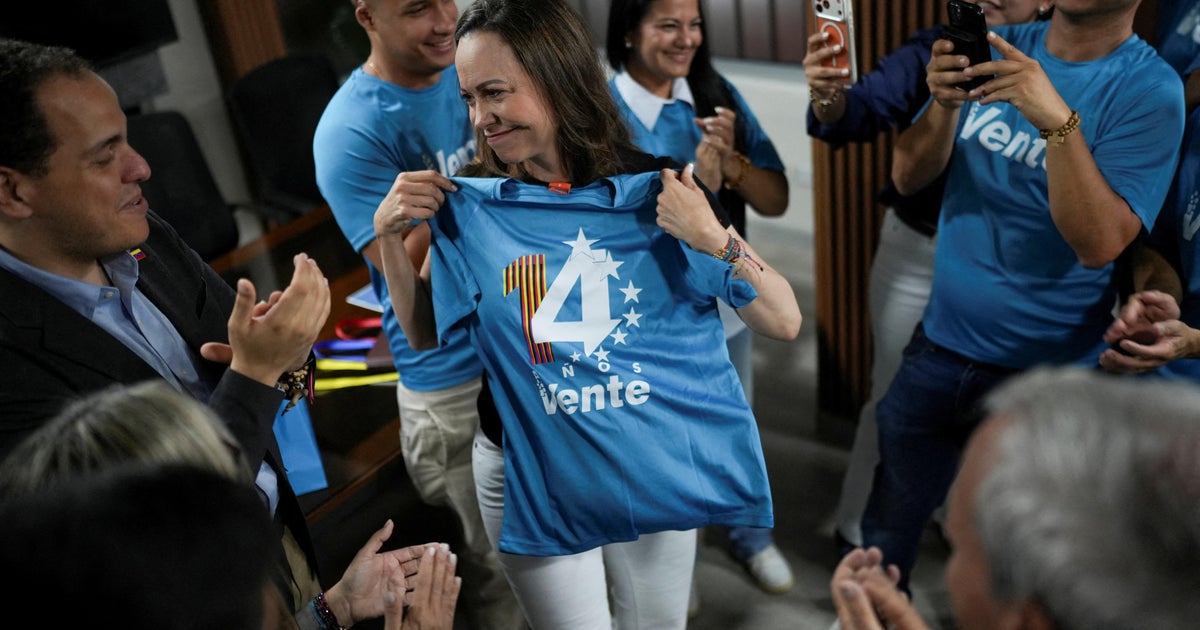
Venezuelan opposition leader and 2025 Nobel Peace Prize recipient María Corina Machado was prevented from entering Venezuela three times within a 24-hour period, according to a statement from her senior adviser, David Smolansky. Machado, who has been in exile in Panama since December, attempted to return to the country by air and sea but was turned away in each instance. The Venezuelan government considers Machado a fugitive, accusing her of calling for foreign military intervention.
These events follow a period of political transition in Venezuela. After Nicolás Maduro claimed victory in a disputed July 2024 election, the country experienced a wave of repression that reportedly eased after U.S. forces captured Maduro in January. Interim President Delcy Rodríguez currently leads the government and recently met with U.S. President Donald Trump at the United Nations General Assembly. Machado, while stating she would not interfere in transition talks, was not invited to participate in the negotiations between the interim government and other opposition segments.
Details regarding the recent failed entries indicate that Machado faced a combination of air travel restrictions, last-minute cancellations, and mechanical failures. These attempts to return follow previous unsuccessful efforts, including one during the aftermath of double earthquakes on June 24. While Machado remains abroad, her team alleges that she is being systematically blocked from the country. In a January interview, Machado said Rodríguez is in a critical position because "nobody trusts her."
This development affects the leadership of the Venezuelan opposition and the estimated 7 million Venezuelans who have left the country in recent years. The current standoff between Machado and the interim government led by Delcy Rodríguez maintains a status quo where an opposition voice remains in exile, potentially complicating transition talks that currently exclude her.
The scale of the political conflict is defined by the disputed 2024 election, where Machado-backed candidate Edmundo González reportedly defeated Maduro by a two-to-one margin according to opposition-collected records from 85% of voting machines. The subsequent crackdown led to more than 2,000 arrests, including at least 10 Americans. For ordinary Venezuelans, the outcome of this power struggle determines the stability of their daily lives, which have been marked by security force deployments, "colectivo" armed group activity, and economic pressures.
What happens next depends on the progress of the transition talks and the stance of the interim government. While the U.S. has recognized González as the president-elect and supported the transition, the mechanical and legal barriers preventing Machado's return suggest ongoing friction within the anti-Maduro coalition and between Machado and Rodríguez. No specific dates for future return attempts or deadlines for the conclusion of transition talks were reported. Maduro loyalists in the National Assembly had previously scheduled his swearing-in for a third term in January, though he was captured before that ceremony occurred.