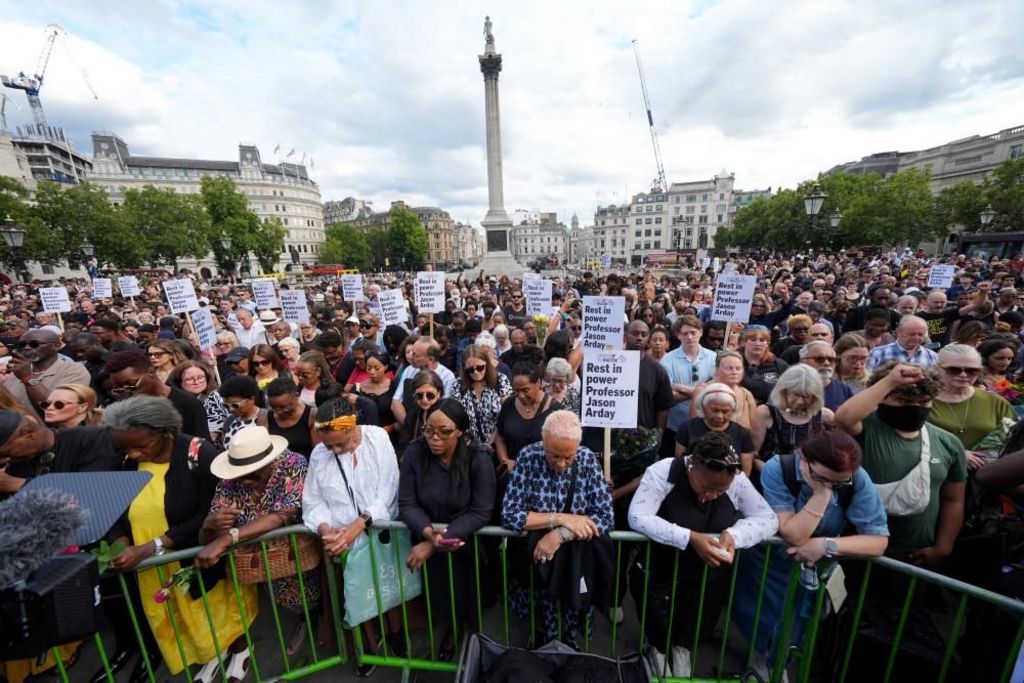
A vigil was held in London’s Trafalgar Square on Monday for Jason Arday, a Cambridge University professor who died on August 14. More than 2,000 people attended the event, organized by Stand Up to Racism, to commemorate the 41-year-old academic following weeks of intense media coverage regarding allegations of plagiarism and questions about his career achievements.
Arday, who in 2023 became the youngest Black professor appointed at the University of Cambridge, had resigned from his position as professor of sociology of education on August 5. His resignation followed the university’s announcement that it would review claims about his professional history. While Arday denied the allegations, Cambridge stated on August 12 that it would investigate the circumstances of his appointment. Arday was found dead at a south London address two days later.
During the vigil, Labour MP Bell Ribeiro-Addy read a statement from Arday’s family, who described him as a selfless person and stated that the "public cruelty" he faced was overwhelming. Other speakers, including Labour MP Diane Abbott and Lord Simon Woolley, principal of Homerton College, criticized the media’s role. Woolley reported that Arday told him last week he felt he was being "hounded to death." Conversely, Shadow Housing Secretary Sir James Cleverly noted that while some coverage was likely motivated by racism, questions regarding academic plagiarism were legitimate and should have been addressed through robust due diligence by the university.
For university staff and students, the outcome of these investigations may lead to changes in how senior academic appointments are vetted and how plagiarism allegations are managed publicly. If a formal inquiry is launched, it could set new precedents for the intersection of employment law and media conduct in the UK. The situation has also drawn responses from the highest levels of government; while Downing Street has called for a "moment for reflection," the involvement of prominent political figures suggests potential legislative or regulatory scrutiny of academic and media standards.
The immediate next steps depend on legal and institutional timelines. The London Inner South Coroner's Court has stated that an investigation to determine the cause of death is underway and could take several weeks. Once that investigation is complete, the coroner will decide whether a formal inquest is necessary. Meanwhile, the University of Cambridge has not yet released findings from its internal review into the circumstances surrounding Arday’s appointment. A date for a decision on a government-led public inquiry has not been reported.