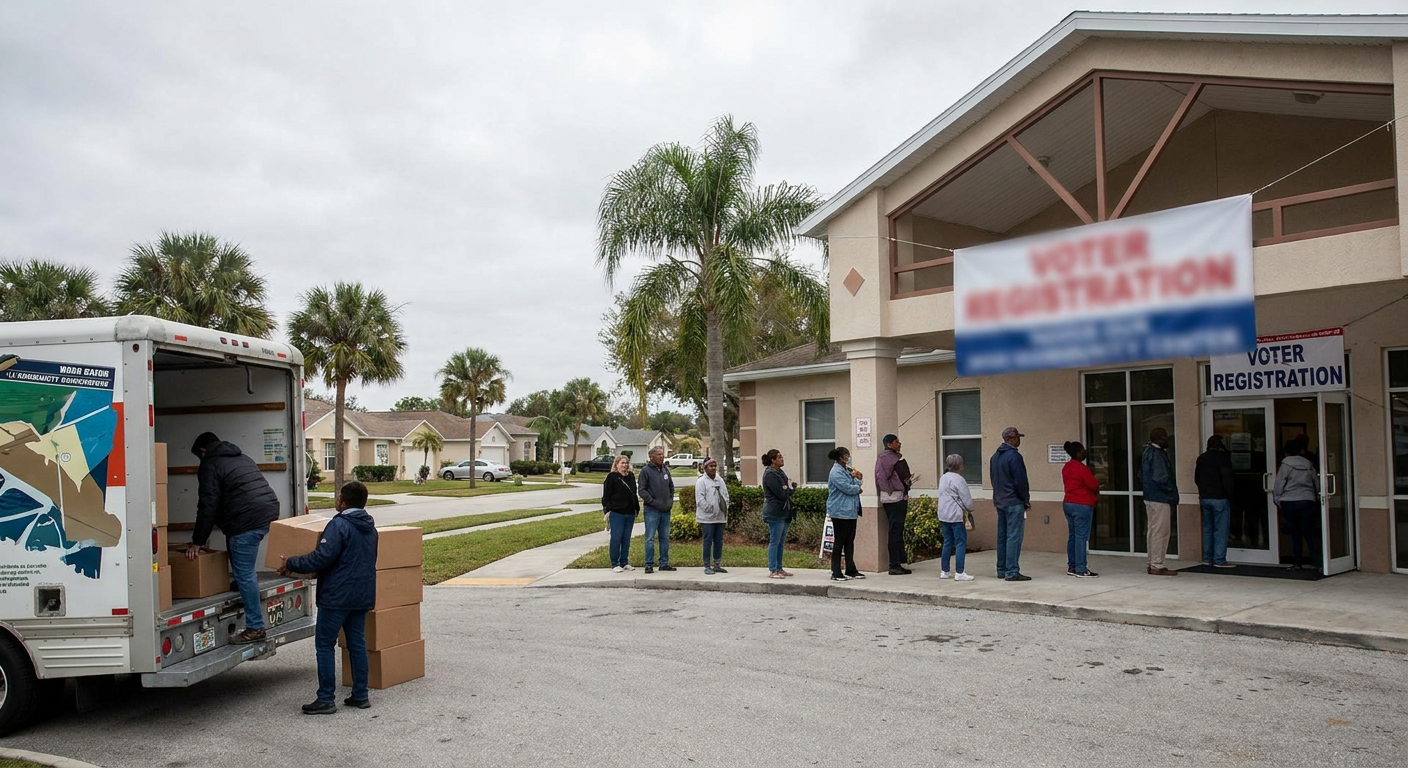
Migration patterns involving conservative residents moving from Democratic-led states to Republican-led states have contributed to shifts in the Florida electorate. According to a report by NPR, these individuals, sometimes referred to as "blue state refugees," are part of a trend of political relocation.
Florida has historically been considered a competitive state in national and local elections. However, the movement of voters with conservative political leanings from other regions has altered the demographic and political composition of the state's registered voters.
The source reports that these new residents are relocating from states governed by Democrats. While specific states of origin were not named in the initial report, the movement is characterized as a factor in the increasing Republican strength within Florida.
The influx of conservative-leaning voters strengthens the Republican Party's influence over state-level policy, including education, healthcare, and infrastructure spending. This trend may reduce the competitiveness of Democratic candidates in statewide races, potentially changing how national parties prioritize Florida in presidential election cycles. Current residents may notice changes in local representation and the types of legislation prioritized by the state government as the voter base evolves.
The exact number of individuals who have moved specifically for political reasons is not reported in the provided text. What happens next depends on whether these migration patterns continue through the next census and election cycles. Further details on the specific scale of this migration and its long-term effect on congressional reapportionment are expected as updated voter registration data is released by the Florida Department of State.