Near the end of the Lindsay Clancy trial, a prosecutor said something that captured the horror surrounding the case: “It is a choice that we don’t want to think about that a mother could make.” Behind that sentence were three children—Cora, Dawson and Callan Clancy—whose short lives have too often been reduced to evidence in an argument about their mother.
Clancy has admitted killing the children in their Massachusetts home in January 2023. Her attorneys say she was experiencing postpartum psychosis and could not be held criminally responsible; prosecutors say she understood what she was doing. By early September 2026, the jury had heard weeks of painful testimony and was struggling to reach a verdict. National outlets followed nearly every turn. Television programs explained postpartum psychosis. Online, strangers chose sides: illness or evil, compassion or punishment. Almost inevitably, the intensity of that debate began to crowd out the quieter truth that three children were gone, a father had lost them, and relatives on every side would live with the consequences long after the courtroom emptied.
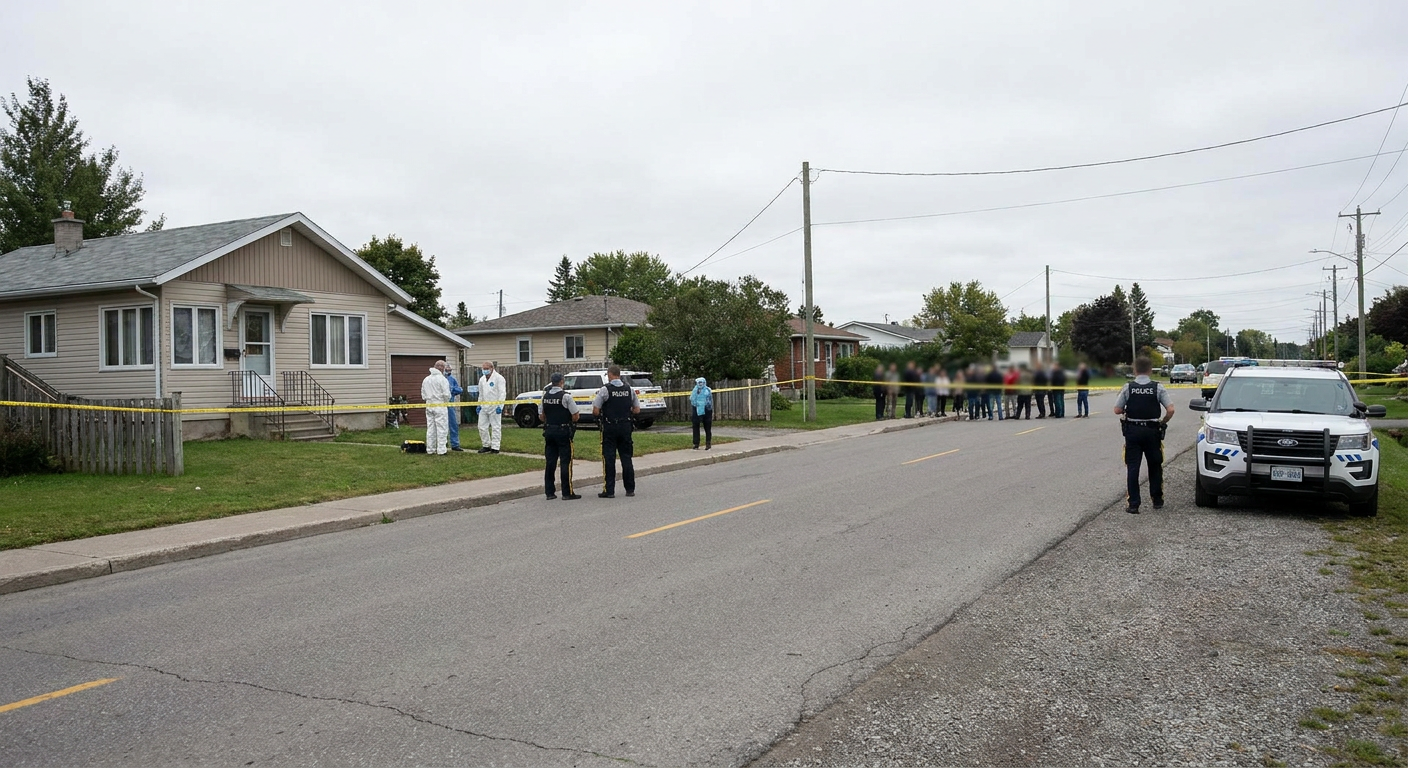
That same summer, other families were shattered in Michigan, Kansas, Minnesota and Montana. Police attributed those killings to men who then took their own lives. In Michigan, Amanda Karolkiewicz and six children were killed. In Kansas, Kelly George and four young children died. In Montana, eight relatives spanning four generations were shot during what should have been an ordinary family dinner. Each name belonged to someone who was expected home, someone whose absence would change birthdays, classrooms and holiday tables for years. The cases made the news. Some received strong local reporting and several days of national attention. Then, for most of the country, they slipped away.
It is tempting to look at that contrast and conclude that the press simply cares more when the killer is a mother. There is something to that. But it is not the whole answer. Gender matters. So do the mechanics of the news business: whether a suspect survives, whether there will be a trial, whether new facts keep emerging and whether the case can be attached to a larger cultural argument. Some deaths become part of a national conversation. Others are mourned intensely by the people closest to them, then treated by the wider public as terrible but self-contained events. The difference says nothing about the depth of either loss. It says a great deal about how attention works.
The number we can know—and the number we cannot
There is no reliable, up-to-the-minute national count of parents who killed a spouse, a child or an entire family during 2025 and 2026. Federal homicide figures arrive slowly, and “familicide” is not a single, neatly tracked category. Filicide may involve one child or several. Family annihilation usually refers to the killing of multiple relatives. Murder-suicide overlaps with both but includes many cases in which only an intimate partner is killed. Combining all three into one number would create the appearance of precision while muddying the very comparison we are trying to make.
The clearest recent comparison comes from the Violence Policy Center, which reviewed news reports of murder-suicides during the first half of 2025. It identified 237 incidents. In 219 of them, the person who killed someone and then died by suicide was male. Twelve were female, and six were not identified by sex. Put another way, 92 percent were men and 5 percent were women. Nearly two-thirds of the incidents involved an intimate partner. In those cases, almost every partner killed was a woman. Forty-five of the homicide victims were children or teenagers.
MALE PERPETRATORS
219 | 92%
FEMALE PERPETRATORS
12 | 5%
Among 237 U.S. murder-suicide events identified from Jan. 1–June 30, 2025. Six additional perpetrators (3%) were not identified by sex. Source: Violence Policy Center, American Roulette. These are murder-suicide figures—not a count of all filicides or familicides.
A much larger study, published in JAMA Network Open in 2025, found almost the same imbalance. Looking at seven years of complete data from 30 states, researchers found that 91.6 percent of people who died by suicide after committing a homicide were male. Current or former romantic partners made up more than half of the people killed. Firearms were used in nearly nine out of ten cases, and 433 of the homicide victims were children.
The picture becomes less complete when we narrow the definition to family mass murder—four or more victims, not counting the offender. The Associated Press, USA Today and Northeastern University recorded 17 mass killings of all kinds in 2025, the lowest annual number since their database began in 2006. Among them were clearly documented male-perpetrated family killings, including the deaths of Briana Payne and her three daughters in Lake Station, Indiana, that February. By late August 2026, public reporting had identified at least ten family-annihilation cases that year. The major cases drawing national attention in July and August were attributed to men. That is a documented minimum, not a complete national count, and it should be read that way.
Even with those limits, the direction of the evidence is hard to miss. Male-perpetrated family violence is not unusual within these categories; men account for the overwhelming majority of perpetrators. Yet frequency can have a numbing effect. A mother who kills is treated as an astonishing contradiction. A man who kills his partner and children can be folded into a grimly familiar phrase—“murder-suicide”—before the public has had time to learn who the victims were.
The crime that breaks the story we tell about mothers
We carry a sentimental idea of motherhood into stories like these. A mother is supposed to protect instinctively, to endure exhaustion and fear, to place herself between danger and her children. When a mother kills a child, the public does not experience it as one more violent crime. It feels like a violation of the order of things. The question quickly expands from what happened inside one home to how a mother could do such a thing at all.
Studies of crime reporting have found that this expectation follows women into the coverage. A 2024 analysis of news stories about parents who killed their children found that women were often placed inside a “flawed mother” narrative. Their mental health, domestic life and performance of motherhood became central to the story. Men were more easily detached from their role as fathers. The study examined Australian coverage, so it cannot tell us exactly how large the effect is in the United States. Still, the pattern is recognizable: the woman is examined as a mother; the man becomes a gunman, husband, worker, neighbor or the unnamed subject of a “murder-suicide.”
That framing does not always benefit women. A mother may be portrayed as monstrous because she violated motherhood, or treated primarily as a patient rather than an offender. Sometimes both versions appear in the same story. A father, meanwhile, may be explained through debt, a lost job, separation, jealousy or the suggestion that he suddenly “snapped.” Those details may be relevant. But they can also turn fatherhood into a footnote and make a history of control or abuse disappear behind a search for motive.
The language of the first headline does a surprising amount of work. “A family died in a murder-suicide” sounds neutral, but it clouds the sequence of events: a person killed family members and then killed himself. Money problems did not pull the trigger. A custody dispute did not kill anyone. If there had been threats, stalking, strangulation, coercive control or a recent change in access to guns, those facts tell readers more than a neighbor’s recollection that the family seemed happy.
Why Clancy stayed in the news
Still, gender cannot explain the difference in attention by itself. Clancy survived. That one fact opened the door to an arrest, years of hearings, dueling specialists, a contested insanity defense and a trial lasting more than a month. Every day in court offered reporters something new. The men accused in the large Michigan, Kansas, Minnesota and Montana family killings died at the scene. There will be no arraignments, expert testimony, verdicts or televised courtroom confrontations. As national stories, those cases were nearly over when the homicide investigation began.
News coverage has its own kind of survivor bias. When an accused person is alive, the justice system keeps producing events: motions, hearings, evidence, testimony, a verdict and perhaps an appeal. A murder-suicide often produces a sheriff’s briefing, profiles of the dead, a vigil and an unanswered question about motive. Local reporters may keep returning to the families, schools and neighborhoods left behind, but national outlets have fewer reasons to do so. The pain continues even when the news does not. What looks like a judgment about whose victims matter is partly a consequence of which cases continue to generate reportable events.
Clancy’s case also sits inside a larger, unresolved argument. Postpartum psychosis is rare, frightening and widely misunderstood. Her treatment history raises questions about maternal mental-health care, criminal responsibility and whether mothers can safely disclose disturbing thoughts without fearing that their children will be taken away. The story has drawn maternal-health advocates, critics of the insanity defense and the enormous online true-crime audience. Each new development gives those groups another reason to resume the debate.
Male family annihilation is more often presented as a closed circle. The killer is dead. Investigators look for a reason. Reporters gather the available fragments—job loss, debt, marital trouble, an eviction, a request to leave the house—and the fragments begin to sound like an explanation. They can make the violence appear sudden even when it grew from a familiar pattern of intimidation, intimate-partner abuse or a man’s fear of losing control.
What the coverage comparison actually shows
Measuring the difference on social media is harder than it sounds. Search results change by the hour. Platforms keep impression and engagement data private, and a single wire story may be republished by scores of outlets, creating the illusion of independent coverage. Without access to internal data and a fixed list of search terms, no one can honestly say that one case received an exact multiple of another’s attention.
The public news record is less precise, but the contrast is visible. The Clancy trial generated recurring national stories from opening statements through jury deliberations, along with explainers about postpartum psychosis and near-daily courtroom updates. The Associated Press maintained a running trail of developments and published several separate stories during deliberations alone. The large male-perpetrated family killings of summer 2026 generally followed a shorter arc: bodies were found, relatives received the worst possible news, names were released, a vigil was held, investigators offered an update, and national attention moved elsewhere. Grief does not follow that timetable. Some local newsrooms kept reporting on the people and communities left behind. The national conversation mostly did not.
So the original observation holds, with a qualification. When a mother kills, the case is more likely to become a continuing cultural story. When a man kills his family, the crime is more likely to remain an event. One becomes an argument about what a mother is. The other fits a pattern so familiar that the repetition itself can make it seem less newsworthy.
This does not require a newsroom conspiracy. Nor does it mean every woman receives sympathy or every man disappears from the headlines. Race, class, geography, the age and number of victims, photographs, courtroom access and the survival of the accused all shape which stories travel. And the attention paid to postpartum psychosis is not frivolous; the illness deserves careful reporting. The imbalance appears when one unusual case is asked to explain motherhood while a recurring pattern of male violence is rarely allowed to say anything larger about men, control or the private life of domestic abuse.
The pattern behind the “unthinkable”
“Unthinkable” is one of the words most often attached to family annihilation. But researchers have been documenting its warning signs for years. A National Institute of Justice review of 408 homicide-suicide cases found that 91 percent of the perpetrators were men and 88 percent used a gun. In a smaller multi-city study discussed in the review, seven in ten intimate-partner murder-suicides had a known history of domestic violence. Estrangement, previous abuse, threats and access to firearms appeared again and again.
Another study examined 163 family mass murders committed in the United States from 2006 through 2017—about 14 a year. The most common perpetrator was a current or former male intimate partner using a firearm. The researchers also noted an odd disparity in public attention. Family killings are among the most frequent kinds of mass murder, yet they are overshadowed by attacks in schools, stores and workplaces. Violence in a home is still treated as private, even when nearly everyone in the home is dead.
Women do kill children, and a woman should not be presumed mentally ill—or excused—simply because she is a mother. Research that includes the killing of a single child finds a much smaller gender gap than research focused on family annihilation or murder-suicide. The circumstances also change with the child’s age, the presence of abuse or psychosis and whether a partner is also targeted. These are different kinds of crimes. But when a current or former partner is killed, several relatives die, or the homicide ends in suicide, the gender imbalance is stark.
How journalism can stop losing the pattern
The answer is not less reporting about mothers. It is better and more persistent reporting about family violence committed by men. The first-day story should tell readers what police know. The stories that follow should ask whether there were protection orders, threats, stalking, coercive control, previous calls to police or a recent separation. They should be wary of words such as “snapped” and “crime of passion,” which can make a series of decisions sound like a momentary loss of control.
A few habits would change the coverage considerably. Use active voice. Introduce the victims before devoting paragraphs to the killer’s biography. Put the case in the context of reliable local and national data. Speak with domestic-violence specialists as well as neighbors and police. Then return weeks later and ask which institutions encountered the family before the killings. When mental illness is part of the case, report the evidence without using diagnosis as a shorthand for violence. When the perpetrator dies by suicide, do not allow that final act to obscure the homicides that came first.
Online audiences have responsibilities too. The true-crime economy rewards certainty, intimate speculation and amateur diagnosis. Cases involving mothers are especially vulnerable because every family photograph can be recast as proof that she was either loving or deceptive. The children become supporting characters in a trial of the mother’s identity. Separating fact from rumor, leaving medical gossip alone and refusing to harass surviving relatives may feel less satisfying than choosing a side. It is also more humane—and usually more accurate.
What prevention looks like before the headline
The useful lesson is not how to spot a monster. It is how to recognize danger before a household becomes a headline. Separation can be an especially dangerous period. Threats of homicide or suicide, strangulation, stalking, isolation, obsessive jealousy, ready access to firearms and statements that a partner or the children “belong” to someone should never be dismissed. A person threatening suicide in the middle of a domestic crisis may also pose a danger to other people; family members and professionals need to ask about both.
Prevention is not one program. It includes coordinated domestic-violence risk assessment, enforcement of firearm restrictions for people subject to qualifying protective orders or convictions, extreme-risk protection orders where they are available and better communication among courts, police, schools and health providers. Maternal mental-health care needs enough capacity to distinguish common but frightening intrusive thoughts from psychosis and to respond quickly when either becomes dangerous. Protecting a child from a mother in psychosis and protecting a family from a controlling man are not competing causes.
There is also a simpler obligation: not to confuse the length of a news cycle with the value of a life. The victims in Michigan, Kansas, Minnesota and Montana did not become less important when their names disappeared from national feeds. They were children, parents, siblings, students, coworkers and friends before they became the subjects of crime stories. The people who loved them do not experience their deaths as examples of a trend. Any responsible account of the trend has to remember that.
The Clancy case leaves the country with an unbearable question: How could a mother kill her children? Cora, Dawson and Callan deserve to be remembered as more than the reason that question was asked. So do the women and children whose deaths at the hands of men briefly entered the news and then receded. The numbers leave us with another question, one that has become easier not to hear: Why do men so often kill the people closest to them—and why does the story so often end before we ask what might have prevented another family from enduring the same loss?
Methodology and source note
This article examines coverage from January 1, 2025 through September 2, 2026. The Clancy killings occurred in 2023; they are included because her trial dominated coverage in 2026. Sources generally recorded perpetrator sex rather than gender identity, so the comparison uses “male” and “female” in that limited statistical sense. Figures for 2026 remain provisional. Murder-suicide, filicide and family mass murder overlap, but they are not interchangeable. Because social platforms do not provide complete public reach data, the discussion of attention relies on observable measures: repeat national stories, follow-up duration, explanatory coverage and continuing legal developments.