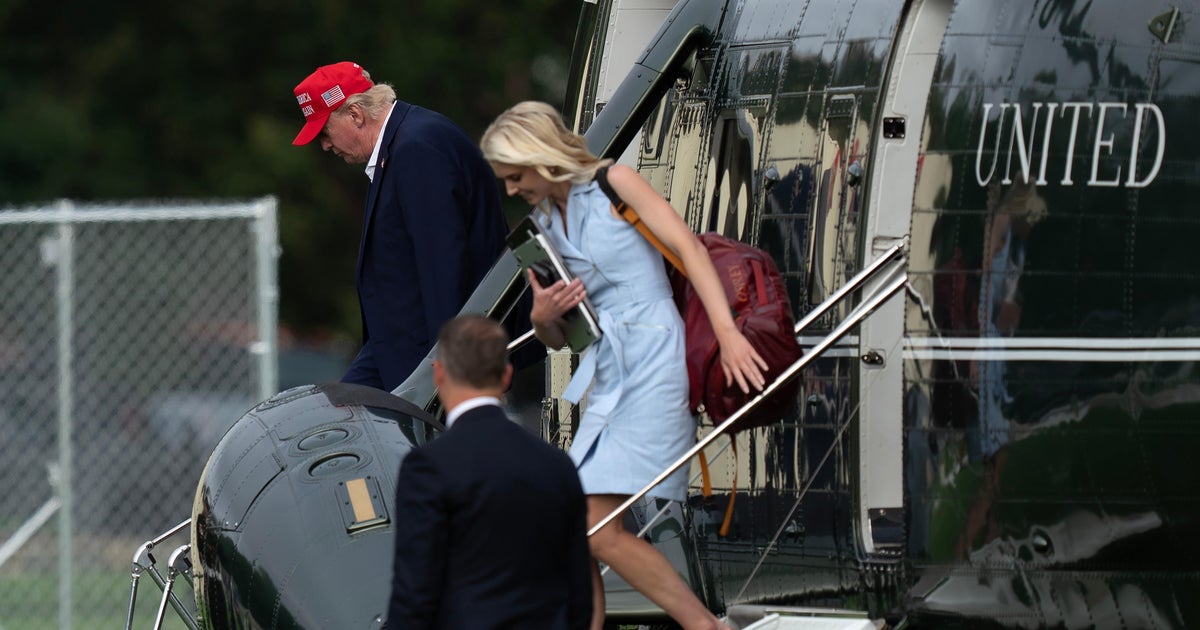
Natalie Harp, a 35-year-old presidential aide, has come into focus following public comments by Sen. Jon Ossoff (D-GA) regarding her role in the Trump administration. Harp serves as special assistant and executive assistant to President Trump, a position she has held since he took office in January 2025.
Harp previously worked for the Trump presidential campaigns in 2020 and 2024. During the 2024 campaign, she was reported to carry a portable printer to provide the president with physical copies of news articles and social media posts, as he often prefers reading printouts over digital screens. She also assists the president by typing and posting dictated content to the Truth Social platform.
The current public attention follows a Sunday campaign rally where Sen. Ossoff suggested the president was focused on traveling with Harp rather than his official duties. In response, President Trump used a pejorative comparison to describe the senator, while White House spokesperson Davis Ingle and communications director Stephen Cheung defended Harp's work ethic and loyalty.
Harp’s history with the president includes a 2020 Republican National Convention speech where she credited him with saving her life by signing the Right to Try Act of 2018. A bone cancer survivor, Harp stated the law allowed her access to experimental treatments. However, the Washington Post later reported that Harp had also described receiving an FDA-approved immunotherapy used off-label, a process that does not require the Right to Try Act.
The scale of her influence is reflected in her constant proximity to the president, who has approximately 2.1 million followers on Truth Social where she posts on his behalf. While her salary is not reported, her role as an appointed official means she is part of the small group of assistants who handle the day-to-day personal and professional logistics for the head of the executive branch. This level of access is significant for policy stakeholders and legislators, as Harp is noted for providing the specific printouts that the president reviews to form opinions on media coverage and political developments.
The situation also highlights the ongoing friction between the executive branch and members of Congress, specifically impacting Sen. Jon Ossoff's reelection campaign in Georgia. The exchange of personal insults between the president and the senator underscores the current tone of legislative-executive relations. For students of political science or voters, the case sets a precedent for how personal staff can become central figures in national political discourse. What happens next depends on the 2026 election cycle, as Sen. Ossoff continues his bid for reelection and the White House maintains its current staffing structure. No specific court dates or legislative votes related to Harp's role are currently scheduled.