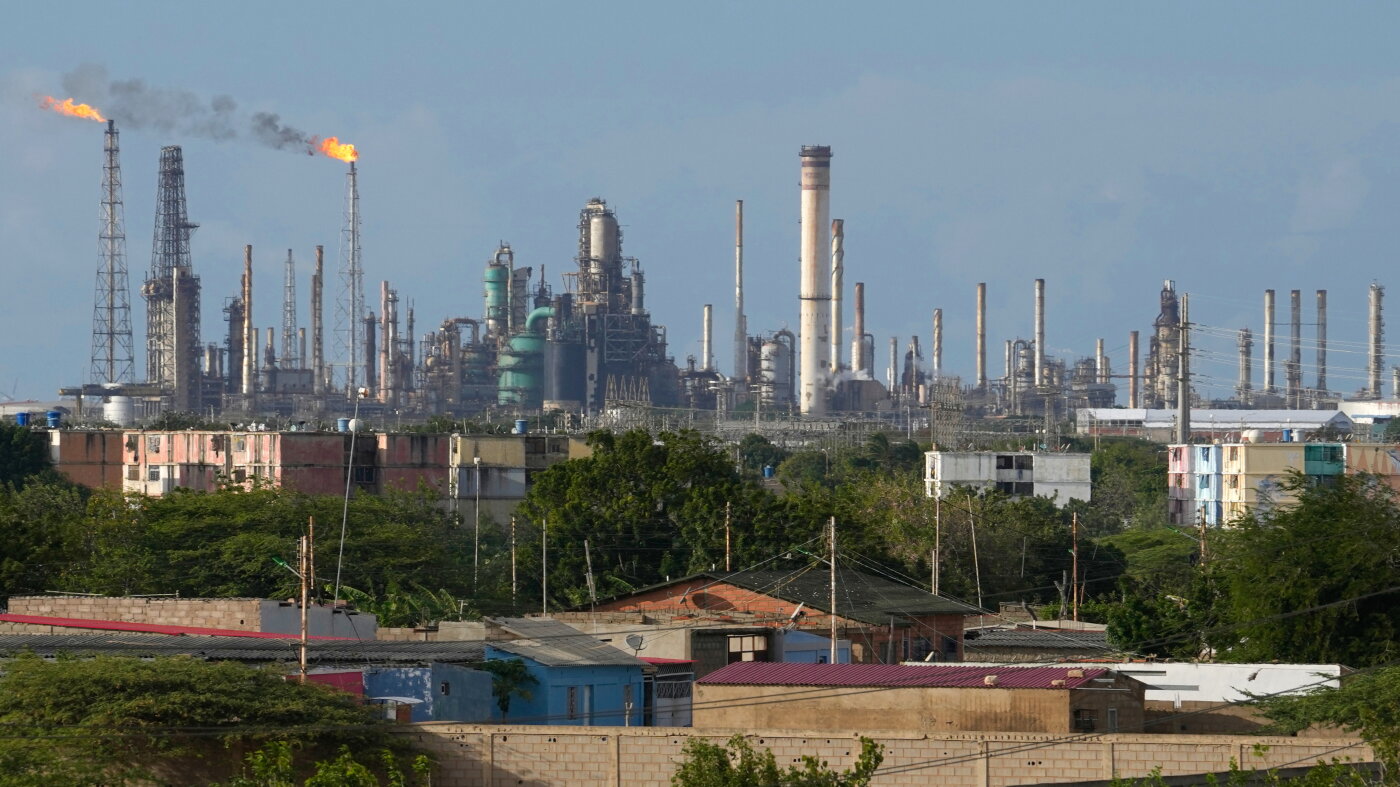
The White House released new details Monday regarding an agreement to develop oil reserves in Venezuela through a joint venture between the U.S. government and North American Blue Energy Partners (NABEP). The deal, signed by Secretary of Defense Pete Hegseth and Secretary of State Marco Rubio, involves Venezuela’s acting President Delcy Rodríguez granting the company 100-year rights to 17 oil fields containing approximately 65 billion barrels of proven reserves.
The agreement follows a January military mission that led to the capture of Nicolás Maduro. According to the Trump administration, the deal aims to establish a new oil source in the Western Hemisphere to counter global supply disruptions caused by the Iran war. The White House noted that many of the involved fields were previously under the control of Russian or Chinese firms.
Under the terms disclosed Monday, the Pentagon’s Office of Strategic Capital will hold a 35% ownership stake in the joint venture. NABEP, which is owned by Venezuelan businessman Alejandro Betancourt, has committed to investing $100 billion in new oil infrastructure. The U.S. government maintains veto power over board members and holds a guaranteed right to purchase 20% of the output at cost through the State Department.
For U.S. consumers, the impact on gasoline prices, which AAA reports have risen 28% over the past year to a $4.08 national average, will not be immediate. President Trump acknowledged on Monday that it "could be a little bit" before prices fall, while independent analysts cited by the report suggested it could take years to rehabilitate Venezuela's energy infrastructure. The deal also aims to provide heavy oil for the production of asphalt and other industrial goods.
The agreement sets a precedent for the U.S. military serving as an investor in foreign commercial energy projects. This move has drawn political scrutiny; Sen. Jack Reed (D-RI) characterized the use of military resources for a private oil venture as an abuse of power, while Rep. Rick Crawford (R-AR) requested more information regarding the details. The deal is governed by U.S. law and subject to U.S. court jurisdiction. Next steps include a meeting between President Trump and oil refiners on Tuesday to discuss expanding capacity to process the Venezuelan crude.