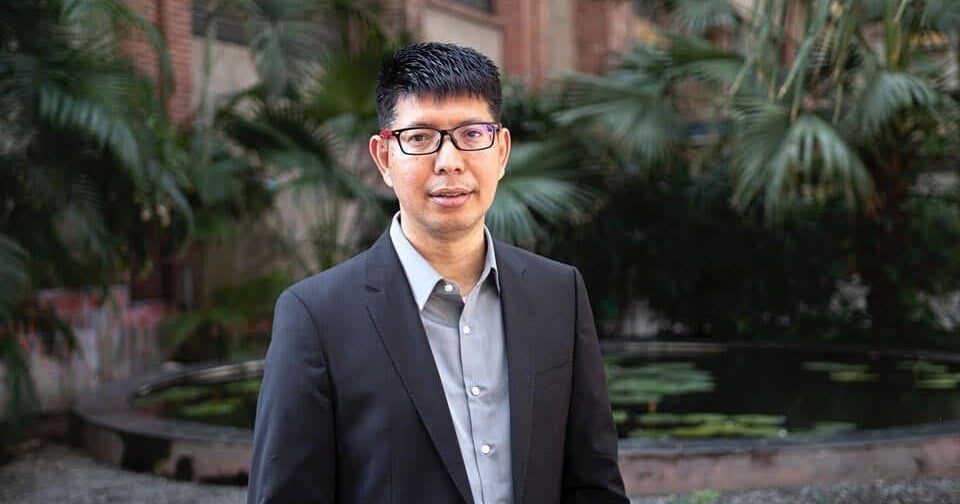
Sylvia Zin, the wife of U.S. scholar Min Zin, is calling on President Donald Trump to secure her husband's release during his summit with Chinese President Xi Jinping in Washington this week. Min Zin, a naturalized U.S. citizen and California resident who directs the think tank ISP-Myanmar, has been held in China for more than 100 days without formal charges. U.S. officials designated him as "wrongfully detained" in August, a legal status that directs more federal resources toward seeking a prisoner's release.
Min Zin was arrested on June 3 after arriving in Kunming, China, for an academic conference at the invitation of a Chinese professor. His work focuses on Myanmar and China’s regional influence, which human rights experts and scholars suggest may have drawn the attention of the Chinese Ministry of State Security. He is reportedly being held at a "Residential Surveillance at a Designated Location" (RSDL), a type of facility human rights groups refer to as a "black site" because detainees are held in undisclosed locations without access to legal counsel.
Chinese authorities informed Sylvia Zin that her husband is under investigation for "endangering national security," though no trial date has been set. U.S. consular officials are permitted 30-minute monthly visits with Min Zin at a hotel, but these encounters are heavily monitored. In addition to Min Zin, the family of Dr. Youlin Chen, a U.S. seismologist detained in China since 2024, is also in Washington to advocate for his release during the summit. President Xi arrived at a military base in Maryland on Wednesday, September 23, for the state visit.
The scale of the issue extends beyond these individual cases to the broader U.S.-China relationship. While the Trump administration has previously secured the release of over 100 Americans held abroad, expert analysts such as Josh Kurlantzick suggest that China may use these detentions as diplomatic leverage during high-level summits. The U.S. government has responded by shifting these cases to the office of the Special Envoy for Hostage Affairs, signaling a formal escalation in diplomatic efforts.
The situation also impacts the academic community and organizations receiving U.S. government funding, as U.S. officials noted that Min Zin’s think tank had previously received federal support. A lack of forceful response from the U.S. could, according to some experts, set a precedent that U.S. citizens conducting research in the region are vulnerable to similar enforcement actions. The immediate next step is the scheduled summit between President Trump and President Xi on Thursday, September 24, where families and officials expect the cases to be raised.