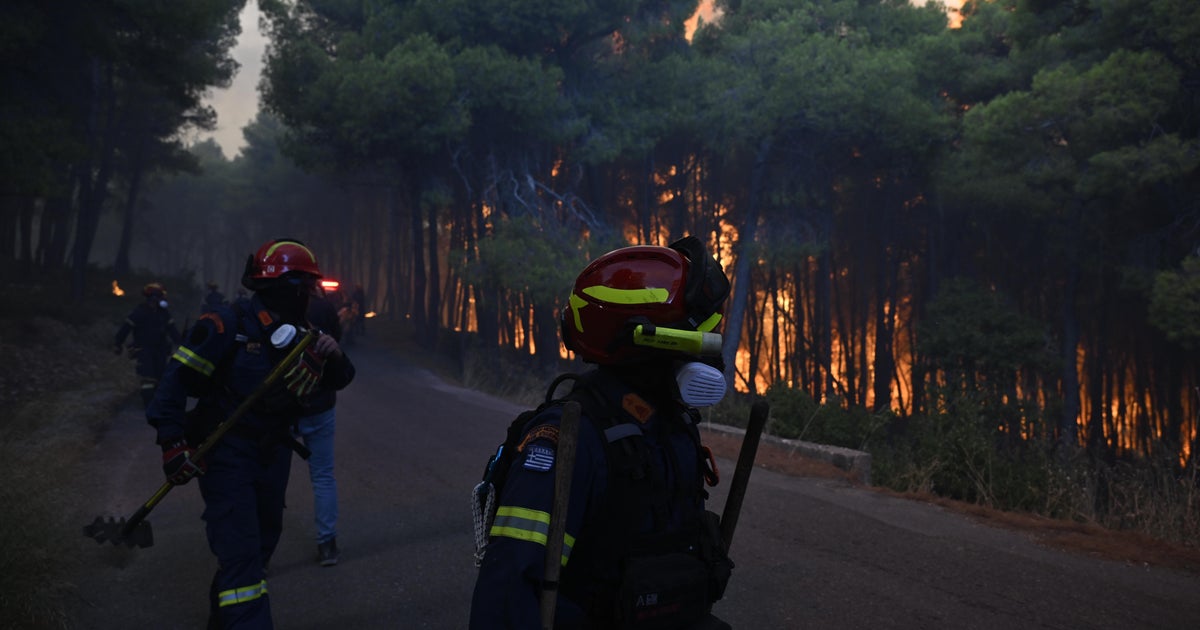
Wildfire activity shifted toward Greece on Saturday as gale-force winds accelerated a blaze near the coastal resort of Porto Germeno. While conditions stabilized in parts of France and Spain, Greek authorities deployed nearly 500 firefighters and dozens of aircraft to combat fires threatening forests northwest of Athens. The shift comes as western European nations begin assessing damage from what French officials described as one of the region’s largest peacetime evacuation events.
The current fire season follows years of increasing temperatures in Europe, which the European Union’s Copernicus climate service identifies as the world’s fastest-warming continent. The region has warmed at more than twice the global average since the 1980s, contributing to prolonged droughts and drier vegetation. For Greece, the current risk follows the 2018 Mati fire, which resulted in 104 deaths and remains the deadliest wildfire in Europe this century.
In Greece, approximately 300 people were evacuated by sea from the village of Agios Vasileios as flames moved through pine forests. Climate Crisis and Civil Protection Minister Evangelos Tournas reported that extreme wind turbulence prevented some firefighting aircraft from completing water drops. Meanwhile, in southwestern France, the Gironde fire—which burned 420 square kilometers—was declared contained. French Interior Minister Laurent Nunez stated that roughly 198,000 people were cleared to return home, though thousands remain displaced near the Cap Ferret peninsula due to active hot spots.
The fires have also strained international emergency resources, requiring the cross-border deployment of specialized forest-fire teams. Greece utilized crews from France and Romania to bolster its domestic forces, while French authorities deployed 1,500 firefighters to a single blaze in the Var region. These events set a precedent for increased reliance on the EU’s Civil Protection Mechanism, a framework through which member states share equipment and personnel during disasters. The cost of these operations, involving 19 water-dropping planes and 11 helicopters in Greece alone, represents a significant expenditure for national emergency budgets and European Union contingency funds.
What happens next depends on changing weather patterns and containment efforts. In France, 20 departments remained under orange heat warnings as of Saturday, with eight departments classified as high-risk for new forest fires. While the Gironde fire is contained, it has not yet been declared "fixed," meaning underground hot spots could reignite along the 240-kilometer perimeter. In Greece, evacuation orders remain active for several villages near Nafpaktos. Authorities have not yet released a final tally of total burned acreage or a formal estimate of the economic damage to the tourism and agricultural sectors, which will be assessed once the active fronts are extinguished.