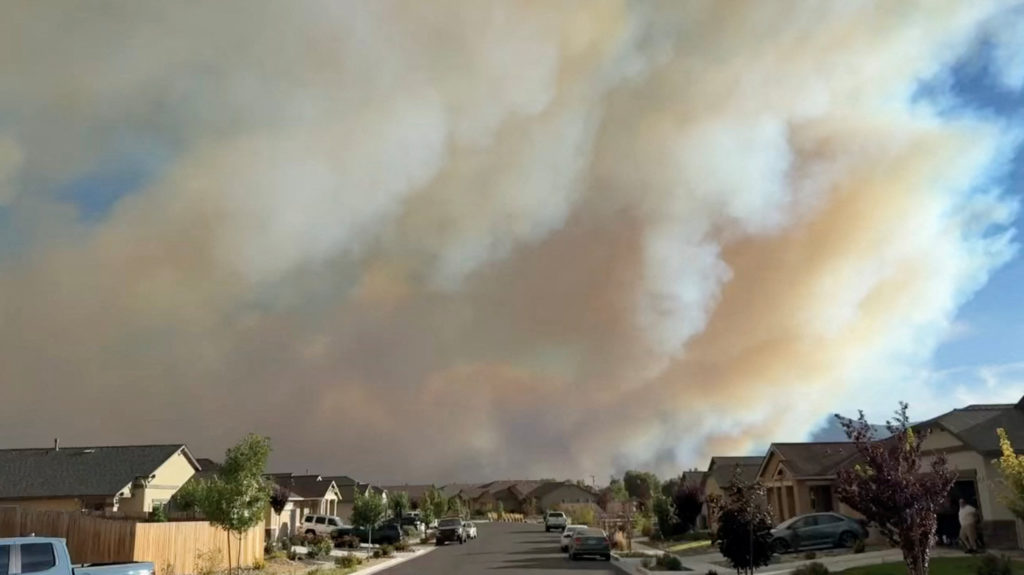
Tens of thousands of residents near Reno, Nevada, were urged to evacuate Monday as the Hawk Fire burned roughly 25 square miles. The wildfire, which ignited Saturday northwest of the state’s second-largest metropolitan area, was 27 percent contained by Monday. Nevada Governor Joe Lombardo declared a state of emergency and deployed the National Guard to assist approximately 800 fire personnel battling 90-degree heat and shifting winds.
In Washington, the U.S. Supreme Court issued a ruling Monday allowing President Trump to proceed with an executive order that restricts mail-in voting. The order requires the U.S. Postal Service to obtain lists of eligible voters from states and deliver mail-in ballots only to those individuals. The administration also filed plans Monday to codify a $103,000 fee for H-1B worker visas, with the Department of Homeland Security stating the revenue would fund immigration courts and U.S. Immigration and Customs Enforcement (ICE).
Separately, the Pentagon reported striking a vessel in the eastern Pacific, resulting in the deaths of two individuals accused of drug trafficking. In international news, the United Kingdom and France pledged increased military support to Ukraine on its 35th Independence Day, with British Prime Minister Andy Burnham offering assistance for long-range missile production. In Illinois, former sheriff’s deputy Sean Grayson died while serving a 20-year sentence for the 2024 shooting of Sonya Massey; Grayson had been diagnosed with colon cancer, though his cause of death was not immediately confirmed.
For the tens of thousands of residents evacuated near Reno, the Hawk Fire has already resulted in the loss of dozens of homes and injuries to seven people, including three first responders. The immediate impact includes the closure of local schools and the displacement of families into local shelters. The scale of the economic damage to these households and the Reno area is not yet fully determined, but fire officials noted this is the third human-caused fire in the region in two weeks, signaling an ongoing risk to property and safety in the high-temperature, dry conditions currently affecting the Southwest.
The proposed $103,000 H-1B visa fee represents a significant financial shift for U.S. companies that rely on the program to hire tens of thousands of foreign workers annually. This cost, which the Department of Homeland Security intends to use for immigration enforcement and court funding, would be borne by employers in sectors such as technology and research. While the administration argues the program impacts American jobs, companies maintain it is necessary for recruitment. The codification follows a previous court ruling in Massachusetts that struck down a similar temporary fee, suggesting the new rule will face scrutiny regarding its implementation and impact on the labor market.