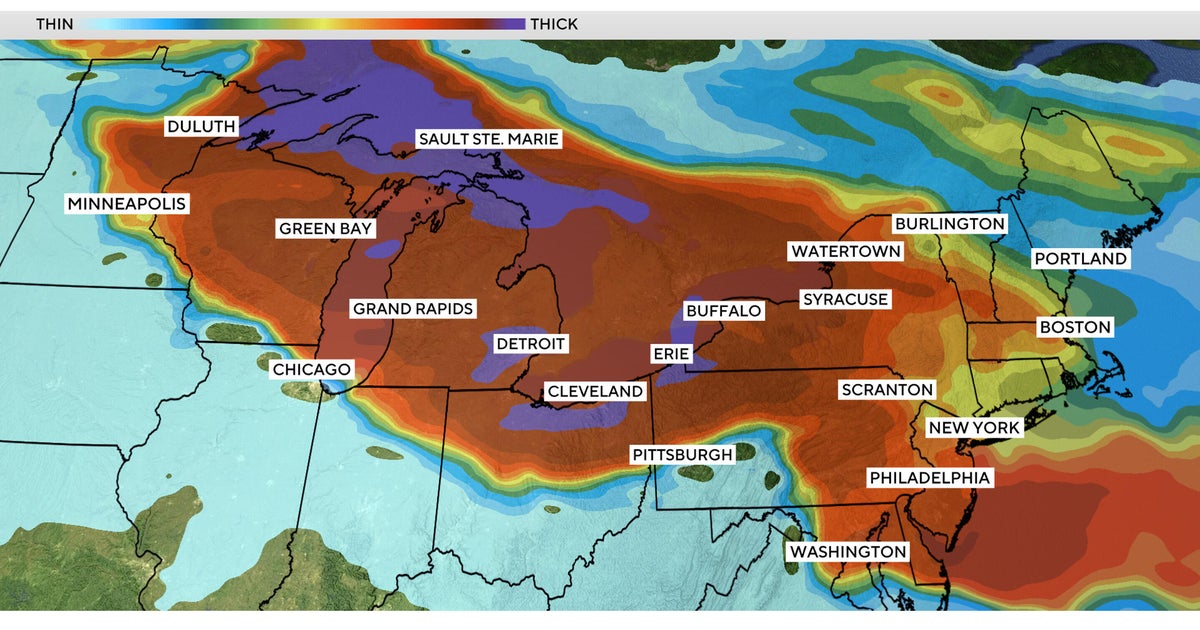
Wildfire smoke from more than 100 blazes in Canada and several fires in northern Minnesota spread across the Midwest and Northeast United States on Thursday. The weather event resulted in air quality alerts for millions of residents, as Detroit, Minneapolis, and Chicago were ranked among the five most polluted major cities globally. The National Weather Service reported that winds carried fine particulate matter southeast, with smoke reaching as far south as Washington, D.C.
State officials in Minnesota, Michigan, Wisconsin, New York, Pennsylvania, and Massachusetts issued varying levels of air quality advisories throughout the week. In Minnesota, air quality reached hazardous levels in the northeastern region, while Pennsylvania declared a Code Red alert. New York City officials announced the distribution of N95-style masks to commuters to mitigate the effects of the pollution.
Health officials warned that high levels of fine particulate matter can cause respiratory distress, dizziness, and fatigue, particularly for children and those with preexisting heart or lung conditions. Dr. Alexander Azan of NYU Langone Health advised the public to remain indoors or use N95-grade masks if outdoor activity is necessary. According to Dan Westervelt of Columbia University's Climate School, the fires were fueled by severe drought and high temperatures.
The Canadian blazes have caused significant infrastructure disruptions, including the suspension of rail operations by the Canadian National Railway near Armstrong, Ontario. Meteorologists expect the air quality issues to persist through at least Friday in several states as the smoke continues to move across the region.