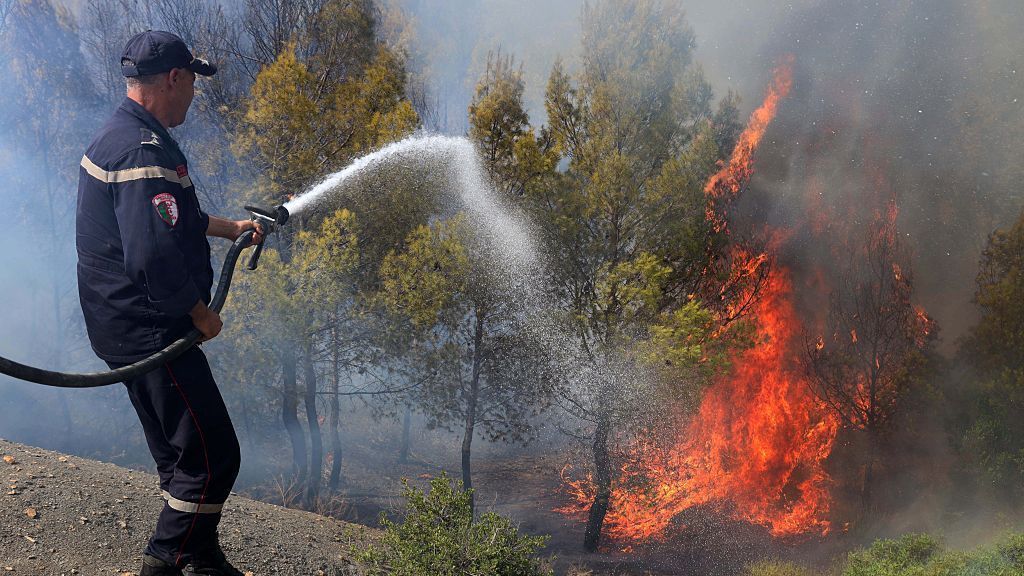
At least 12 people died and dozens were injured as wildfires spread across several provinces in northern Algeria. Interior Minister Said Sayoud reported on Wednesday night that at least 54 people suffered burn injuries, including six individuals currently receiving treatment in intensive care units. The fires reached coastal areas and forced the evacuation of numerous homes as thick smoke affected local residents.
The current blazes follow a period of extreme heat across North Africa, specifically affecting Tunisia and Algeria. Authorities in Algeria have managed more than 2,000 fires throughout the month of July, which resulted in at least six deaths prior to the current outbreak. The region of Bejaia, which is currently affected, previously experienced forest and farmland fires three years ago that resulted in 30 fatalities.
Interior Minister Sayoud confirmed the locations of the 12 recent deaths: five in Jijel province, four in Bejaia, and three in Tizi Ouzou. The Algerian civil protection agency reported that firefighters were engaged with 69 separate blazes across the country as of Wednesday evening. Sayoud and Health Minister Mohamed Seddik Ait Messaoudene traveled to Bejaia to evaluate evacuation procedures and firefighting efforts, according to government officials.
The scale of the fire season in Algeria is significant, with over 2,000 fires recorded in July alone, placing a heavy burden on national emergency services and the healthcare system. The 54 reported injuries, including six people in critical condition, require specialized intensive care resources. Beyond human impact, the rising temperatures and water shortages associated with these heatwaves have led to documented increases in camel deaths, potentially affecting agricultural and transport sectors that rely on these animals in the region.
The continued severity of these fires may influence future government policy regarding forest management and emergency response in Algeria's northern provinces. The WMO reports that extreme heat is becoming common in the region, which could lead to more frequent evacuations and strain on the national grid or water supplies during summer months. As of Wednesday night, firefighting efforts were ongoing to contain the 69 active blazes, and health officials continue to monitor those in intensive care to determine the final toll of the event.