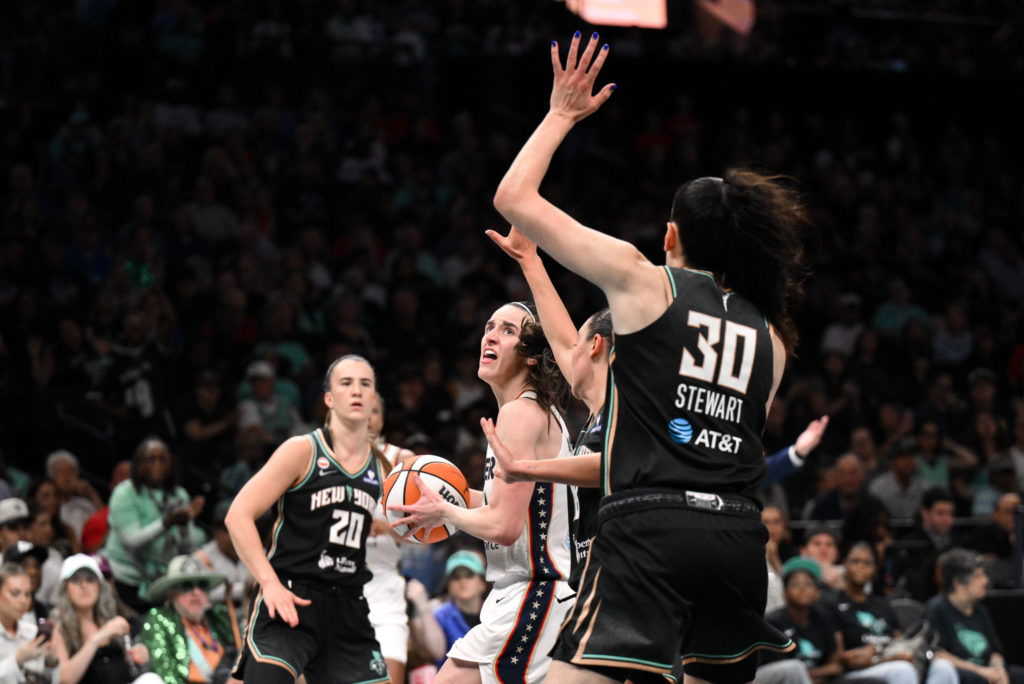
New York Liberty forward Breanna Stewart called for WNBA arenas to remain "safe spaces" following demonstrations related to the participation of transgender women in the league. The comments were made Saturday prior to a game between the New York Liberty and the Indiana Fever, which was preceded by peaceful rallies representing opposing views on the issue.
The debate intensified after Sophie Cunningham of the Indiana Fever stated in an ESPN profile published last month that she opposed transgender girls and women competing in female sports. While the WNBA's collective bargaining agreement—the contract governing player employment—states the league is restricted to women, it does not contain specific language regarding sex assigned at birth or gender identity. The WNBA has never had a transgender player.
During last Sunday's game between the Atlanta Dream and the Indiana Fever, WNBA security staff directed at least three fans to cover shirts featuring messages about transgender participation in women's sports. The league later issued a statement clarifying that the fans should have been permitted to wear the clothing. Stewart noted that while everyone is entitled to an opinion, she believes efforts to divide teams and opponents should not be tolerated.
The scale of the conflict involves the entire WNBA ecosystem, including its growing fanbase and the safety protocols of its arenas. Players like Cunningham argue that the increased attention is a positive development that brings more eyes to the league's talent, potentially reaching thousands of new viewers. Conversely, players like Stewart emphasize the importance of maintaining an inclusive environment for LGBTQ+ youth, noting her own contributions to organizations like The Trevor Project, a suicide prevention nonprofit for LGBTQ+ youth.
A person attending a WNBA game may notice a shift in the arena environment, including the presence of rallies outside venues or specific instructions from security regarding attire. These events set a precedent for how professional sports leagues handle social and political speech within their facilities. The WNBA has not announced any formal changes to its gender participation policies or its collective bargaining agreement at this time. The next steps involve the league’s ongoing monitoring of game-day safety and the internal management of player and fan expressions as the season continues.