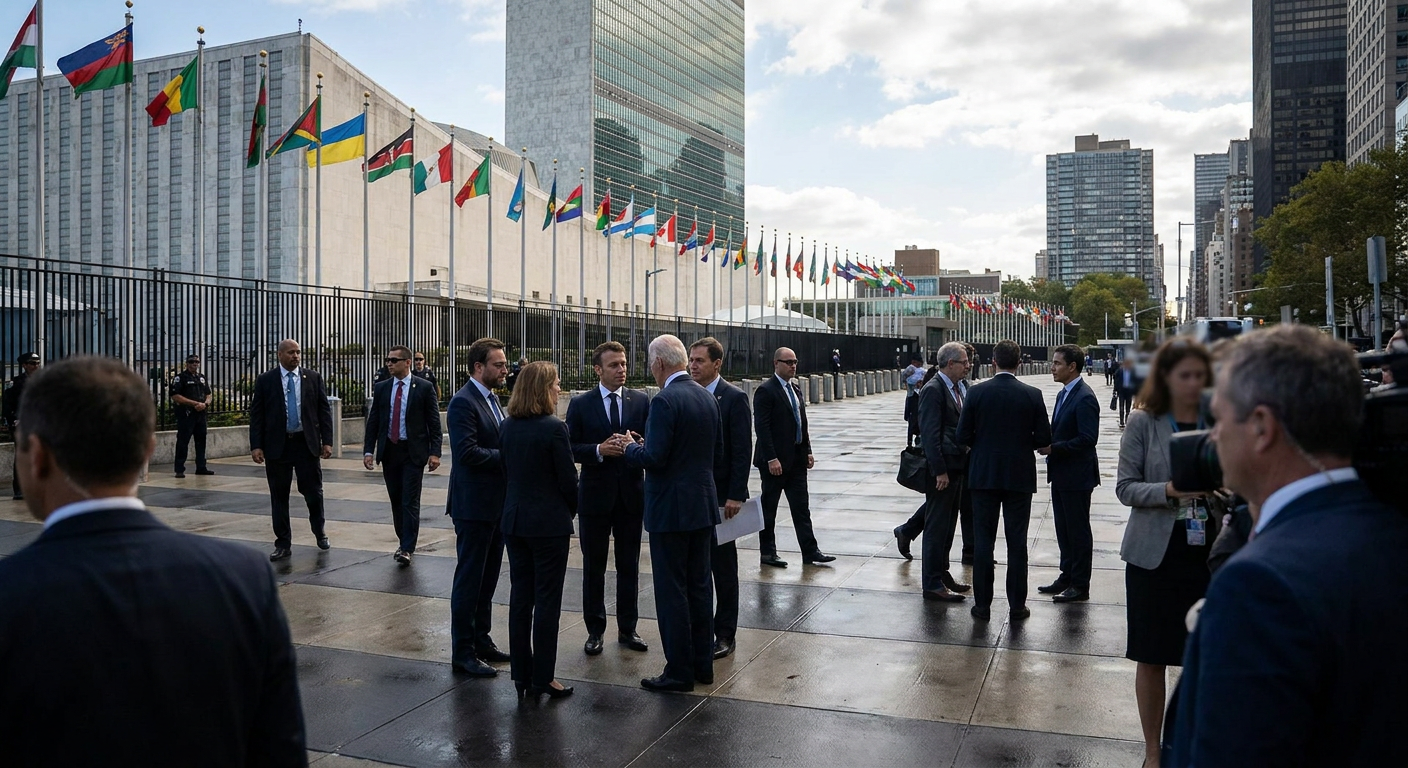
United Nations diplomats and world leaders are scheduled to gather in New York next week for the annual General Assembly. The meeting occurs as the U.S. and Russia, both permanent members of the UN Security Council, are involved in ongoing conflicts, including the war in Ukraine now in its fifth year and a U.S.-Israeli war against Iran. NPR diplomacy correspondent Michele Kelemen reported that the UN Secretary-General has struggled to bring about meaningful diplomacy regarding these issues.
The upcoming assembly follows a period of friction between the United Nations and the United States. During last September's assembly, President Donald Trump stated the UN was funding an "assault on Western countries" by not stopping invasions related to mass migration. Kelemen noted that the Trump administration has prioritized national sovereignty and "America First" policies over multilateral programs focused on climate change, poverty, and the rights of women and girls.
Historical sessions of the General Assembly have been marked by unconventional diplomatic behavior. In 2006, Venezuelan President Hugo Chávez referred to U.S. President George W. Bush as "the devil" during his address. In 2009, Libyan leader Muammar Gaddafi delivered a speech lasting an hour and a half, significantly exceeding the requested 15-minute limit. The length of the address caused his personal interpreter to stop working before the speech concluded, requiring a UN official interpreter to finish the translation.
Next week’s schedule includes an address by Delcy Rodríguez, identified as the interim leader of Venezuela following the U.S. ouster of Nicolás Maduro earlier this year. Kelemen noted that logistics in New York become complicated during the assembly due to extensive road closures and security measures, especially when the U.S. President is in town, often requiring attendees to walk between meetings.
The U.S. government under President Trump has opted to manage the situation in Gaza through a newly created Board of Peace rather than through the UN. This shift in strategy directly impacts how international aid is distributed and how peace negotiations are structured. For residents in conflict zones or those relying on UN programs for health and education, these changes in diplomatic procedure can result in different aid providers or shifting legal frameworks for their protections.
Looking ahead, the participation of leaders like Delcy Rodríguez will test the assembly's role in resolving disputed leadership claims. The upcoming week of meetings, known for "speed dating" style diplomacy in the hallways of the UN headquarters, will focus on whether the Security Council can reach agreements on the Strait of Hormuz and the wars involving Russia and Iran. The assembly sessions are scheduled to begin next week, with world leaders and their diplomatic delegations arriving in New York for the high-level debate.