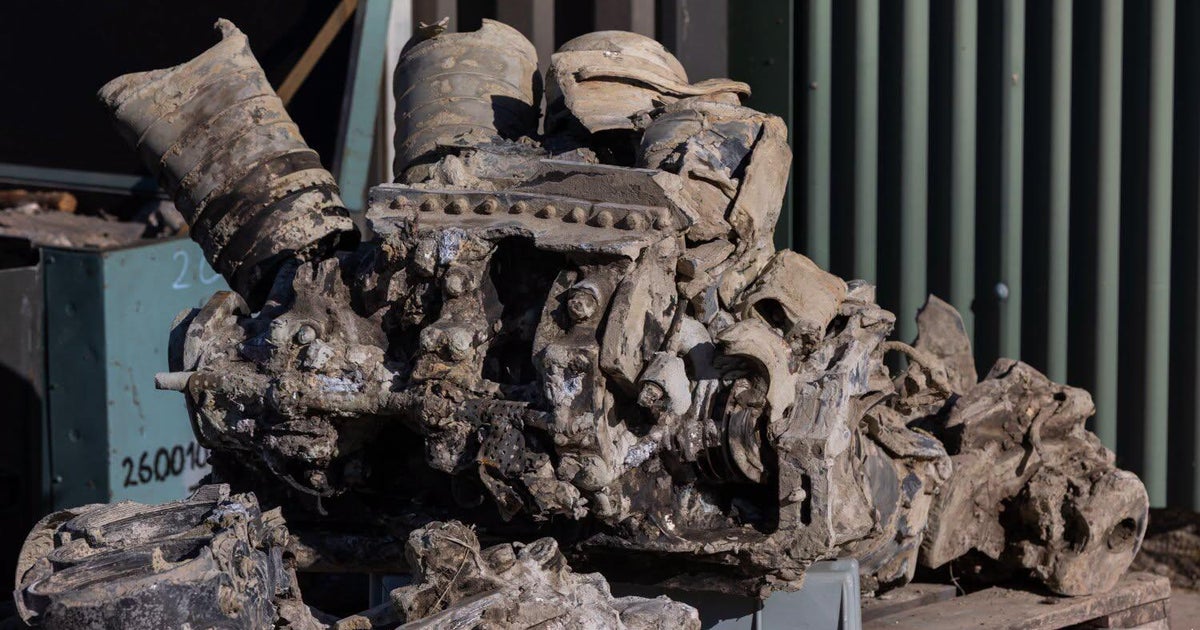
The Hungarian Museum of Military History and the Hungarian Defense Forces announced the discovery of a Soviet Yakovlev Yak-1 fighter aircraft wreckage in the village of Törtel. Excavators recovered the aircraft, which was buried approximately 17 feet underground, about 50 miles southeast of Budapest. The find followed a monthslong investigation involving archival research and eyewitness interviews led by István Kocsis of the Hungarian Aircraft Wreck Research Association.
Historical records and local media reports identified the aircraft as one piloted by Soviet Guards Lieutenant Alexander Semyonovich Andrianov. The plane was downed in November 1944 during an aerial duel with German Lieutenant Peter Düttmann. While Andrianov successfully deployed his parachute, he was subsequently captured and held as a prisoner of war. The aircraft, constructed from steel tubing, wood, and fabric, shattered upon impact and sank into the area's loose soil over the following eight decades.
Archaeologists utilized a "block lifting" technique to recover the debris, using heavy machinery to remove large sections of earth for careful, layer-by-layer clearing. This method allowed researchers to preserve fragile components, including pieces of the plane's fabric covering and a portion of its red star insignia. The team also recovered the engine serial number and construction identification, which confirmed the plane belonged to Andrianov. Personal items belonging to the pilot were also found, including a compass and a book containing his signature, which museum experts are currently working to restore.
The find is also significant for aviation historians due to the rare preservation of Yak-1 components. Because these aircraft were built with wood and fabric, large-scale discoveries of this type are infrequent. The recovery effort involved members of the Hungarian Defense Forces and the Hungarian Aircraft Wreck Research Association, who used specialized archaeological techniques to ensure that deformed parts were not further damaged during extraction.
The best-preserved sections of the aircraft, including the fuselage displaying the side number, will be prepared for public exhibition at the Military History Museum in Budapest. Museum officials stated that the archaeology department must first complete restoration procedures and log all observational records. Other portions of the wreckage will be moved to archives for continued study. No specific date for the opening of the public exhibit was reported.