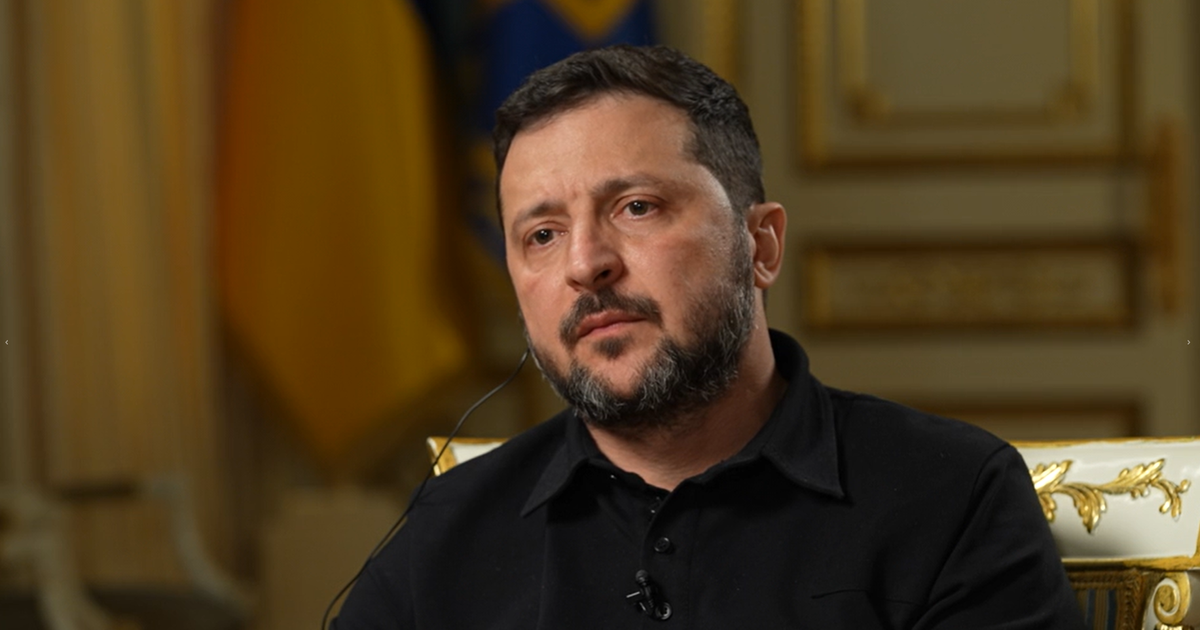
Ukrainian President Volodymyr Zelenskyy stated in a Tuesday interview with CBS News that his presidential aircraft was targeted by drones twice in recent weeks. The incidents occurred during travel involving Moldova, including an encounter while departing for a visit to Norway and a second incident during his return flight.
Norwegian Prime Minister Jonas Gahr Store previously stated that Zelenskyy’s plane was nearly hit by a drone in Moldovan airspace on September 9 as the president traveled to Oslo. Zelenskyy identified these actions as part of a Russian strategy to intimidate him and other international leaders.
In the Tuesday interview, Zelenskyy said that one or two drones entered Moldovan airspace during his return trip to Ukraine. Additionally, he discussed a Sunday strike where a Russian drone hit a passenger train carrying a delegation of foreign dignitaries, including former CIA Director David Petraeus and senior European officials. The delegation was forced to evacuate near the Polish border; Zelenskyy stated his belief that the strike was intentional despite the presence of foreign officials.
Related aerial incidents have been reported across the region in recent months. NATO fighter jets shot down a drone in Lithuanian airspace on Tuesday, an event Lithuanian military officials described as the first of its kind in that country. While some unidentified drones in European airspace have been traced to Russia, Ukrainian officials noted they were initially unsure if the specific incidents involving the presidential plane were intentional before Zelenskyy’s latest assessment.
The impact is felt by the personnel on the ground, such as the delegation forced to evacuate a train near the Polish border. For the general public in neighboring countries like Moldova and Lithuania, these incidents translate into increased military activity, including the deployment of NATO jets to intercept drones in Lithuanian airspace.
The entry of drones into the airspace of non-combatant nations like Moldova and NATO members like Lithuania could lead to changes in international engagement rules and regional defense. As Zelenskyy maintains that these actions are a deliberate intimidation tactic, the immediate focus remains on the safety of diplomatic transit. The ongoing nature of these aerial encounters suggests that regional military alerts will continue.