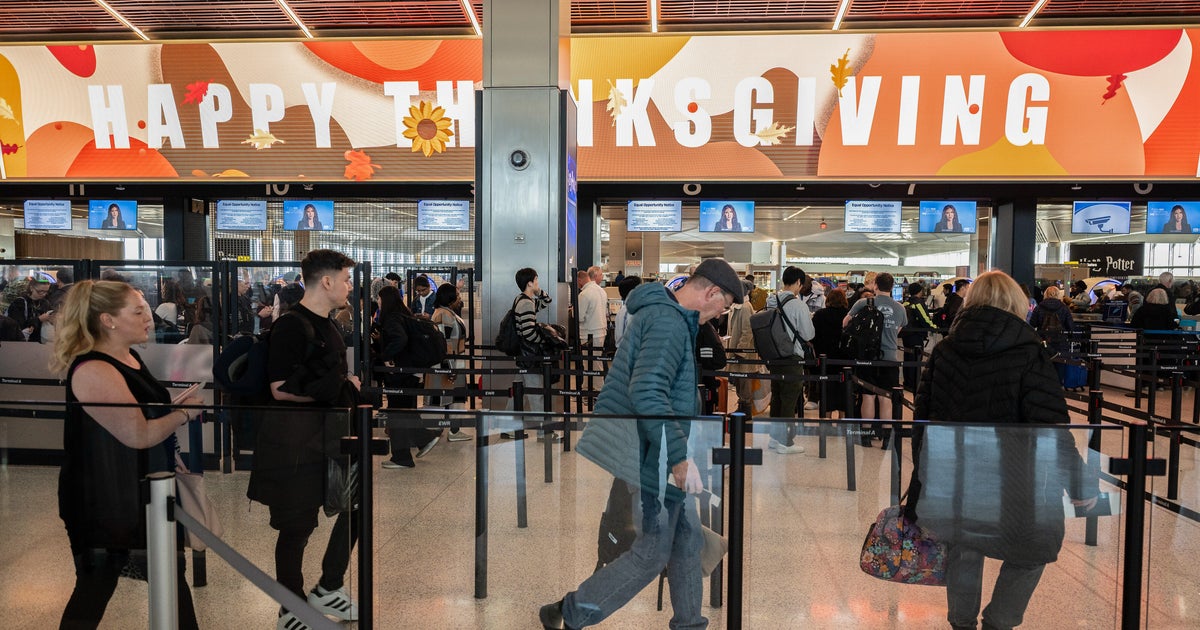
AAA, an auto club federation, reported on Monday that travel for the upcoming Thanksgiving holiday is expected to decline by approximately one-tenth of a percent compared to last year. The organization's annual forecast predicted that 81.5 million people will travel at least 50 miles from home between the Tuesday before Thanksgiving and the following Monday. This projected drop of roughly 121,000 travelers would end a three-year period of record-setting holiday travel that followed the COVID-19 pandemic.
The anticipated decrease is attributed to higher travel costs, specifically regarding gasoline and airfare. According to AAA, regular gasoline averaged $3.82 a gallon on Sunday, an increase from $3.08 one year earlier. The organization noted that if these prices remain steady, gasoline could reach a record high for Thanksgiving Day, surpassing the previous record of $3.58 set in 2022. Additionally, AAA reported that round-trip domestic flights booked through its service were 17% more expensive than last year, averaging $800 per ticket.
While overall travel is expected to dip, different modes of transportation show varying trends. AAA expects nearly 6 million people to fly during the holiday period, a decrease of about 12,000 from the previous year. In contrast, the use of buses, trains, and cruise ships is expected to increase by 4%. For those traveling by car, rental company Hertz identified Orlando, Phoenix, Las Vegas, Atlanta, and Denver as the cities with the highest demand for vehicle pickups on the Tuesday and Wednesday before the holiday.
Transportation officials addressed recent disruptions, including a four-hour nationwide ground stop caused by air traffic control communication and radar issues on a recent Friday. Transportation Secretary Sean Duffy and Federal Aviation Administrator Bryan Bedford stated they expect air traffic to return to normal before the Thanksgiving rush. AAA spokesperson Aixa Diaz said the organization does not anticipate the ground stop will significantly impact holiday travel unless the technical issues recur.
The travel shift reflects broader economic factors, including jet fuel prices that rose during a U.S. war with Iran and general inflation. While the 0.1% decline in travelers is a small fraction of the total 81.5 million people moving, it marks a reversal of the post-pandemic growth trend. Travelers using air transport will notice higher ticket prices and increased fees for checked bags, while those opting for alternative transportation like buses or trains will be part of a group that is 4% larger than last year, potentially leading to fuller cabins on those services.
Looking ahead, the busiest travel days for those renting cars are expected to be the Tuesday and Wednesday before Thanksgiving. The holiday travel period defined by AAA runs from Tuesday through Monday. While airlines and government officials expect operations to be normalized, aviation analytics firm Cirium noted that overall flight bookings were already trailing last year's figures by 1.6% as of late October. The actual impact on highway congestion and airport security lines will be determined by whether these price-driven forecasts align with real-world turnout during the final week of November.