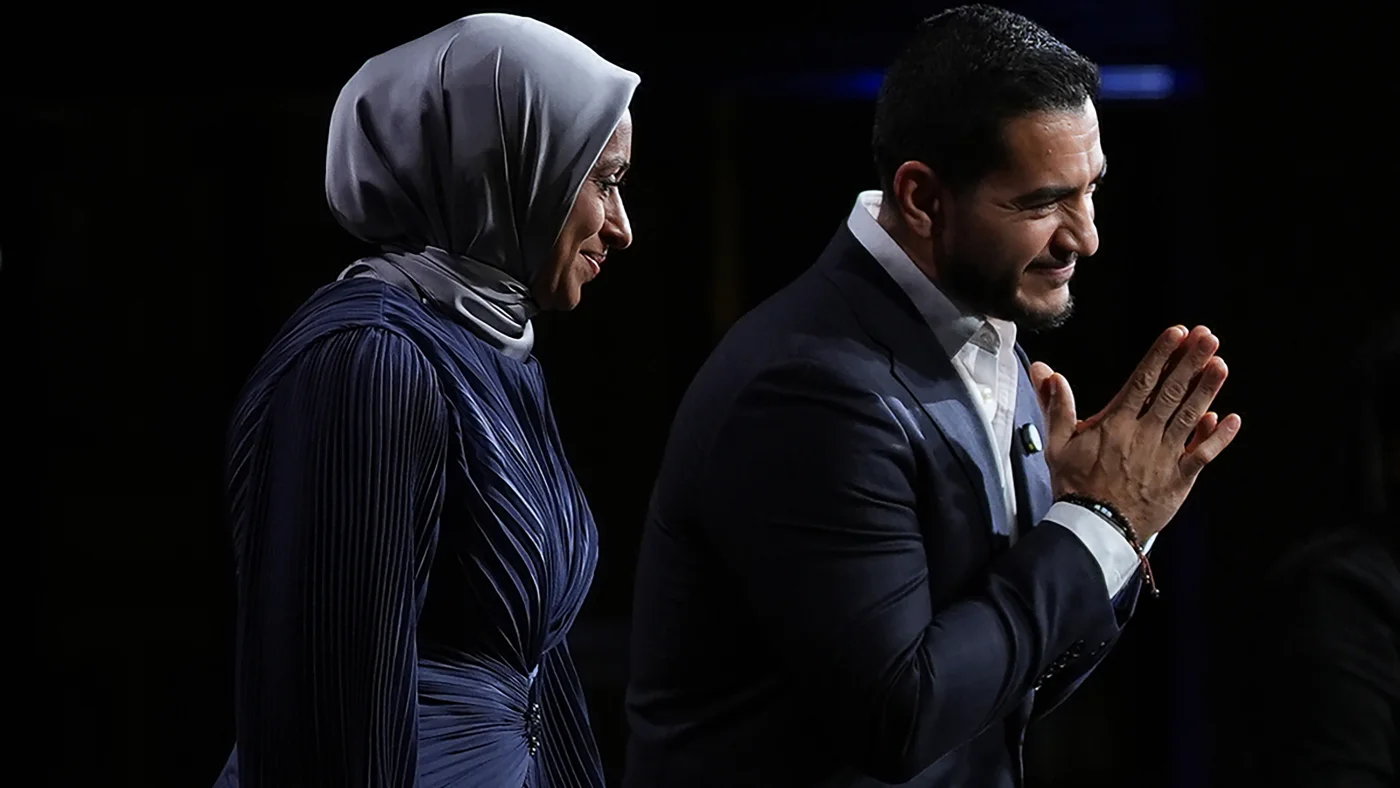
Sen.-elect Abdul El-Sayed (D-MI) stated he supports a proposal by President Trump to end U.S. military aid to Israel following his election victory on Tuesday, November 3, 2026. El-Sayed, who defeated Republican Mike Rogers, will become the first Muslim member of the U.S. Senate as his party takes control of Congress.
The election followed a campaign where military aid and the conflict in Gaza served as central issues. El-Sayed, a 42-year-old former public health official, ran on a platform of Medicare for All, removing corporate money from politics, and reducing consumer costs. During the campaign, Rogers, who had the endorsement of President Trump, criticized El-Sayed for his opposition to Israel's military funding and his Muslim faith.
President Trump has announced his intent to terminate approximately $4 billion in annual military aid to Israel by the end of 2026, though specific implementation details have not been released. In an interview following his win, El-Sayed called the president's policy right but argued for further action, specifically calling for an end to arms sales. He stated the weaponry is being used for "genocide and apartheid" in Israel.
Beyond the specific policy regarding Israel, El-Sayed questioned the necessity of U.S. military support for other nations, including Egypt, Saudi Arabia, Jordan, and Pakistan. The senator-elect argued that tax revenue currently directed toward international military aid should instead be allocated to domestic spending.
For the American public, the scale involves roughly $4 billion in annual federal spending, which El-Sayed argues should be redirected toward domestic programs. While the specific per-household impact was not calculated in the report, the policy shift indicates a potential reallocation of federal resources that could affect domestic health or infrastructure budgets. Furthermore, El-Sayed's position on ending military aid to Jordan, Egypt, and Saudi Arabia suggests a broader legislative effort to reconsider billions of dollars in foreign assistance.
The immediate impact will be felt in the U.S. Senate, where El-Sayed joins a new Democratic majority. While he and President Trump share a stated goal of ending aid, their motivations and ultimate objectives for the region differ. Days before the election, Rep. Haley Stevens, whom El-Sayed defeated in the primary, endorsed his Republican opponent due to disputes over Israel. What happens next depends on the specific details of the president's plan, which have not yet been provided, and whether the incoming Congress moves to formalize these cuts or stop arms sales before the current aid agreement expires in 2028.