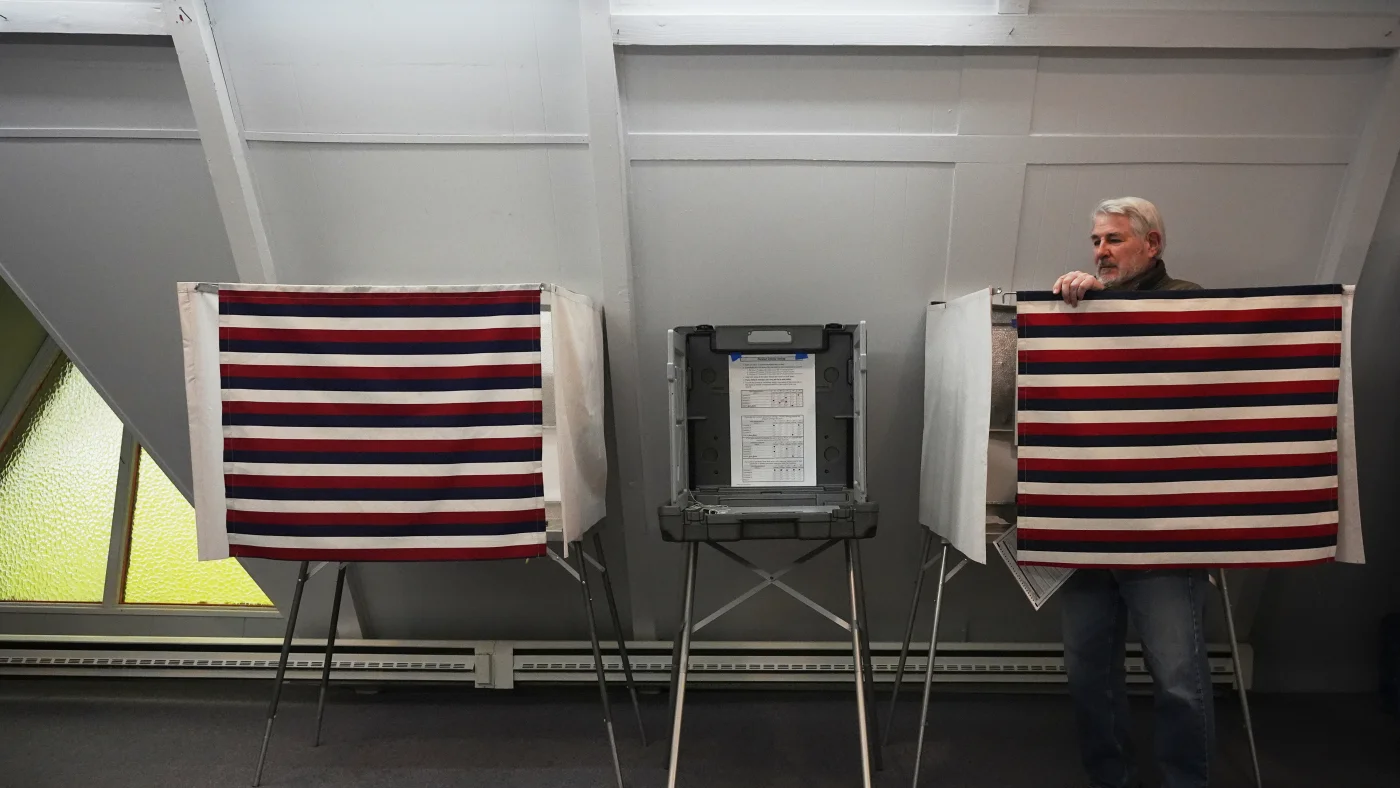
Alaska voters rejected a ballot measure that would have repealed the state's nonpartisan primary and ranked-choice voting system. The Associated Press called the race after results showed the repeal effort failed.
This marks the second time Alaskans have voted to maintain the election format since its initial approval in 2020. A previous repeal attempt in 2024 also failed by a narrow margin. The system remains one of only a few in the United States that allows voters of all affiliations to participate in a single primary.
Under the current rules, the top four candidates from the primary advance to the general election regardless of party. If no candidate receives a majority of the general election vote, ranked-choice tabulation is used to determine the winner. This year, the system faced scrutiny during a U.S. Senate race featuring two candidates with the same name, Dan Sullivan, which appears likely to proceed to a ranked-choice count.
Opponents of the system argued that the process is confusing and subject to manipulation. They pointed to the Senate race, where an independent candidate named Dan Sullivan was alleged to be a Democratic-backed spoiler recruited to siphon votes from the Republican incumbent of the same name. Democrats denied recruitment allegations. Proponents, such as Nick Troiano of Unite America, stated that the system provides voters the freedom to choose any candidate regardless of party.
The outcome maintains a unique legal precedent in Alaska that differs from most other states. While California and Washington use "top-two" systems, Alaska remains the only state mentioned using a "top-four" model combined with ranked-choice voting. This year, voters in Massachusetts rejected a move toward a top-two system, and in 2024, voters in several other states rejected similar nonpartisan primary measures, leaving Alaska's system as a distinct outlier in national election policy.
The immediate next step involves the state's Division of Elections conducting the ranked-choice tabulation for races where no candidate secured more than 50% of the initial vote, including the U.S. Senate contest. The source did not report the specific date for when these final tabulations will be completed or when the election results will be officially certified.