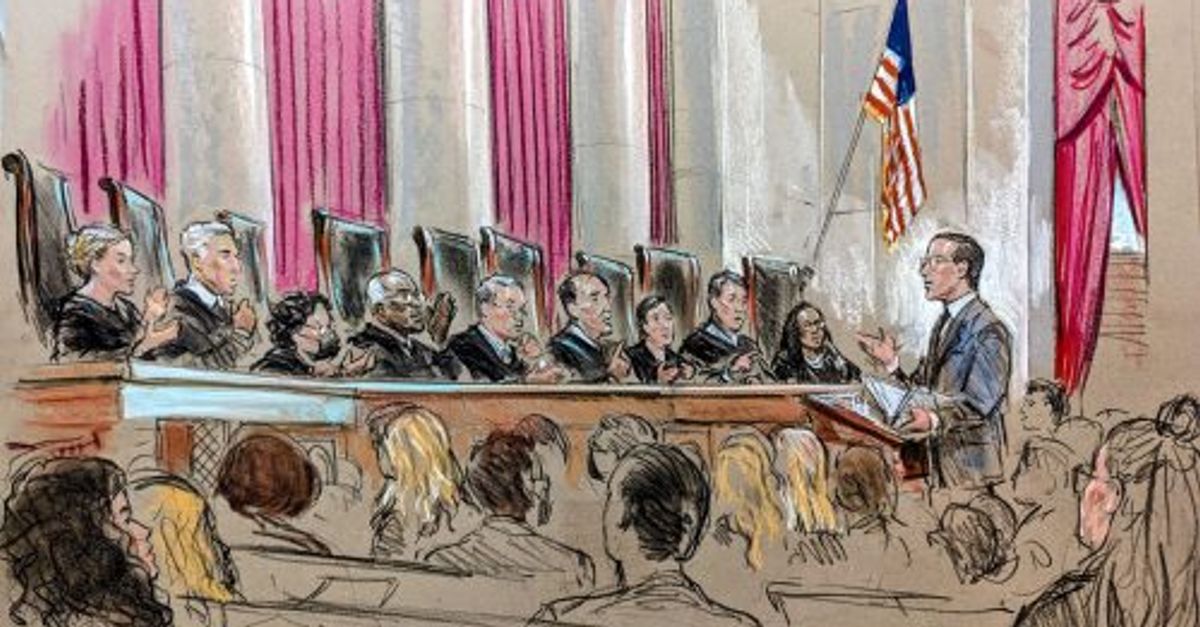
An analysis of Supreme Court emergency docket decisions published on November 24, 2026, found that individual justices support federal executive positions at varying rates depending on the administration in power. The study reviewed 106 substantive decisions involving federal executive actions from 2017 through November 12, 2026, spanning the first Trump administration, the Biden administration, and the second Trump administration.
The data indicates that Chief Justice John Roberts maintains the most consistent record across different presidencies, siding with the federal executive in roughly 72% to 74% of cases regardless of the president's party. In contrast, Justices Clarence Thomas and Samuel Alito supported the executive in 92% of eligible decisions during the second Trump administration, compared to 39% and 47% respectively during the Biden administration. The court’s three liberal justices showed an inverse pattern, supporting Biden’s executive positions in 88% to 94% of cases but siding with the second Trump administration in 24% or fewer.
The analysis highlighted that even within the conservative majority, justices often diverge based on the specific legal issue, such as immigration, public health, or personnel removal. For instance, in June 2026, Roberts and Justice Brett Kavanaugh joined the court's liberal members to prevent President Trump from removing Federal Reserve Governor Lisa Cook. However, in other cases, such as a dispute over medical care for transgender federal prisoners, Thomas and Alito were the only justices to publicly indicate they would have granted the administration's requested relief.
The scale of this judicial activity involves dozens of emergency orders that impact national policy on immigration, federal spending, and agency regulation. For example, during the second Trump administration alone, the court issued 38 distinct substantive decisions on the emergency docket as of November 12, 2026. These rulings can result in the immediate implementation or suspension of federal rules, changing how agencies operate and how federal funds are distributed across all 50 states. While merits cases receive full briefings and arguments, emergency docket decisions often provide the first, and sometimes final, word on high-stakes executive actions.
What happens next depends on the specific timelines of pending litigation, as emergency orders typically remain in place while lower courts continue to hear the full merits of a case. The analysis noted that coalitional shifts continue to occur, as seen in the December 2 scheduled oral argument for Khaya v. Cook County, a major Second Amendment case. Observers will continue to monitor the emergency docket for indications of how the court’s varying ideological alignments will resolve upcoming disputes over federal research grants, agency personnel, and environmental regulations.