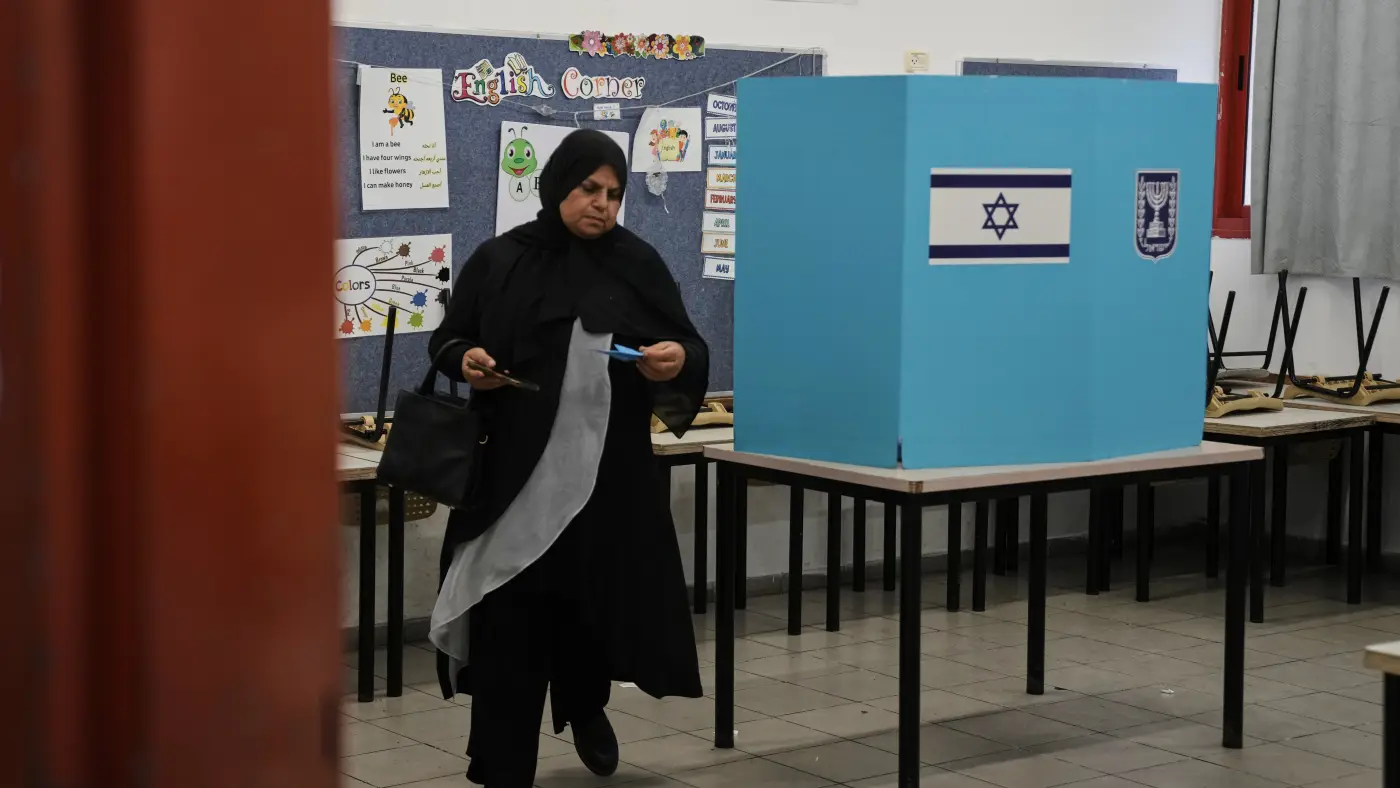
Israeli election results show that neither Prime Minister Benjamin Netanyahu’s coalition nor Gadi Eisenkot’s center-right opposition reached the 61-seat threshold required to form a government. Arab-led parties won 19 out of 120 seats in the Knesset, Israel’s parliament, positioning them as a decisive factor in upcoming coalition negotiations. The Central Elections Committee reported a 64% increase in votes for Arab-led parties compared to the previous election.
The surge in turnout follows a period where many Palestinian citizens of Israel—who make up approximately 20% of the population—shunned elections. Jamal Zahalka, chairman of the High Follow-Up Committee, characterized the result as a "historical achievement" that blocked the continuation of the current government. Residents in Palestinian-majority towns like Kufr Qasim cited worsening rights and discrimination since the October 7, 2023, attacks as primary motivations for participating in the October 27, 2026, vote.
During the campaign, Prime Minister Netanyahu and National Security Minister Itamar Ben Gvir characterized the high Arab turnout as an "emergency" and urged Jewish voters to mobilize. Following the release of results, Netanyahu’s Likud party alleged the election was "stolen" through fraud and bribery, though police and election officials stated they found no evidence to support these claims. The head of the elections committee has requested the Shin Bet security service investigate suspected foreign funding used to boost Arab voter turnout, while maintaining that the vote itself was conducted properly.
The 19 seats won by Arab-led parties are split between the socially conservative Islamist Ra'am party and the Joint List alliance, which holds 11 seats. Ra'am campaigned on joining a governing coalition. However, the Joint List has stated it will not formally join a government led by Eisenkot due to the ongoing war in Gaza and the occupation of the West Bank, though it may offer support from the outside. Eisenkot, a former military chief of staff, has previously advocated for the "Dahiyeh doctrine," which involves using disproportionate force against areas where militants operate.
The concrete impact will be felt during the coalition-building period, as any potential prime minister must negotiate with Arab-led parties to reach a majority. If a deal is struck, Palestinian citizens could see changes in how their communities are policed and funded. Conversely, if no agreement is reached, the country faces a repeat election next year. The result shows that high minority turnout can effectively strip a governing coalition of its majority.
President Isaac Herzog began consulting with party leaders following the October 27 vote and is expected to grant a mandate to form a government soon. The chosen candidate will have 28 days, with a possible two-week extension, to secure a majority. If the first candidate fails, a second candidate will be given 28 days without the possibility of an extension. Failure by both candidates would trigger a new general election.