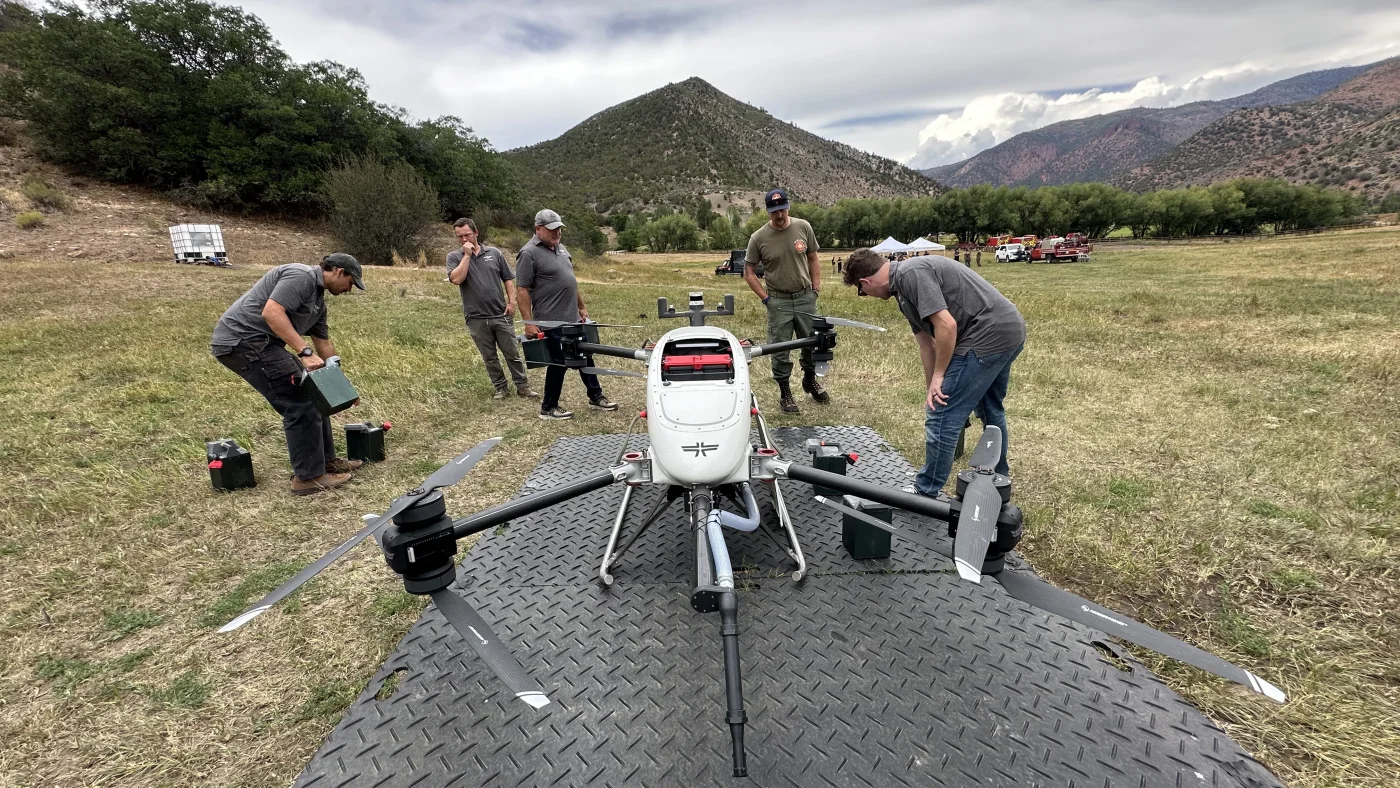
The Aspen Fire Protection District in Colorado is training to use new artificial intelligence-enabled drones designed to assist in extinguishing wildfires. The district is currently working with California-based manufacturer Seneca to test the 10-by-12-foot machines, which can carry fire-suppressing foam and water to remote areas.
Firefighters have used drones for monitoring purposes for decades, but this technology represents a shift toward using autonomous systems for active suppression. While the drones have previously been utilized on prescribed burns in California with manufacturer support, the program in Aspen would make the district the first fire department to operate the drones independently.
The drones utilize an AI-supported sensor suite to calculate wind speed and distance, allowing them to release retardant at specific angles and velocities. Seneca founder Stuart Landesberg stated that five drones working in a swarm can carry between 500 and 1,000 gallons of finished fire foam. The devices have a range of 5 to 10 miles while carrying a load, which Landesberg stated can be doubled when the drones are empty.
Firefighters and emergency responders would see a change in how they address remote fires, particularly those started by lightning in treacherous terrain. If the technology functions as intended, the drones could be deployed to smoldering spots before ground crews arrive, potentially reducing the physical risk to personnel who currently fly helicopters and air tankers. Joe Stutler, a veteran incident commander, noted that drones could operate during overnight hours when manned aircraft are typically grounded.
The success or failure of this program will set a precedent for other fire departments considering similar investments in the technology. Currently, the Federal Aviation Administration (FAA) has granted a waiver allowing flights up to 200 feet, provided a human observer maintains a line of sight at all times. The district plans to officially launch the independent program as early as next year, and if effective, they intend to seek expanded FAA waivers to assist with fires across the state of Colorado.