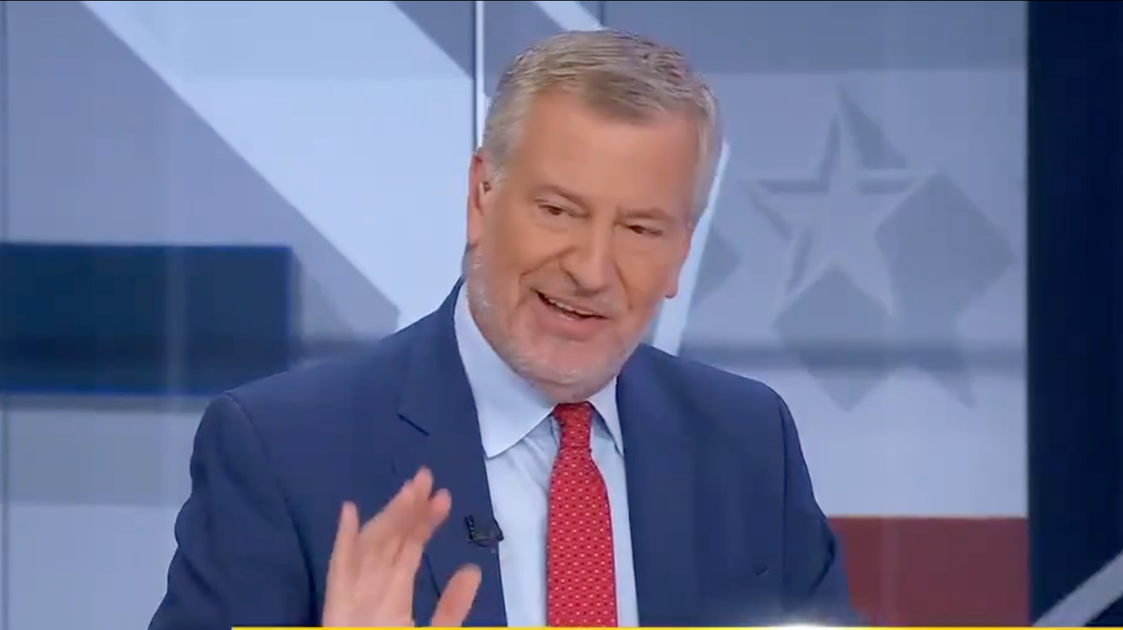
Former New York City Mayor Bill de Blasio (D) told a Fox News election panel on Tuesday night, November 3, 2026, that the network and Republican strategies were "missing the plot" regarding voter motivations. During the live broadcast, de Blasio argued that voters were focused on economic and foreign policy concerns rather than the ideological labels emphasized by other panelists.
The discussion occurred during coverage of the 2026 midterm elections as results showed several losses for Republican candidates. Former White House press secretary Kayleigh McEnany argued on the panel that Republicans like Sen. JD Vance (R-OH), Sen. Marco Rubio (R-FL), or Gov. Ron DeSantis (R-FL) must focus their future campaigns on "making the case against socialism" to succeed in the 2028 presidential election.
De Blasio interjected, stating that voters were instead reacting to a war they "did not authorize," rising prices that affected the middle and working classes, and a lack of access to healthcare. He noted that while some favor "Medicare for All," the immediate issue for voters was the current inability to afford care. De Blasio attributed the Republican losses to a failure to address these practical concerns despite having the opportunity to legislate over the previous year.
The debate expanded to specific races, such as in Michigan, where McEnany noted that voters elected Abdul El-Sayed, whom she described as a "Democratic socialist." De Blasio countered that candidates like El-Sayed and James Talarico won by using a "populist economic message" centered on the idea that the economy is "rigged" by billionaires. He cited Elon Musk, who spent nearly $500 million supporting Republicans in the 2026 midterms, as an example of the concentration of power that he claimed resonated as an issue with Republican and Independent voters.
The midterm results determine the balance of power in the U.S. Congress, dictating the legislative agenda for the next two years. The next major steps include the seating of the newly elected members of Congress in January 2027 and subsequent committee assignments that will govern national policy.