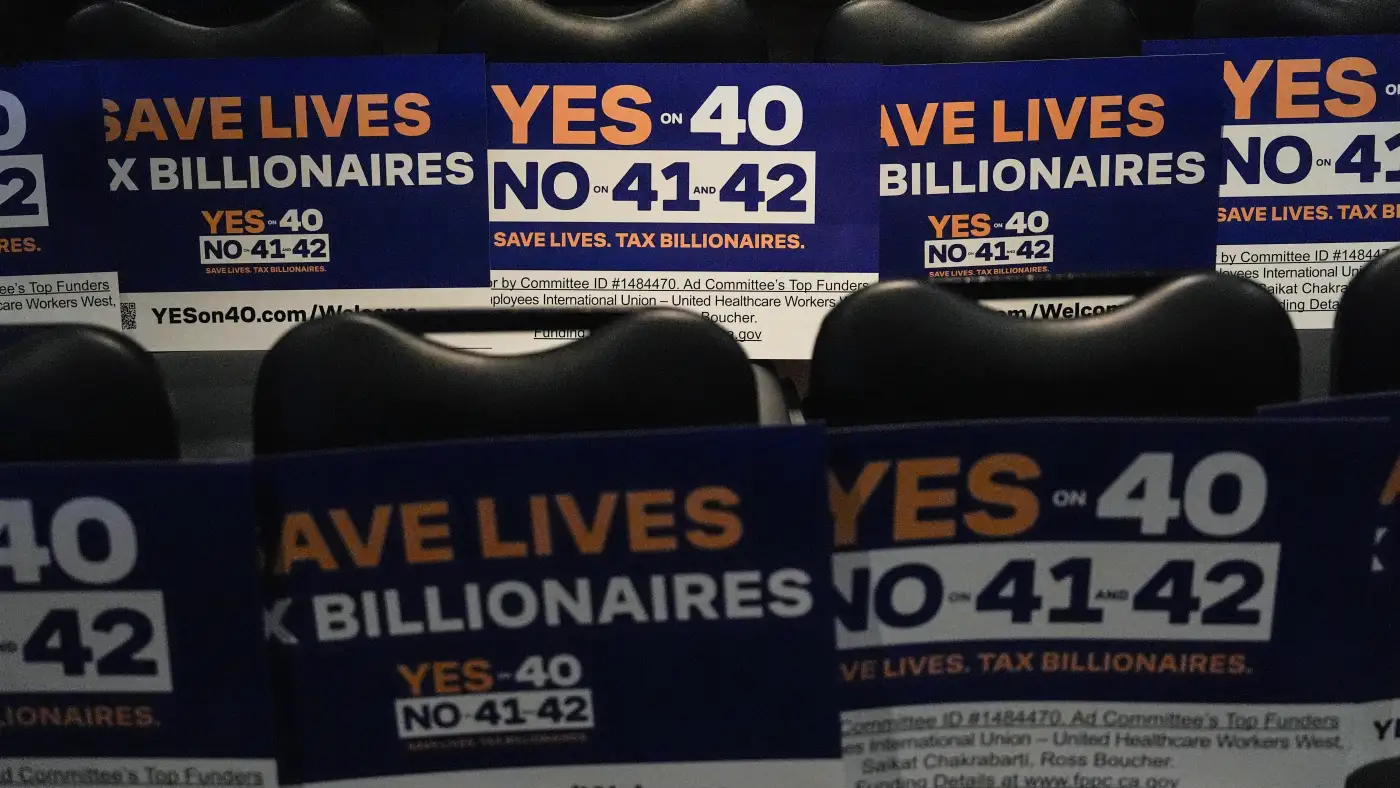
California voters rejected Proposition 40, a ballot initiative that would have imposed a one-time 5% tax on residents with a net worth exceeding $1 billion. With approximately 83% of the votes counted, the Associated Press called the race on November 9, 2026, reporting that 52.8% of voters opposed the measure compared to 47.2% in favor.
The proposal sought to tax the overall wealth of billionaires, including company ownership, but excluding real estate and certain retirement assets. Supporters, led by the SEIU Healthcare Workers West union, argued the revenue was necessary to offset federal healthcare funding cuts enacted in 2025. Opponents, including Governor Gavin Newsom (D), argued the tax would encourage wealthy residents to leave California, potentially reducing tax revenue.
The campaign saw record-breaking spending for a California tax measure. A coalition of opponents, including Google co-founders Sergey Brin and Larry Page, raised over $250 million through the group Building a Better California as of October 28. This spending was at least five times the amount spent by proponents. While the California Democratic Party and Sen. Bernie Sanders (I-VT) endorsed the tax, other Democrats including Governor Newsom and former Rep. Katie Porter opposed it.
The rejection of Proposition 40 affects the funding levels for state-run public services. If passed, 90% of the revenue was earmarked for healthcare programs, including emergency rooms, clinics, and Medi-Cal—California's version of Medicaid which provides health coverage for low-income residents. The remaining 10% was designated for education, food assistance, and tax administration.
Beyond California, the vote serves as a signifier for national policy debates regarding wealth taxation. Additionally, because voters rejected Proposition 40, two secondary measures—Propositions 41 and 42—which were designed to block or limit the wealth tax, are impacted. The results are expected to be certified following the completion of the vote count.