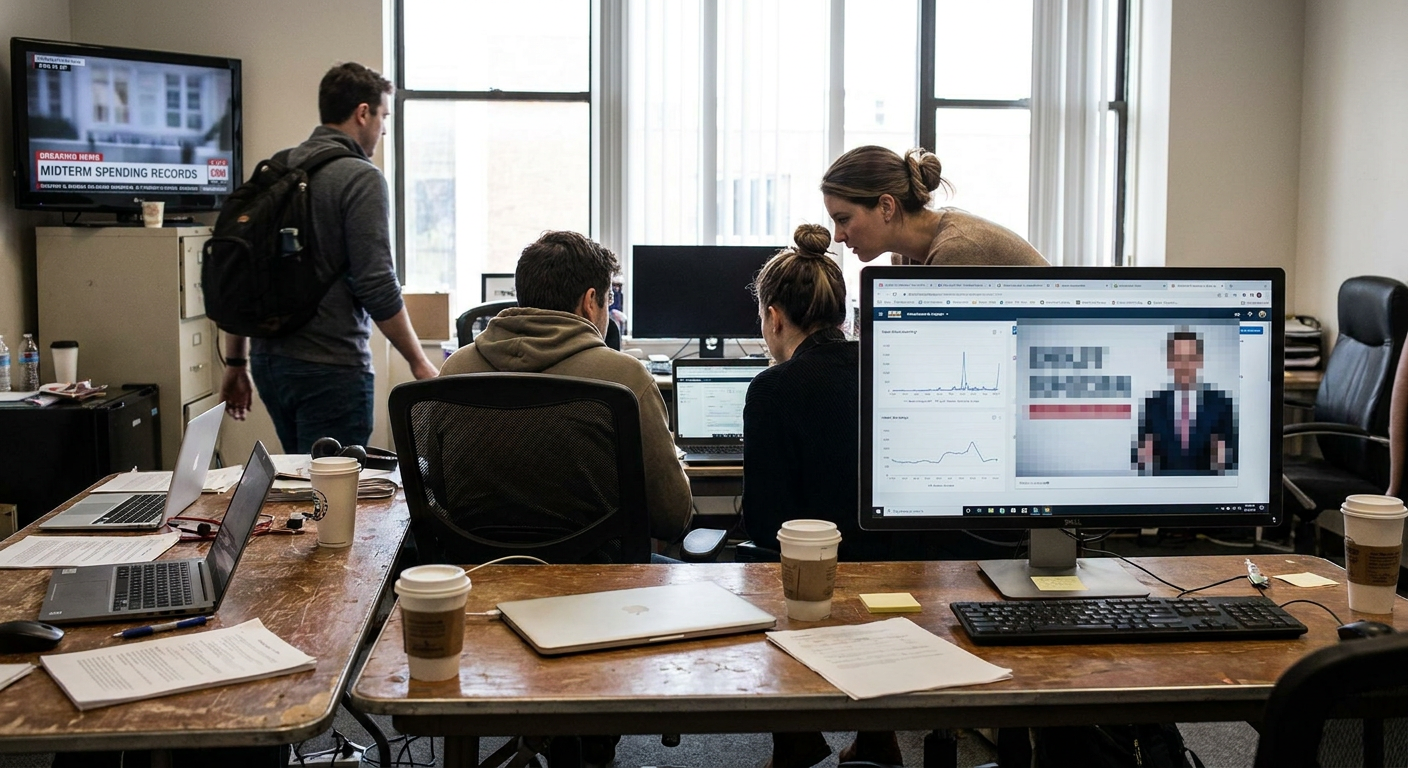
Political campaigns spent at least $187 million on advertisements generated or enhanced by artificial intelligence (AI) during the recent midterm election cycle, according to data from the nonpartisan Wesleyan Media Project. While these advertisements did not appear to change the overall outcomes of the elections, strategists and researchers reported that the data collected during this period will likely be used to target specific audiences in future cycles.
The use of AI in this cycle included the creation of deepfakes, which are digitally altered or generated videos that can depict real individuals saying or doing things they did not. In New York, Republican gubernatorial candidate Bruce Blakeman paid for a campaign ad featuring an AI-generated avatar of Democratic Governor Kathy Hochul. The ad included a disclaimer but depicted the governor stating she had provided "luxury accommodations for illegal migrants" and asking voters to "keep [New York] unsafe and unaffordable." Hochul won the election by approximately 20 percentage points.
Data indicates that more than 90% of the millions spent on AI-enhanced advertising supported Republican candidates, many of whom were defeated. Democratic strategist Basil Smikle stated that despite these results, campaigns are likely to continue using the technology because it allows for the production of high-impact content at a faster pace than traditional live-action video. Republican strategist Brian Ruddle noted that the technology provides a lower-cost alternative for candidates with limited budgets who cannot afford professional television production companies.
For the average consumer of political content, the increasing sophistication of AI may change how they perceive digital evidence. Ruddle noted that as the technology improves, it may become harder for voters to distinguish between real and fabricated content, leading some people to believe that genuine footage is actually fake. This could impact how voters evaluate candidate statements, news reports, and social media posts during future election cycles. The shift toward AI production also changes the financial landscape for candidates, potentially allowing those with fewer donors to compete with better-funded opponents by using cheaper digital tools instead of traditional film crews.
The knock-on effects of this cycle include the accumulation of vast amounts of voter data that AI companies will use to refine future messaging. As these systems learn from how individuals interacted with AI ads in 2026, future campaigns will be able to deploy even more precise messaging to specific demographics or neighborhoods. What happens next involves the preparation for the next election cycle, where strategists expect AI use to expand. While some voters, like Steve Geller of Sacramento, have expressed concerns about the societal impact of allowing such technology in elections, there are currently no reported deadlines for new federal regulations that would prohibit its use.