The Plain Record

Neutral daily news — clear headlines, complete facts.

World

China develops humanoid robots for industrial and domestic use in Wuhan center

The Hubei Humanoid Robotics Innovation Center is using thousands of data iterations to train robots for use in homes, factories, and healthcare facilities.

Published November 18, 2026 at 11:21 AM EST

The short answer

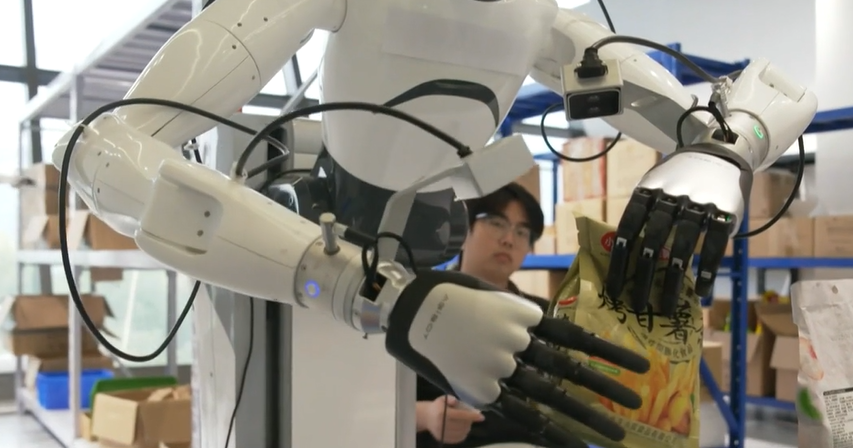
The Hubei Humanoid Robotics Innovation Center is using thousands of data iterations to train robots for use in homes, factories, and healthcare facilities. Researchers at the Hubei Humanoid Robotics Innovation Center in Wuhan, China, are developing humanoid robots intended for use in domestic and industrial environments.

China develops humanoid robots for industrial and domestic use in Wuhan center

The Facts

Who
Professor Jiyin Cao, engineering graduates, and the Hubei Humanoid Robotics Innovation Center.
What
Development and training of humanoid robots for domestic and industrial use.
When
Not reported; the source describes ongoing development at the Hubei Humanoid Robotics Innovation Center.
Where
Wuhan, China
Why
China seeks to address a shrinking, aging population by integrating robots into labor-intensive sectors like manufacturing and healthcare.

Researchers at the Hubei Humanoid Robotics Innovation Center in Wuhan, China, are developing humanoid robots intended for use in domestic and industrial environments. The facility employs more than 100 computer science and engineering graduates who record physical movements to create data sets for training robot models.

The center’s work is part of a broader national effort to integrate robotics into labor-intensive sectors such as manufacturing, logistics, retail, and healthcare. This initiative follows demographic shifts in China, where the population is both aging and shrinking. Professor Jiyin Cao, who manages the center, stated that China’s manufacturing system and robotics supply chain provide a competitive advantage in this field.

To train the robots, graduates wear gloves and outfits equipped with motion and tactile sensors while cameras record them performing repetitive tasks. These actions include pouring water, sorting cutlery, and replacing batteries in flashlights. One intern reported that a single motion, such as pouring water, may require hundreds or thousands of recorded iterations to properly train a robot's model.

For the average household, this technology represents a shift in daily labor. Residents might eventually see robots performing chores in "unstructured" home environments, though Jiyin Cao noted that the complexity of individual homes makes the timeline uncertain. A person might see these robots in their home in as few as three to five years, or it could take up to 10 years. In the shorter term, these machines are expected to appear in factory workshops, nuclear energy sites, and elderly care facilities to assist with labor shortages.

The knock-on effects include a potential transformation of the global manufacturing and logistics markets as China leverages its full supply chain for robotics. If successful, these robots will serve as personal assistants and industrial tools, setting a precedent for how nations manage aging workforces through automation. What happens next depends on the speed of model training and data gathering; while some developers predict robot soldiers could be 5 to 10 years away, the integration into complex home settings remains the current technical hurdle. No specific legislation or effective dates for consumer availability were reported.

Summaries are written by The Plain Record to state the facts of a story plainly and without political slant. Drafted with AI assistance and checked against the source record before publication. See how we report, or report a correction.

← Back to the front page

Questions readers ask

What happened: China develops humanoid robots for industrial and domestic use in Wuhan center?

Researchers at the Hubei Humanoid Robotics Innovation Center in Wuhan, China, are developing humanoid robots intended for use in domestic and industrial environments. The facility employs more than 100 computer science and engineering graduates who record physical movements to create data sets for training robot models.

Who is involved?

Professor Jiyin Cao, engineering graduates, and the Hubei Humanoid Robotics Innovation Center.

When did this happen?

Not reported; the source describes ongoing development at the Hubei Humanoid Robotics Innovation Center.

Where did this happen?

Wuhan, China

Why does this matter?

China seeks to address a shrinking, aging population by integrating robots into labor-intensive sectors like manufacturing and healthcare.