The Plain Record

Neutral daily news — clear headlines, complete facts.

World

China Expands Large-Scale AI Data Center Infrastructure in Inner Mongolia

China is constructing a massive AI data center hub in Inner Mongolia, utilizing 30,000 workers and renewable energy to support its goal of global AI leadership.

Published November 12, 2026 at 4:36 PM EST

The short answer

China is constructing a massive AI data center hub in Inner Mongolia, utilizing 30,000 workers and renewable energy to support its goal of global AI leadership.

China Expands Large-Scale AI Data Center Infrastructure in Inner Mongolia

The Facts

Who
The Chinese government, 30,000 workers, and tech firms including Huawei, Alibaba, and ByteDance.
What
Construction of a major AI data center hub in Ulanqab, China.
When
Ongoing as of February 2025.
Where
Ulanqab, Inner Mongolia, China.
Why
To utilize cheap land, labor, and abundant energy to surpass the U.S. in artificial intelligence development.

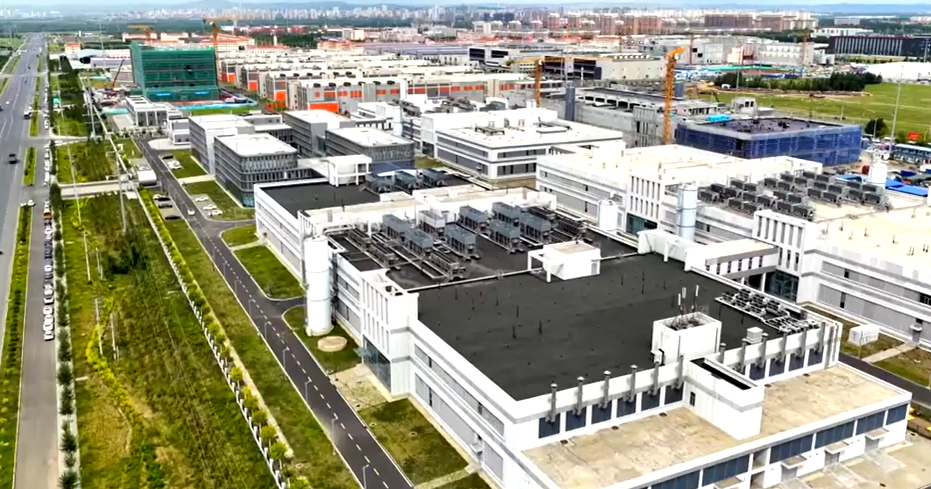
Officials in the Inner Mongolia region of China are overseeing an expansion of artificial intelligence data centers in Ulanqab. The construction project, described as the largest and fastest-growing infrastructure initiative in China, aims to utilize the area's wind power and lower land costs to support the nation's goal of leading the global AI market.

Ulanqab was selected for this development due to its consistent wind, cold climate—which reduces server cooling costs—and the availability of affordable land and labor. While fossil fuels remain the primary power source for the region, the new data centers will also draw electricity from transmission towers linked to wind and solar farms.

According to reports cited by the Financial Times, the cost of building data centers in China is approximately one-fifth of the cost in the United States. The project has employed as many as 30,000 workers brought in from across the country. Major Chinese technology firms, including Huawei, Alibaba, ByteDance, Baidu, Deepseek, Z.ai, ZData, and VNET, are active in the region.

On a global scale, the expansion represents an effort to overcome U.S.-led restrictions on high-end microchip sales. While Chinese AI models are estimated to be six months behind U.S. competitors, Henry Wang of the Center For China and Globalization suggests that China's power generation capacity—which is more than double that of the U.S.—could provide a competitive advantage. The scale of the Ulanqab site is described as being comparable to a small American city, housing racks of servers and semiconductor chips.

The project highlights state-supported infrastructure that prioritizes energy access as a driver for AI development. As the gap in AI model capability narrows, the availability of power is expected to be a factor in the industry's growth. Construction continues across dozens of sites in Inner Mongolia as companies move into finished facilities where avenues are named after the tech firms occupying them. No specific completion date for the entire hub was reported.

Summaries are written by The Plain Record to state the facts of a story plainly and without political slant. Drafted with AI assistance and checked against the source record before publication. See how we report, or report a correction.

← Back to the front page

Questions readers ask

What happened: China Expands Large-Scale AI Data Center Infrastructure in Inner Mongolia?

Officials in the Inner Mongolia region of China are overseeing an expansion of artificial intelligence data centers in Ulanqab. The construction project, described as the largest and fastest-growing infrastructure initiative in China, aims to utilize the area's wind power and lower land costs to support the nation's goal of leading the global AI market.

Who is involved?

The Chinese government, 30,000 workers, and tech firms including Huawei, Alibaba, and ByteDance.

When did this happen?

Ongoing as of February 2025.

Where did this happen?

Ulanqab, Inner Mongolia, China.

Why does this matter?

To utilize cheap land, labor, and abundant energy to surpass the U.S. in artificial intelligence development.