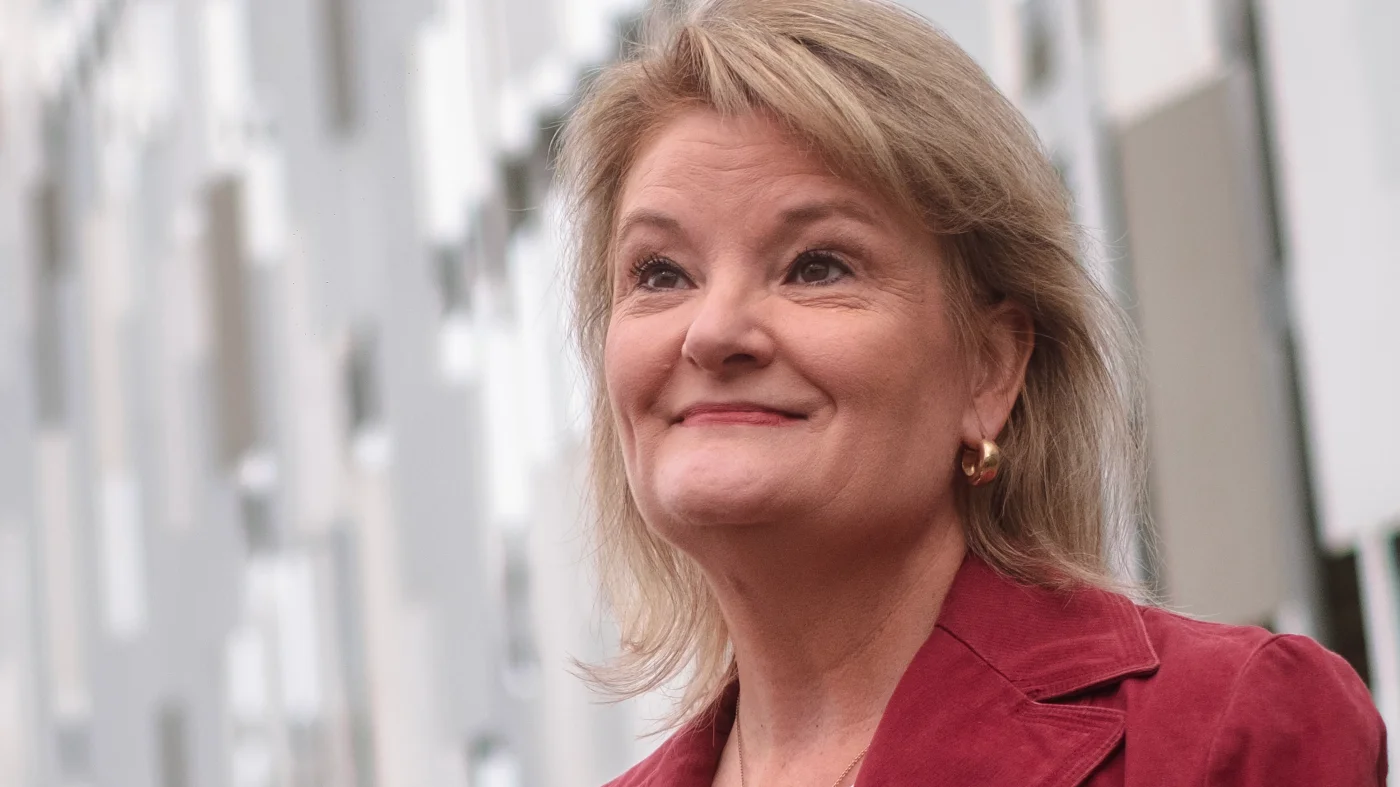
The Associated Press has projected that state Sen. Cindy Holscher (D) won the election for Kansas governor, defeating Republican state Senate President Ty Masterson. The outcome maintains Democratic control of the executive office in a state where Republicans hold a majority in the legislature and frequently win other statewide and presidential contests.
The election results were finalized following several days of counting provisional ballots and local officials conducting recounts. Holscher will succeed Gov. Laura Kelly (D), who was ineligible to run for a third term due to state term-limit laws after eight years in office.
During the campaign, Holscher focused on opposing "sweetheart deals" for billionaires and criticized Masterson's work in the state Senate during the passage of tax cuts under former Gov. Sam Brownback (R), which she linked to past state budget crises. Masterson campaigned on a platform of lower property taxes and said he would be a supporter of agricultural, business, and energy interests. He described Holscher as a socialist, a characterization she dismissed by stating he used labels because that was all he had.
Policy differences between the candidates centered on education and state revenue. Holscher campaigned against school vouchers and called for increased support for public schools, while Masterson supported voucher programs. Additionally, Holscher proposed legalizing cannabis to increase state revenue and suggested a moratorium on the construction of new data centers. Masterson stated that his faith informed his decisions.
The financial scale of the proposed policies includes Holscher’s plan to legalize cannabis, though the specific projected dollar amount for state revenue was not reported. For property owners, Masterson's proposed property tax reductions will not be implemented as presented during his campaign. The policy direction for Kansas remains a divided government, where a Democratic executive serves alongside a Republican-controlled legislature. This structure requires cooperation for any bill to become law without a veto-proof majority.
The next steps for the transition of power involve the certification of votes and the official inauguration. Holscher will then begin a four-year term, during which she will be responsible for submitting the state budget and managing state agencies. New legislative sessions typically begin early in the calendar year, where proposals for cannabis legalization and public school funding will face review by the state Senate and House.