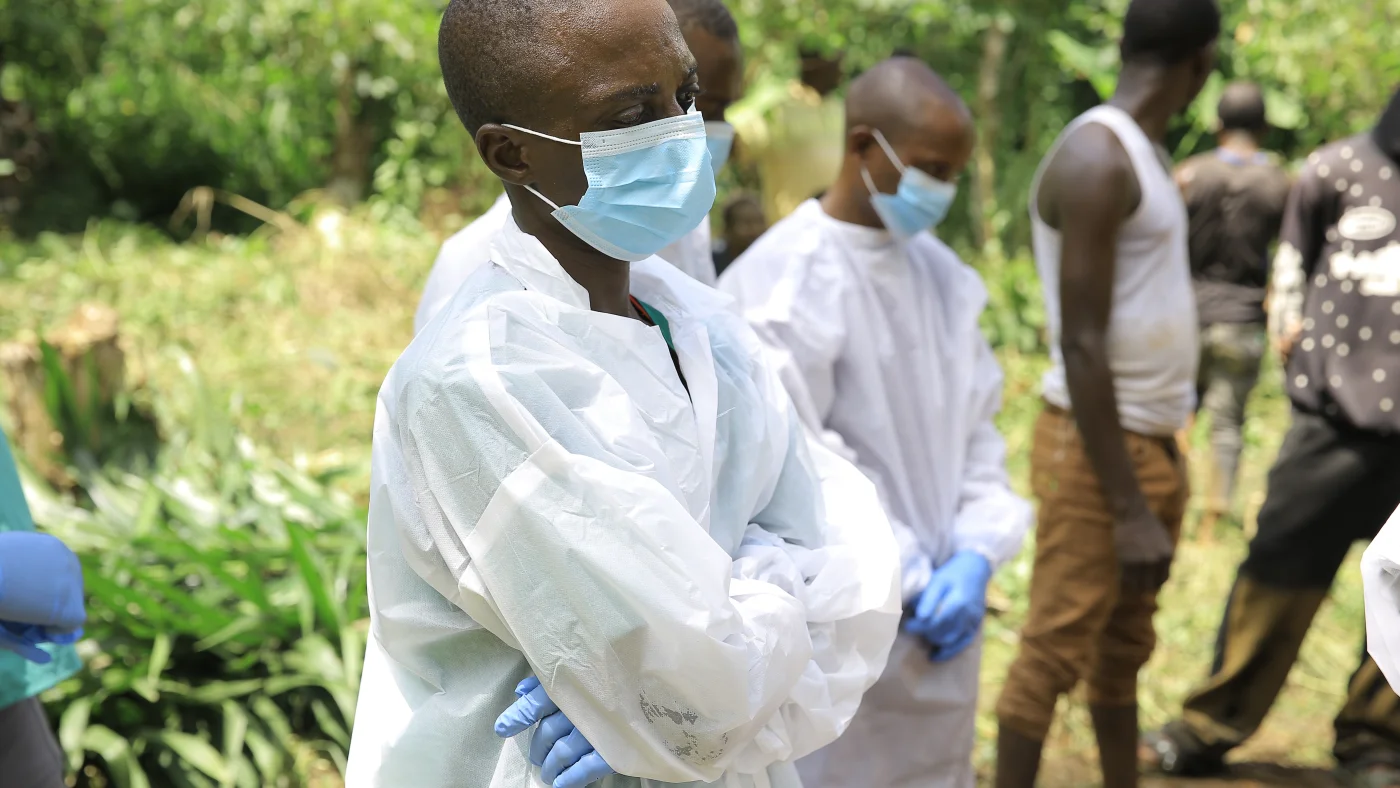
Health officials in the Democratic Republic of the Congo reported Thursday that a current Ebola outbreak has reached 12,021 confirmed cases. The Ministry of Health stated that nearly half of those infected have died, marking this as the deadliest of the country’s 17 recorded outbreaks. Efforts to contain the virus are being hindered by fighting between the Congolese army and rebel forces in the eastern part of the country.
The outbreak, which was first declared in May, is caused by the Bundibugyo virus. Unlike more common strains of Ebola, the Bundibugyo virus currently has no approved vaccine or medical treatment. Response teams have faced multiple challenges in managing the spread, including poor infrastructure, local mistrust of health workers, and ongoing armed conflict.
Recent combat has centered near Iga-Barrière, a mining town located approximately 25 kilometers north of the provincial capital, Bunia. The fighting involves the Congolese army and the Convention pour la révolution populaire (CRP), a rebel group founded by Thomas Lubanga. This conflict has forced residents to flee toward Bunia, which serves as a primary operations hub for international and local health organizations.
Dr. Catherine Smallwood, the Ebola incident manager for the World Health Organization (WHO), stated Wednesday that the violence has prevented teams from reaching certain communities and monitoring individuals exposed to the virus. Smallwood reported that about a dozen health workers, including two WHO personnel, were evacuated to Bunia on Tuesday. The group had been trapped for three days inside a hospital in Akwe due to intense crossfire.
The day-to-day impact for those in the affected areas includes the loss of access to healthcare facilities as staff are evacuated and treatment centers become understaffed. Displaced families moving toward Bunia face increased risks of virus transmission due to the nature of Ebola, which spreads through contact with bodily fluids. The disruption of contact tracing—the process of identifying and monitoring those exposed to the virus—increases the likelihood that new chains of transmission will go undetected.
The ongoing conflict creates challenges for health emergencies, as medical responders must navigate a landscape with over 100 active armed groups. What happens next depends on the security situation in Ituri province; health teams cannot resume full monitoring or treatment activities until the fighting between the army and CRP rebels subsides. No specific dates for a ceasefire or the deployment of experimental treatments were reported by the Ministry of Health or the WHO.