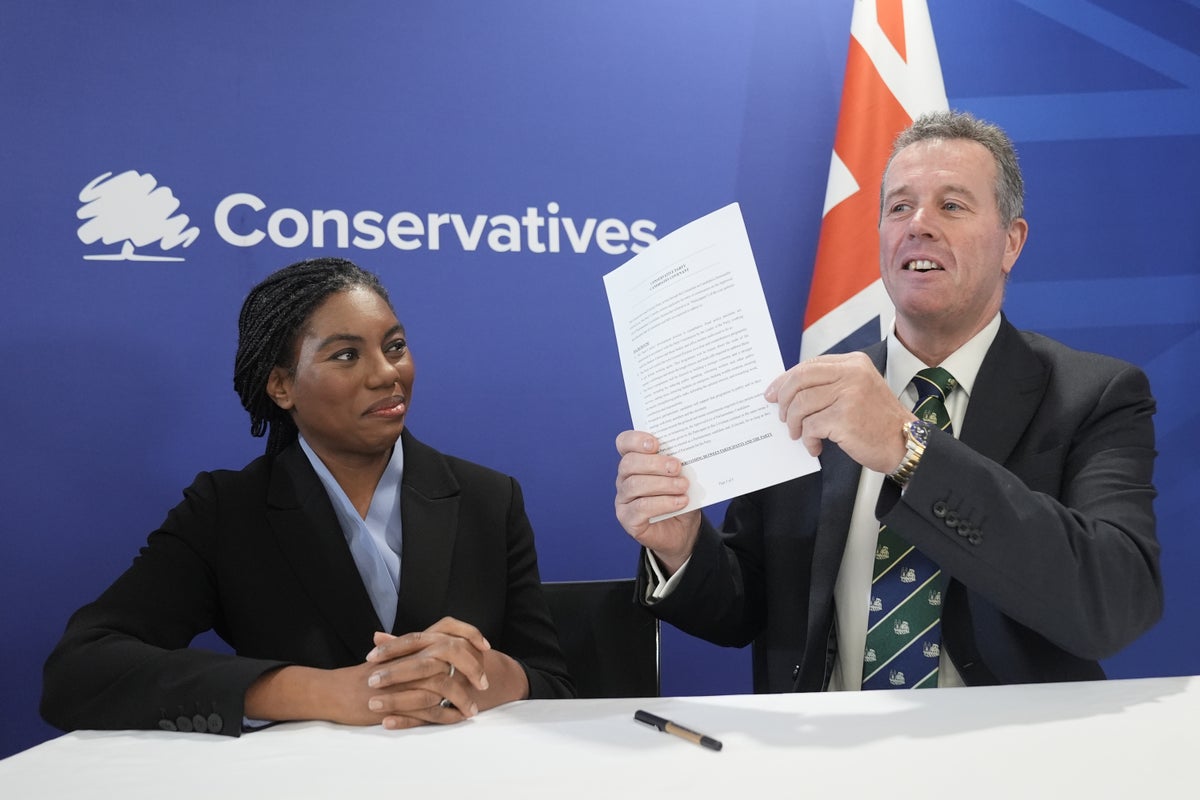
Conservative Party leader Kemi Badenoch announced on Friday, November 27, 2026, that all party candidates for the next general election must formally commit to two specific policies. These requirements, part of a new "candidate covenant," include support for Britain leaving the European Convention on Human Rights (ECHR) and the repeal of the net zero emissions target by 2050.
The move marks a shift from previous Conservative government policy, which had established the net zero target and maintained membership in the ECHR. Badenoch stated at the party's regional East Midlands conference that signing the document is a mandatory condition for candidacy, regardless of whether the individual is a member of the shadow cabinet, a veteran Member of Parliament (MP), or a first-time candidate.
Under the new rules, candidates must also support the repeal of the Climate Change Act of 2008. Badenoch further specified that if a deal is signed with the European Union before the next election that prevents Britain from leaving the ECHR, a Conservative government would seek to reverse that deal. Former minister Sir Mark Spencer became the first to sign the covenant during the conference.
Badenoch described the covenant as a set of "basic Conservative ideas based on our party's principles" and stated she does not view it as a "purity test." However, Tobias Ellwood, a former MP and veterans minister, said the move bars him from standing for the party. Ellwood reported that he had applied to stand again as a candidate but was told he did not make the cut. Ellwood argued that requiring adherence to specific policies could have excluded figures like Winston Churchill and stated that differing views within a party are helpful.
For the general public, the scale of this change involves the potential repeal of the Climate Change Act of 2008, a law that currently mandates a reduction in greenhouse gas emissions by 2050. If enacted by a future government, this would alter the regulatory framework for the United Kingdom. Additionally, leaving the ECHR—an international treaty protecting human rights and fundamental freedoms in Europe—would change how legal rights are adjudicated and could impact existing agreements with the European Union.
The requirements may influence internal party unity and the breadth of political views represented within the Conservative parliamentary group. While Badenoch stated the party is currently united, Ellwood described the requirements as "purity tests." The next steps for the party involve the vetting of candidates against these new criteria ahead of the next general election.