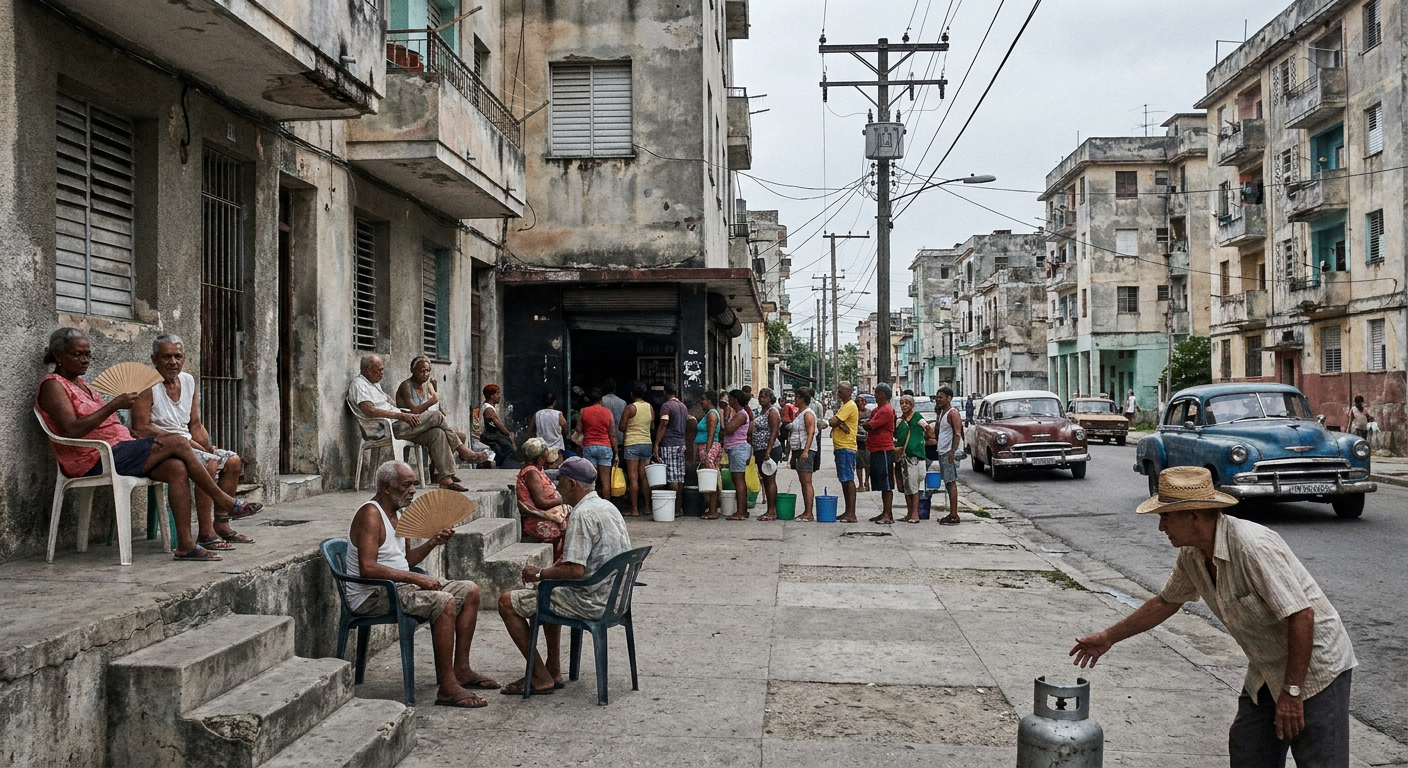
Reporting from Havana indicates that the island is facing power outages, fuel shortages, and deficiencies in food and medicine. According to NPR correspondent Eyder Peralta, frequent blackouts now last longer than 24 hours. The shortages have left landmarks like the capitol building in darkness and forced residents to navigate streets using flashlights.
The current situation follows actions taken by the U.S. government in January 2026 to restrict fuel supplies to Cuba. Additionally, the Trump administration has stated that the days of Cuba's communist government are numbered. U.S. sanctions prevent U.S. citizens from staying at many major hotels, many of which remain closed. Those that are open typically rely on generators to provide electricity, air conditioning, and hot water.
Cubans interviewed by NPR expressed frustration directed at both the United States and their own government. Some residents described the U.S. fuel restrictions as inhumane, while others argued the Cuban government has failed to negotiate. One resident suggested the government should hold elections and free political prisoners to secure international aid. In response, Cuba's deputy foreign minister stated that changing the country's political system is a "red line" that will not happen.
The crisis affects the daily lives of residents as blackouts exceeding 24 hours impact the ability to preserve food. The scarcity of goods has led to a day-to-day subsistence economy; for example, one resident reported that selling five blouses provided enough currency to purchase a carton of eggs.
For U.S. citizens, federal law prohibits staying in many Cuban hotels, leading travelers to use private accommodations like Airbnbs that may use battery-powered fans or lights. The U.S. move to restrict fuel starting in January 2026 has contributed to a lack of fuel and supplies for the general population.
The U.S. government is using economic pressure to seek political change. The Cuban government's refusal to alter its political structure suggests a prolonged period of diplomatic stalemate. Residents who speak to foreign media often do so without sharing their names for fear of government retribution. No specific date for the lifting of sanctions or the restoration of the power grid was reported.