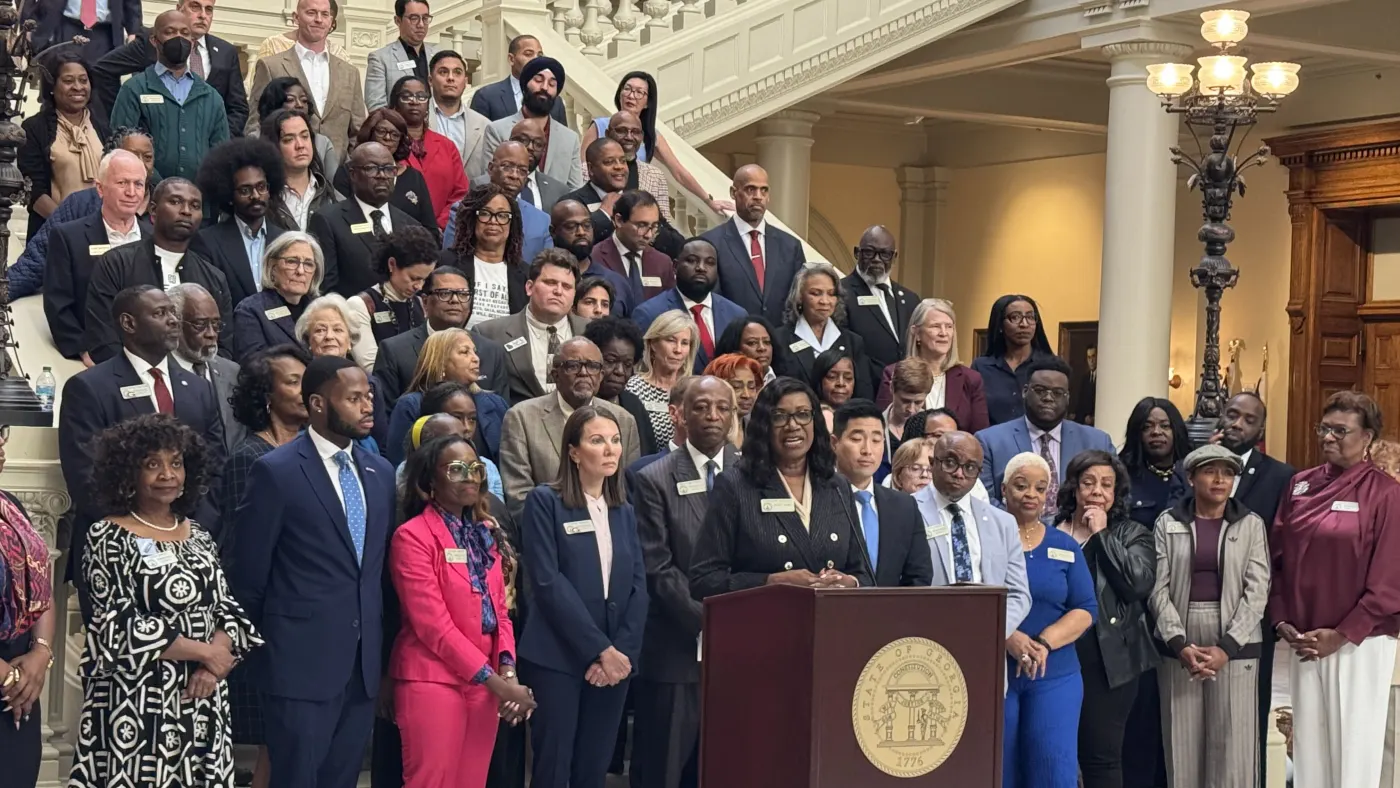
Democratic candidates gained control of several state legislative chambers and established new governing majorities following the midterm elections. According to data compiled by NPR, Democrats flipped the Pennsylvania state Senate for the first time since the 1970s and secured majorities in the Texas and Georgia state Houses for the first time in over 20 years.
Prior to the elections, Republicans held legislative control in 28 states compared to 18 for Democrats. With some votes still being counted, the National Conference of State Legislatures reports that Democrats are likely to hold 24 legislatures while Republicans hold 22, with the remainder divided. This shift follows a period of Republican dominance in statehouses that began in 2010.
Democrats established six new "trifectas," a term for controlling both legislative chambers and the governor’s office, in Arizona, Michigan, Minnesota, Wisconsin, Nevada, and Pennsylvania. In Arizona, this marks the first Democratic trifecta since 1966. Additionally, Democrats ended Republican supermajorities in six states, providing Democratic governors in states like North Carolina, Ohio, and Kansas the ability to use veto power against GOP-led initiatives.
The shift affects residents in states where the balance of power shifted or supermajorities were broken. Potential impacts include efforts to expand Medicaid for low-income residents in Georgia, changes to Arizona's billion-dollar school voucher program, and a proposed minimum wage increase to $15 per hour in Pennsylvania. In Arizona, Gov. Katie Hobbs (D) has sought to limit the voucher program, which provides public funds for private tuition regardless of income level.
Democrats now likely hold 22 trifectas to the Republicans' 17. Residents in these states may see legislative proposals regarding rent, utilities, and childcare relief in Arizona, as well as affordability initiatives in North Carolina. The shift also affects the landscape for reproductive healthcare, as Democrats in Georgia and North Carolina have indicated plans to attempt rollbacks of existing abortion restrictions.
State legislatures have historically been used to either promote or block presidential agendas. The loss of Republican supermajorities in six states means that Republican-led legislatures can no longer override gubernatorial vetoes without bipartisan support. Final outcomes in some chambers depend on remaining vote counts, such as a likely recount in the North Carolina state Senate where a Republican leads by approximately 200 votes. If that race results in a tie, the Democratic lieutenant governor would serve as the tie-breaker.