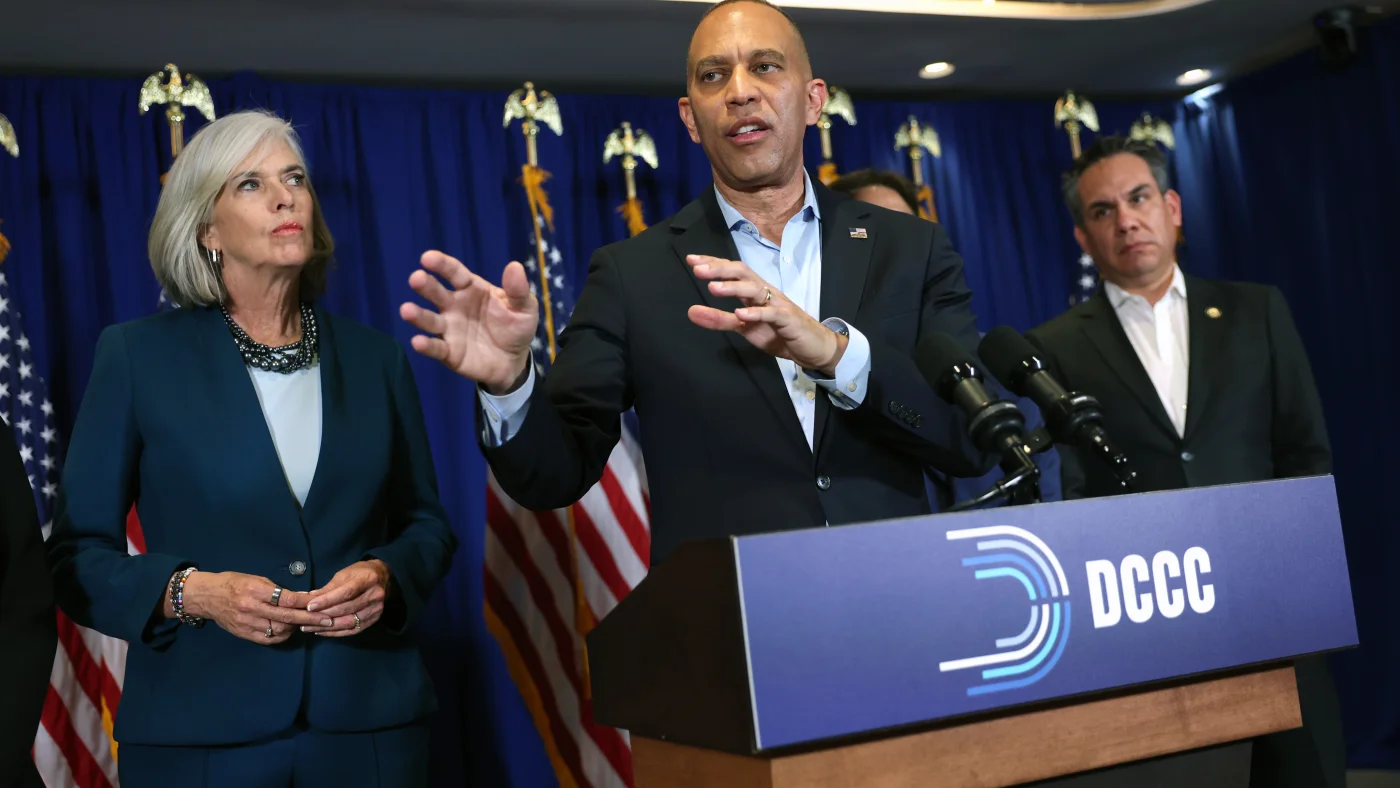
Democratic Party leaders stated on Wednesday, November 4, 2026, that they intend to prioritize lowering costs and addressing corruption after winning majorities in both the U.S. House of Representatives and the U.S. Senate. Incoming House Speaker Hakeem Jeffries (D-NY) said the new majority will pursue "bold, dramatic change" when the new Congress convenes. The party will operate under a divided government, as President Trump remains in office and most Senate legislation will still require 60 votes to bypass a filibuster.
The transition follows a year of campaigning focused on economic and ethical reforms. During the previous session, Republicans passed the One Big Beautiful Bill Act, which included Medicaid cuts that are scheduled to take effect soon. Democratic leaders indicated their first 100 hours will focus on reversing these cuts and restoring enhanced Affordable Care Act health insurance subsidies.
Legislative priorities also include reasserting congressional authority over tariffs and seeking an end to the war in Iran. While the caucus holds substantial margins, it includes a mix of progressives and moderates who flipped seats in traditionally Republican-leaning areas such as Iowa, Kansas, and South Carolina. Internal discussions are ongoing regarding the scope of healthcare reform, with some members advocating for Medicare for All while others prefer gradual expansions of existing insurance systems.
Beyond legislation, Democrats plan to use subpoena power to launch investigations into President Trump and his associates. Rep. Robert Garcia (D-CA), the top Democrat on the House Oversight committee, advised those in the president's orbit to "lawyer up." Additionally, House Democrats have formed working groups consisting of both progressive and centrist members to develop policies addressing the costs of housing, groceries, utilities, and caregiving.
The scale of this shift is driven by a wave election that granted Democrats control of both chambers, though the exact number of seats was not reported. The new majority will oversee the federal budget process, which Brookings Institution expert Molly Reynolds noted could be used to withhold funding for the war in Iran. However, the effectiveness of these policies depends on the actions of President Trump, who has not committed to a specific stance on Democratic proposals, and the ability of the Senate to reach the 60-vote threshold required for most non-budgetary legislation.
Voters in battleground districts, such as those in Michigan, have expressed expectations for rapid changes in both domestic economic policy and foreign military spending. Rep.-elect Will Lawrence (D-MI) noted that constituents are seeking a halt to tax dollars and weaponry going to Israel in addition to ending the Iran war. The new Congress will begin its term in January 2027, setting the stage for these legislative and investigative efforts ahead of the 2028 election cycle.