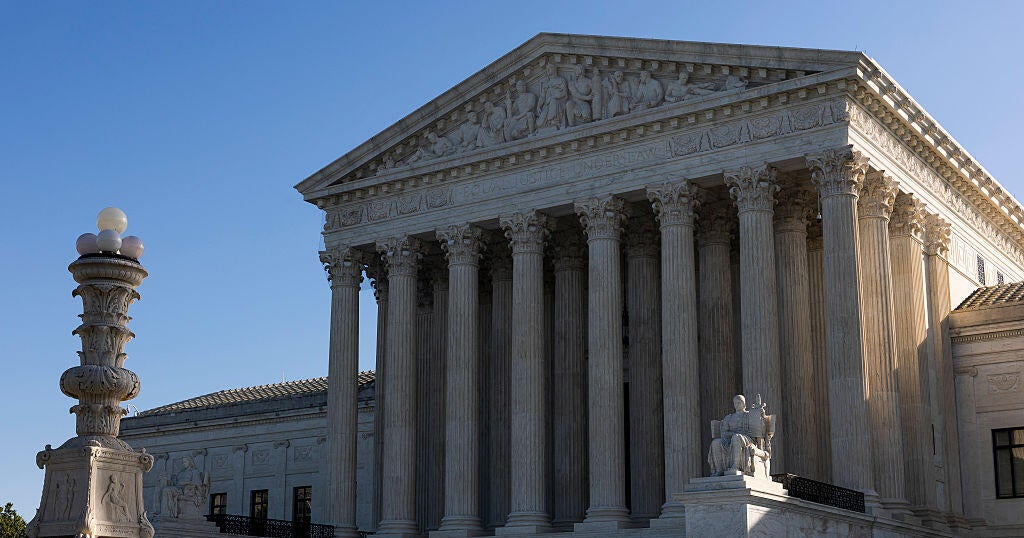
Congressional Democrats are preparing to revisit legislative proposals to reform the U.S. Supreme Court following the party's victory in the House and Senate midterms. Democrats are expected to hold at least 250 seats in the House and 54 seats in the Senate, plus two independents who caucus with them.
The push for reform follows a series of rulings by the court regarding abortion, presidential power, and voting rights. In a previous Congress, the House passed ethics requirements for the court, but the measure failed in the Senate. A commission established by President Joe Biden to study structural changes to the court provided arguments for and against various proposals but did not recommend specific actions.
House Democratic Leader Hakeem Jeffries (D-NY), the expected candidate for Speaker of the House, stated in a letter to colleagues that "accountability begins at home" and listed cleaning up the Supreme Court as a priority. Rep. Jamie Raskin (D-MD) is expected to lead these efforts as the likely chairman of the House Judiciary Committee. Proposals that have been introduced or discussed include implementing 18-year term limits for justices, establishing a formal ethics code with an enforcement mechanism, and expanding the court from nine to 13 seats.
Specific legislation introduced by Rep. Johnny Olszewski (D-MD) would require justices who have served more than 18 years to retire, a move that would currently apply to Chief Justice John Roberts and Justices Samuel Alito and Clarence Thomas. Additionally, a proposal by Rep. Jamie Raskin (D-MD) and Rep. Alexandria Ocasio-Cortez (D-NY) would prohibit federal judges and Supreme Court justices from accepting gifts valued at more than $50.
If passed, these measures would change the financial and professional requirements for the judiciary. Proposed rules would mandate the disclosure of income, gifts, and reimbursements, including those from parties filing friend-of-the-court briefs. One proposal by Sen. Cory Booker (D-NJ) and Rep. Daniel Goldman (D-NY) would establish new federal offices—an Office of Ethics Counsel and an Office of Investigative Counsel—to review and investigate ethics complaints against justices.
The path to enactment remains uncertain as most Senate legislation requires 60 votes to advance, and Democrats are projected to hold between 54 and 56 seats. Furthermore, it is unclear if Mr. Trump would sign such measures into law. Constitutional amendments, such as some proposed for term limits, require two-thirds support in both chambers and ratification by 38 states. The new Congress is scheduled to convene in January.