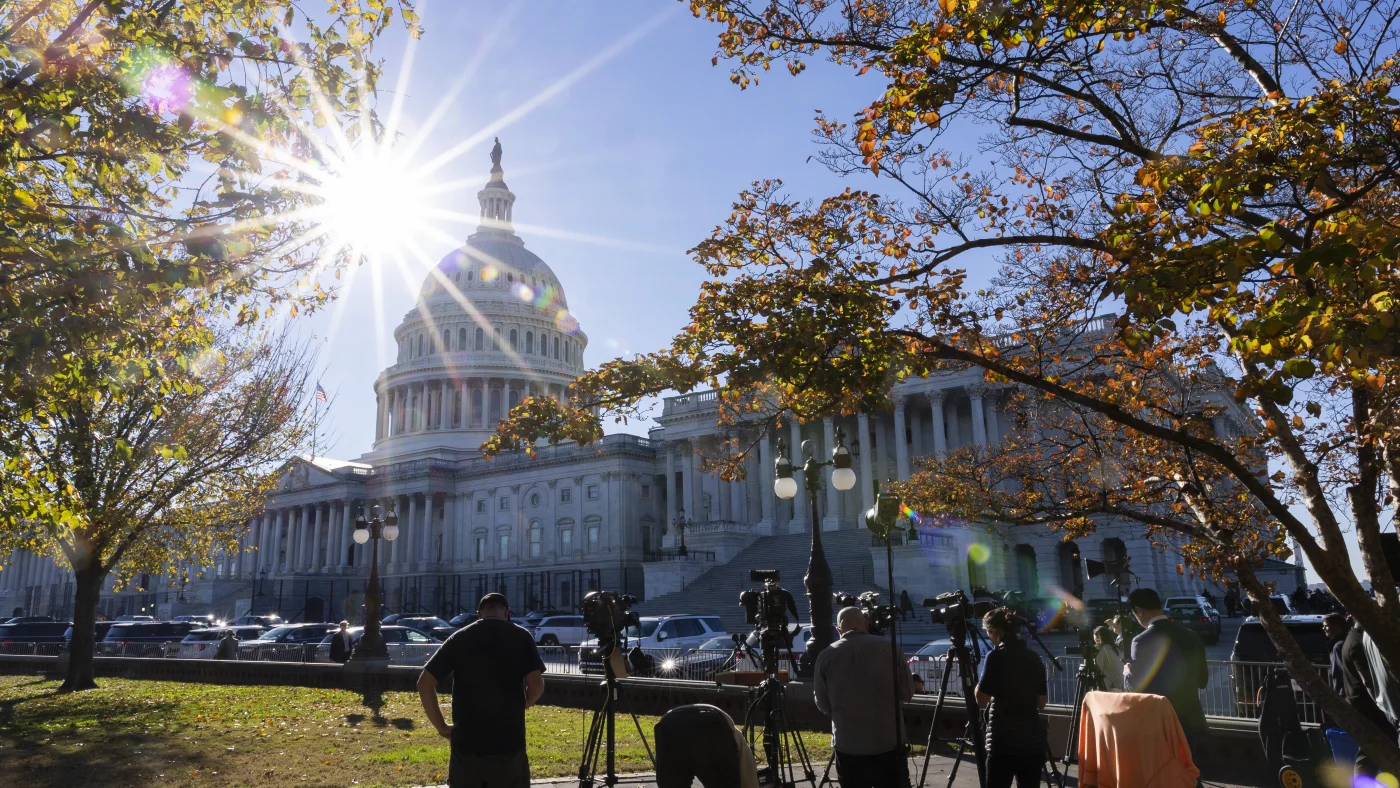
Congressional Democrats are seeking to include a provision in an upcoming spending bill to block funding for the U.S. military conflict in Iran. The move comes as Congress faces a Dec. 11 deadline to pass a funding measure and avoid a government shutdown. Sen. Tim Kaine (D-VA) stated that the goal is to use the spending bill to end what he characterized as an illegal war, noting that President Trump launched attacks last winter without seeking congressional approval.
Republicans have opposed the effort, arguing that withdrawing funding would put U.S. service members in the region at risk. Because the Republican-controlled Senate requires 60 votes to pass most funding measures, Democrats hold significant leverage in the negotiations. Sen. Thom Tillis (R-NC) stated that if Democrats press for a shutdown over the funding, Republicans may look for alternatives, such as using the budget reconciliation process to pass legislation without Democratic support.
In a separate matter involving national security and trade, the House Foreign Affairs Committee released a list of requests from technology companies Nvidia and AMD to sell chips to Chinese firms. Reports indicate the Trump administration approved the sale of approximately 900,000 advanced chips to Chinese companies as of May 2026. The list included approvals for firms like Alibaba and Tencent, which the Pentagon has identified as having ties to the Chinese military.
In Iowa, the U.S. Army has rescheduled the controlled detonation of 9,500 pounds of unstable lead azide at the Iowa Army Ammunition Plant in Middletown. The detonation is now planned for Monday, Nov. 23, following requests for a delay from state lawmakers and environmental groups. The material, which has been stored in underground tanks for 20 years, became unstable after recent inspections found the storage solution had dried, causing the lead azide to crystallize.
The dispute over chip sales involves major American technology firms and affects the global semiconductor market. The approval of nearly 900,000 chips for Chinese companies represents a significant volume of trade in high-end technology, impacting the revenue of U.S. companies while raising concerns among security officials regarding the technological capabilities of firms linked to the Chinese military. Stakeholders in the tech industry and international trade will notice these developments through changes in export licenses and potential shifts in diplomatic relations between Washington and Beijing.
For residents of Middletown, Iowa, the scheduled detonation of lead azide presents immediate safety and environmental concerns. The 9,500 pounds of explosive material requires careful handling to prevent an accidental blast. If the Nov. 23 detonation proceeds, the Army, Environmental Protection Agency (EPA), and the University of Iowa will monitor air quality to track the movement of lead dust. Residents will be watching for revised maps and air quality reports to understand the potential exposure risks to their community. Further delays remain possible if weather conditions, specifically dropping temperatures, increase the danger of the operation.