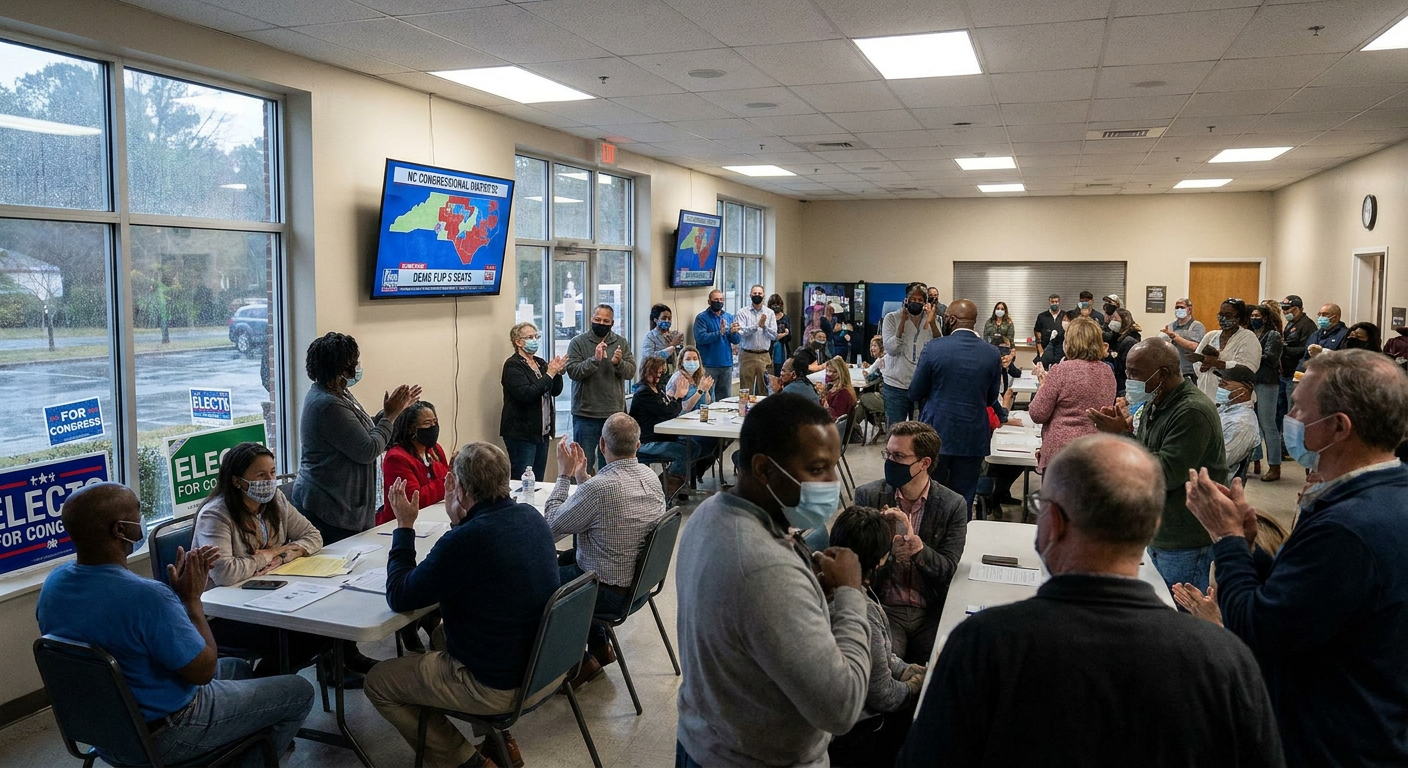
Democratic candidates have won five Republican-held congressional seats in North Carolina, according to race calls by The Associated Press. The wins occurred in a state that former President Donald Trump won three times. While Republicans entered the election holding 10 of North Carolina's 14 House seats, Democrats flipped five districts and retained a seat held by Rep. Don Davis (D-NC).
The results followed a redistricting process led by state lawmakers last year, which WUNC politics reporter Colin Campbell noted was intended to favor Republican candidates. Despite these maps, several Republican incumbents lost their seats, including Rep. Richard Hudson (R-NC), who serves as the chairman of the National Republican Congressional Committee. Other Republican incumbents who lost included Tim Moore, Brad Knott, and Addison McDowell. In western North Carolina, Democrat Jamie Ager won an open seat previously held by the GOP.
Four additional congressional races in the state remain uncalled as officials continue to count provisional and absentee ballots. In one contest, Rep. Virginia Foxx (R-NC), chair of the House Rules Committee, trailed her Democratic opponent by 99 votes. Campbell reported that these remaining races may proceed to recounts, a process that North Carolina law dictates cannot begin until after November 13.
The shift in North Carolina’s congressional delegation affects residents who will see new representation in five of the state's 14 districts. The loss of seats by Republican incumbents follows a redistricting by the Republican-led legislature. For North Carolina voters, this shift extends to the state level, where Democrats secured a majority in the state House for the first time since 2008 and won a seat on the state Supreme Court.
These changes will influence the legislative agenda for North Carolina residents starting next year. Governor Josh Stein (D) has indicated he intends to pursue redistricting reforms. The shift in the state House and a potential tie in the state Senate could alter how laws are passed. Stein identified "affordability issues" as a primary concern for voters following reports of rising prices for gasoline and electricity.
The outcome of the remaining four congressional seats will determine the final scale of the Democratic gains. If recounts are requested, they will not start until after the November 13 deadline. The results also reflect the impact of the U.S. Senate race, where former Governor Roy Cooper’s (D) lead in polling led national Republican groups to redirect advertising funds to other states, a move Campbell said contributed to the outcome. The final composition of the state and federal delegations will be finalized once all ballots are certified and potential recounts are concluded.