The Plain Record

Neutral daily news — clear headlines, complete facts.

On the Hill

Democrats Win House Control as Republican Redistricting Efforts Fail to Yield Gains

Democrats gained control of the U.S. House as Republican redistricting efforts in several states failed to net the expected seat gains.

Published November 5, 2026 at 2:36 AM EST

The short answer

Democrats gained control of the U.S. House as Republican redistricting efforts in several states failed to net the expected seat gains. Democrats won control of the U.S. House of Representatives in the 2026 midterm elections, according to CBS News estimates, as several Republican efforts to redraw congressional districts failed to yield the gains the party sought.

Democrats Win House Control as Republican Redistricting Efforts Fail to Yield Gains

The Facts

Who
U.S. House candidates, Republican and Democratic state lawmakers, and voters.
What
U.S. House of Representatives midterm election results and redistricting outcomes.
When
Tuesday, Nov. 3 and Wednesday, Nov. 4, 2026.
Where
United States, with specific focus on Texas, Ohio, North Carolina, Louisiana, Alabama, Tennessee, Florida, Missouri, Indiana, South Carolina, California, Utah, Virginia, and Maryland.
Why
Republican efforts to maintain House control through mid-decade redistricting did not result in seat gains in several states, leading to a Democratic majority.

Democrats won control of the U.S. House of Representatives in the 2026 midterm elections, according to CBS News estimates, as several Republican efforts to redraw congressional districts failed to yield the gains the party sought. Despite Republican-led redistricting initiatives in states such as Texas, Ohio, and North Carolina, the GOP was on track to lose seats in many of the areas it attempted to remap.

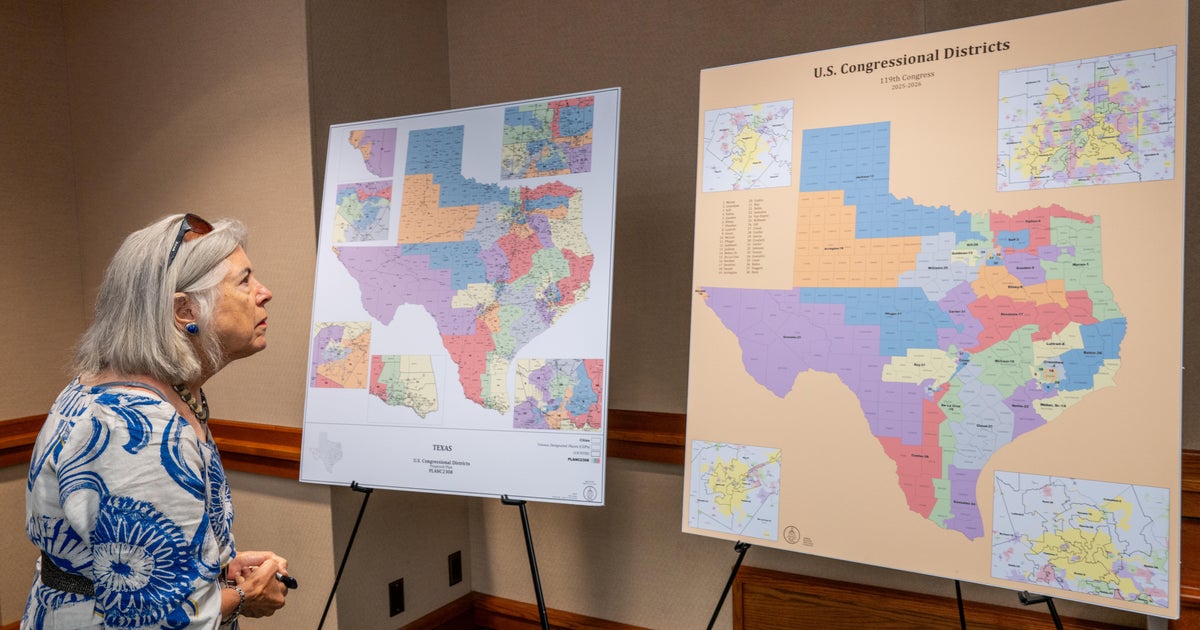
The redistricting efforts followed a period of mid-decade map changes, a practice previously considered rare. In Texas, Republicans redrew maps after Donald Trump requested the state legislature target an additional five seats for the GOP. In Louisiana and Alabama, Republican-led legislatures adjusted boundaries following a June Supreme Court ruling concerning the Voting Rights Act and the use of race in district lines.

In Texas, Republicans entered Election Day with 24 seats but won 24, while Democrats gained one to reach 14. In Ohio, where a Republican-led commission sought to flip two Democratic seats, Democrats instead won seven districts with an eighth estimated as likely Democratic. In Missouri, court challenges blocked a new map, and Democrats flipped a district to move from two seats to three. Meanwhile, California Democrats successfully utilized a ballot measure to pick up seats, and Utah's map was replaced by a court-selected version that created a Democratic-leaning district in Salt Lake City.

This election outcome directly affects 435 congressional districts, determining which party sets the legislative agenda for the next two years. In Utah, the court-ordered map led to Democrat Ben McAdams winning the 1st District by 47 points.

CBS News estimates project Democrats will hold between 251 and 268 seats in the House. Furthermore, in Maryland, voters approved Question 3 by a 20-point margin, which will allow for the redrawing of maps.

The failure of several "gerrymandering" attempts—where one party draws lines to favor its own candidates—led to what is referred to as a "dummymander." In Alabama, Republican efforts to eliminate majority-Black districts saw both Democratic incumbents win reelection. What happens next includes the final certification of results in states with toss-up races, such as Florida and North Carolina, and the scheduled runoffs in Louisiana's 5th District and Tennessee's 9th District. Maryland lawmakers are expected to begin their map-redrawing process following the successful ballot initiative.

Timeline of what happened

Key dates and decisions, in the order they occurred.

  1. 2021

    Virginia congressional map drawn

  2. 2022

    Missouri congressional districts established for that cycle

  3. April 2025

    Virginia voters approve redistricting ballot measure

  4. June 1, 2025

    Supreme Court rules on Louisiana and Alabama redistricting cases

  5. November 4, 2025

    Maryland voters pass Question 3 ballot initiative

Summaries are written by The Plain Record to state the facts of a story plainly and without political slant. Drafted with AI assistance and checked against the source record before publication. See how we report, or report a correction.

← Back to the front page

Questions readers ask

What happened: Democrats Win House Control as Republican Redistricting Efforts Fail to Yield Gains?

Democrats won control of the U.S. House of Representatives in the 2026 midterm elections, according to CBS News estimates, as several Republican efforts to redraw congressional districts failed to yield the gains the party sought. Despite Republican-led redistricting initiatives in states such as Texas, Ohio, and North Carolina, the GOP was on track to lose seats in many of the areas it attempted to remap.

Who is involved?

U.S. House candidates, Republican and Democratic state lawmakers, and voters.

When did this happen?

Tuesday, Nov. 3 and Wednesday, Nov. 4, 2026.

Where did this happen?

United States, with specific focus on Texas, Ohio, North Carolina, Louisiana, Alabama, Tennessee, Florida, Missouri, Indiana, South Carolina, California, Utah, Virginia, and Maryland.

Why does this matter?

Republican efforts to maintain House control through mid-decade redistricting did not result in seat gains in several states, leading to a Democratic majority.