The Plain Record

Neutral daily news — clear headlines, complete facts.

On the Hill

District Court Nominee Questions Scope of 22nd Amendment at Confirmation Hearing

Judicial nominee James P. Sullivan declined to state whether the 22nd Amendment prohibits a third presidential term during a Senate hearing.

Background: The 25th Amendment, explained: how presidential succession and disability actually work

Published November 18, 2026 at 10:05 PM EST

The short answer

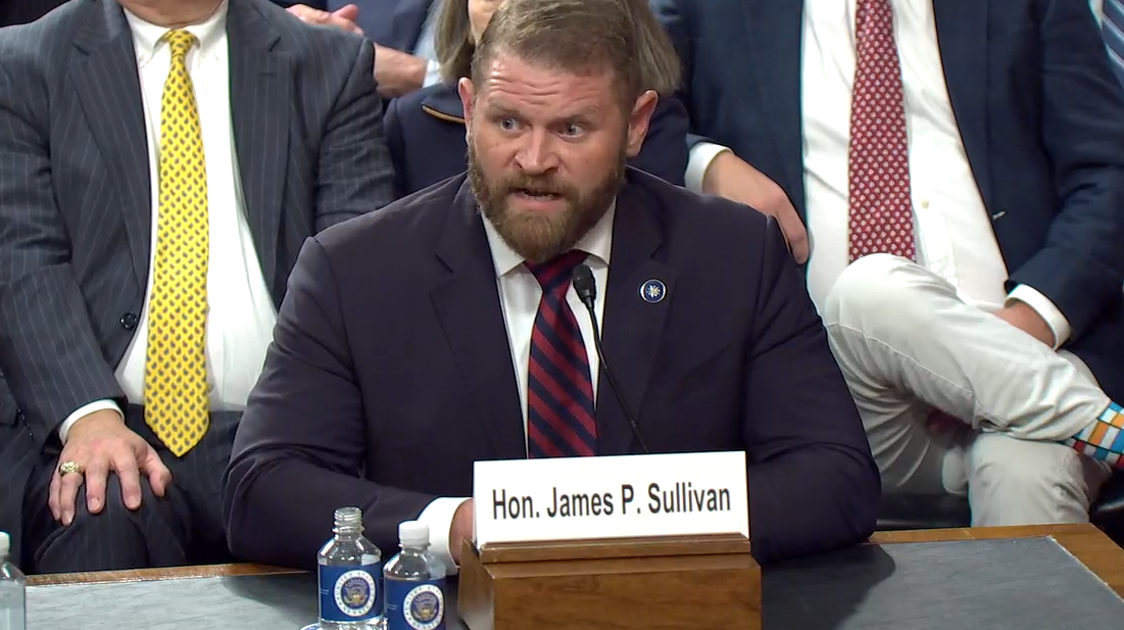
Judicial nominee James P. Sullivan declined to state whether the 22nd Amendment prohibits a third presidential term during a Senate hearing. James P. Sullivan, a nominee for the U.S. District Court for the Western District of Texas, testified before the Senate Judiciary Committee on Wednesday, Nov. 18, 2026.

District Court Nominee Questions Scope of 22nd Amendment at Confirmation Hearing

The Facts

Who
James P. Sullivan, Sen. Chris Coons (D-Del.)
What
Senate Judiciary Committee confirmation hearing for a federal judicial nominee.
When
Wednesday, November 18, 2026
Where
Washington, D.C.
Why
The nominee declined to interpret the 22nd Amendment's term limits as they apply to President Trump, citing judicial ethics rules.

James P. Sullivan, a nominee for the U.S. District Court for the Western District of Texas, testified before the Senate Judiciary Committee on Wednesday, Nov. 18, 2026. During the confirmation hearing for the lifetime judicial appointment, Sullivan was questioned regarding the 22nd Amendment to the U.S. Constitution and its application to presidential term limits.

The hearing occurred as President Donald Trump, who was elected in 2016 and 2024, has discussed the possibility of seeking a third term in 2028. The 22nd Amendment, ratified following the presidency of Franklin Delano Roosevelt, states that no person shall be elected to the office of the President more than twice.

Sen. Chris Coons (D-Del.) asked Sullivan to identify the contents of the 22nd Amendment. Sullivan initially stated he could not remember the specific text before Coons provided a prompt. Sullivan then identified that the amendment prohibits any person from being elected to the presidency more than twice. When asked if the president was eligible to run again in 2028, Sullivan declined to answer, citing Canon 5 of the Code of Conduct for United States Judges, which he said restricts nominees from opining on matters of political debate.

The exchange highlights a disagreement over the scope of judicial ethics rules. Sullivan argued that the question of presidential eligibility is a "subject of ongoing political debate" and that his role as a nominee prevented him from providing a legal opinion. Conversely, Coons stated that the text of the 22nd Amendment is "bracingly clear" and not a matter of legitimate debate for a potential federal judge.

The Senate Judiciary Committee will next vote on whether to advance Sullivan’s nomination to the full Senate. A specific date for that committee vote has not yet been reported.

Summaries are written by The Plain Record to state the facts of a story plainly and without political slant. Drafted with AI assistance and checked against the source record before publication. See how we report, or report a correction.

← Back to the front page

Questions readers ask

What happened: District Court Nominee Questions Scope of 22nd Amendment at Confirmation Hearing?

James P. Sullivan, a nominee for the U.S. District Court for the Western District of Texas, testified before the Senate Judiciary Committee on Wednesday, Nov. 18, 2026. During the confirmation hearing for the lifetime judicial appointment, Sullivan was questioned regarding the 22nd Amendment to the U.S. Constitution and its application to presidential term limits.

Who is involved?

James P. Sullivan, Sen. Chris Coons (D-Del.)

When did this happen?

Wednesday, November 18, 2026

Where did this happen?

Washington, D.C.

Why does this matter?

The nominee declined to interpret the 22nd Amendment's term limits as they apply to President Trump, citing judicial ethics rules.