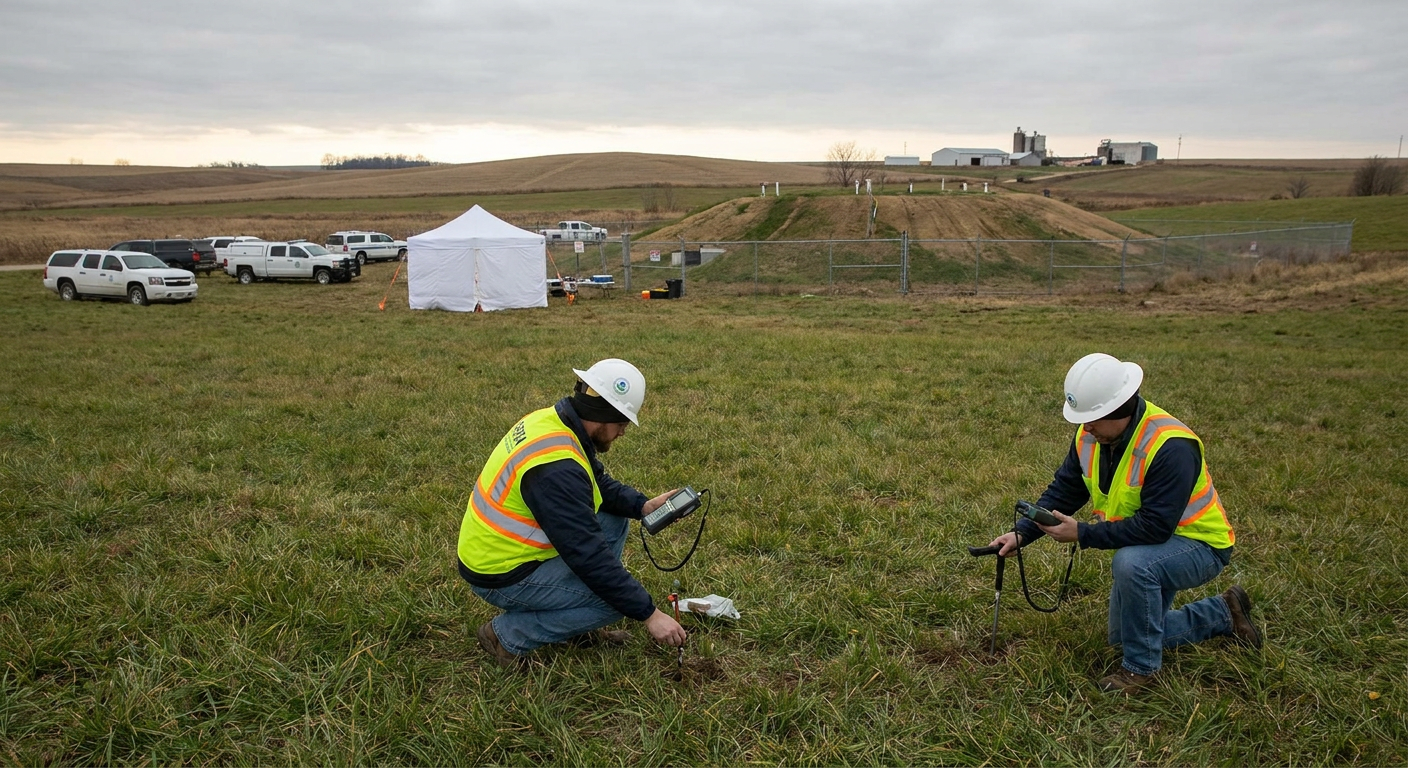
Federal scientists have begun testing air, soil, and water in eastern Iowa following the U.S. Army's detonation of a national stockpile of lead azide on Wednesday. The Environmental Protection Agency (EPA) is monitoring the region surrounding the Iowa Army Ammunition Plant in Middletown for potential lead contamination. The Army stated the detonation was necessary because the material, a substance used in explosives, had become unstable and could only be disposed of through a controlled explosion.
To manage the release of lead during the blast, the Army placed barrels of lead azide underground in bunkers covered with tarps, water, and particle-collecting foam. Following the event, Major General Eric Shirley stated that the munitions used successfully reduced the lead azide threat and that early results exceeded his expectations. The EPA reported that its initial air quality measurements have not detected lead.
The EPA has deployed approximately 300 personnel to sample the ground and nearby surface water. These teams are also checking surfaces near the detonation zone for lead dust that might exceed federal limits for residential areas. While some residents within a five-mile radius evacuated following Army recommendations, others remained or returned shortly after the blast. Iowa Governor Kim Reynolds declared a disaster emergency for three counties in the southeastern portion of the state to facilitate aid.
For residents, the concrete day-to-day impact includes the ability to file property damage or personal injury claims through the Army claims office. Those seeking financial relief can now access Federal Emergency Management Agency (FEMA) funding due to the state's disaster declaration. In the coming days, residents will see whether independent data from the University of Iowa and the University of Illinois matches the EPA's initial findings, a comparison sought by local residents who expressed concern over previous delays and messaging from the military.
The long-term effects depend on whether lead is discovered in the soil or surface water, which could necessitate further cleanup actions or land-use restrictions. Residents can visit the Burlington Public Library to meet with service navigators for help accessing state and federal aid. The next steps involve the release of independent monitoring results and the processing of FEMA and Army claims, though specific deadlines for these applications were not reported.