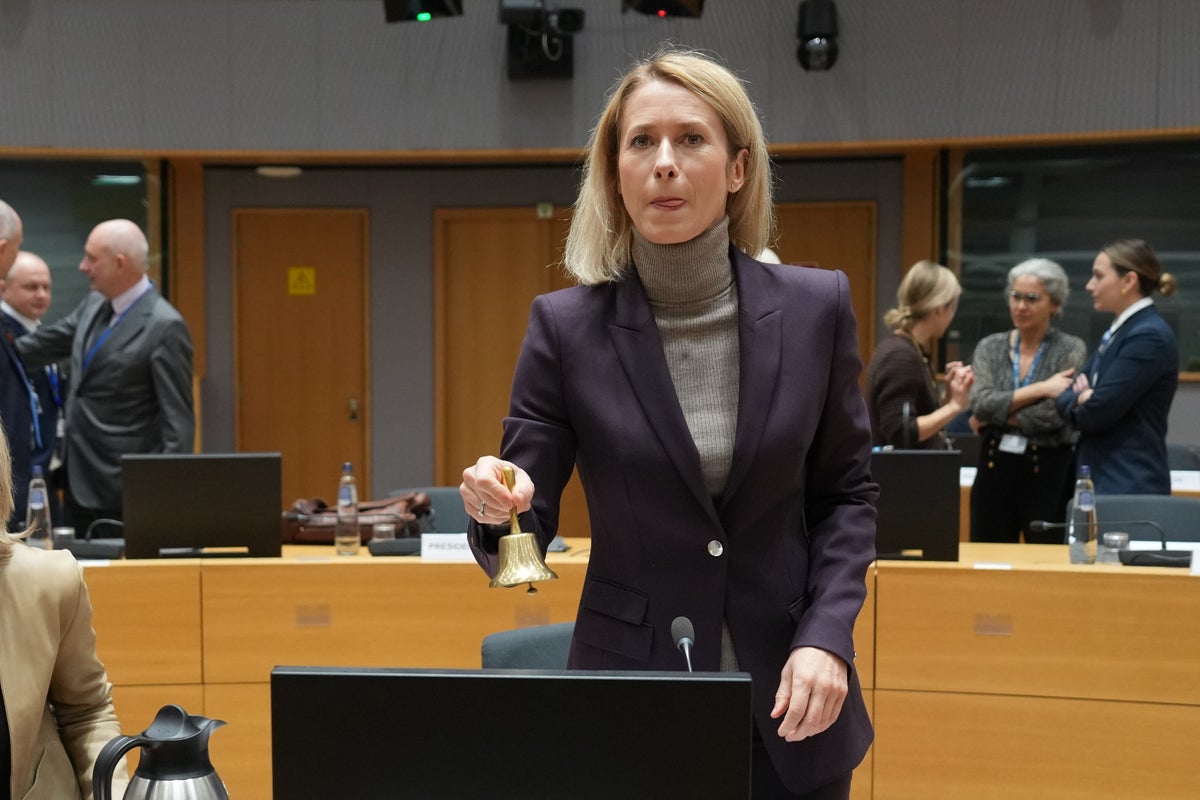
European Union foreign ministers on Monday accused Russia of prolonging negotiations to end the conflict in Ukraine while continuing to target the country's power plants and civilian infrastructure. During a meeting in Brussels, officials stated that the priority must be a ceasefire followed by a peace agreement. EU foreign policy chief Kaja Kallas noted that instead of de-escalation, the organization observed Russia escalating its military actions as winter approaches.
The accusations follow recent negotiations in Abu Dhabi, where the United States encouraged Ukraine and its supporters to consider a Russian demand for a new European security framework. European officials, however, described the proposal as a move to weaken NATO. According to Kallas, the Russian demand would require the alliance to withdraw troops and equipment to positions held before the 1999 accession of the Czech Republic, Hungary, and Poland.
German Foreign Minister Johann Wadephul and Lithuanian Foreign Minister Kęstutis Budrys both rejected the need for a new security architecture, stating that Russia should instead respect existing international rules. Irish Foreign Minister Helen McEntee, representing the EU’s rotating presidency, announced that the bloc would approve additional sanctions on Monday aimed at the financial mechanisms Russia uses to fund the war. The ministers also discussed strategies to assist Ukraine with energy and infrastructure needs during the winter months.
For just over a year, U.S. negotiators Jared Kushner and Steve Witkoff have been talking to Russia and Ukraine. Despite these efforts, no lasting ceasefire has been achieved, and significant disagreements remain regarding territorial control and future security guarantees. The source reports that the only tangible progress in recent months has been the exchange of prisoners between the two warring parties.
The Russian demand to revert NATO's posture to 1999 levels would affect the military deployments of Poland, Hungary, and the Czech Republic. For taxpayers in EU member states and the U.S., the lack of a ceasefire continues the requirement for financial and military aid for a war that has already lasted nearly five years.
What happens next depends on the coordination between European and U.S. negotiators. EU leaders agreed last week in Dublin that a team of security advisers from France, Germany, the U.K., Italy, and Poland, alongside EU institution officials, will represent European interests in future talks. While the EU will focus on reconstruction and long-term security, officials stated that only Ukraine can decide on matters of its own sovereignty. The new sanctions discussed in Brussels were expected to be agreed upon later Monday.