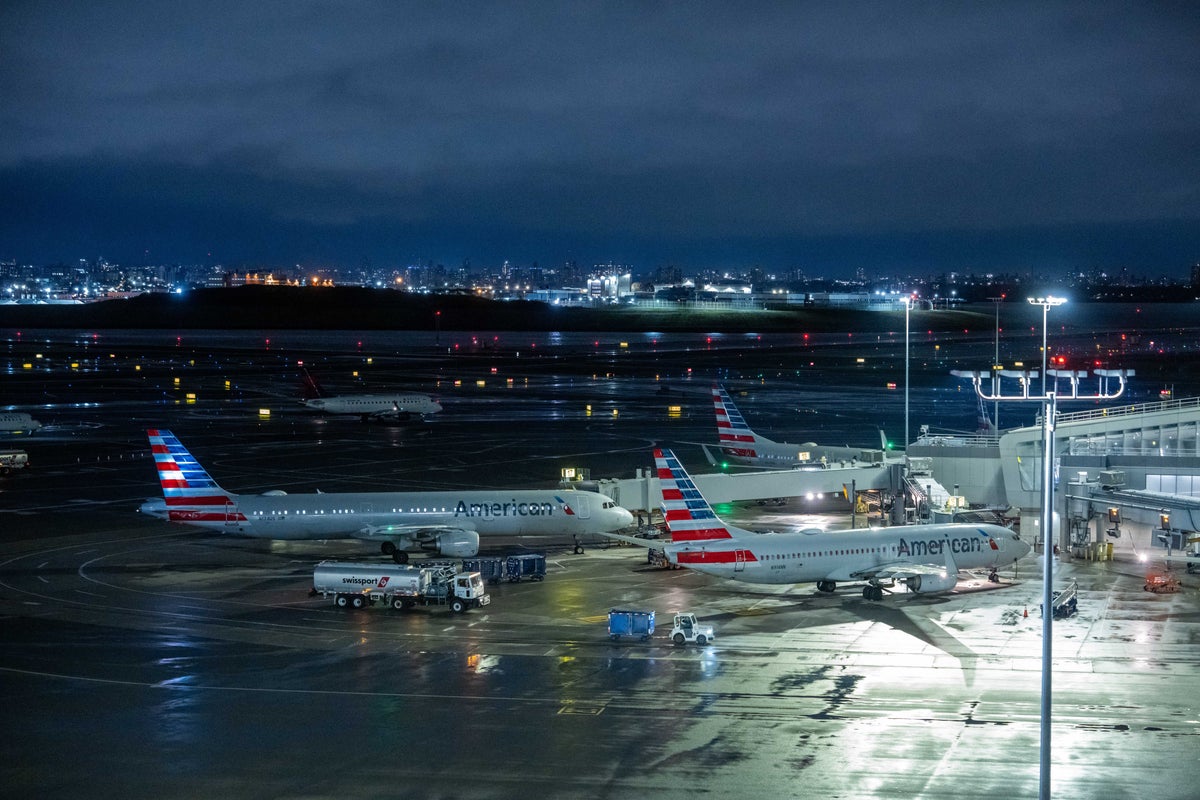
An equipment upgrade reportedly caused a nationwide ground stop for U.S. airline departures on Friday, November 13, 2026. The disruption led to 14,000 flight cancellations across Friday and Saturday as airlines struggled to restore their schedules. Transportation Secretary Sean Duffy initially attributed the failure to an "incredibly old" air traffic control system but later identified the replacement of copper telecommunications wiring with fiber-optic cables as the specific cause.
The Federal Aviation Administration (FAA) reported that air traffic controllers first noticed inconsistencies in radar and communications at 3:36 p.m. on Friday. The FAA ordered a nationwide ground stop 18 minutes later, which remained in effect until 8:15 p.m. that evening. Secretary Duffy stated that a contractor, L3Harris, may have installed a faulty router at a site in Arkansas. The router reportedly had a broadcast feature that sent excessive data, overwhelming the network.
Aviation experts, including Hassan Shahidi of the Flight Safety Foundation, characterized the incident as "preventable," stating that appropriate settings and testing should have blocked the system overload. While the FAA has replaced 3,500 of the 5,170 copper lines scheduled for fiber-optic upgrades by 2028, experts noted that integrating new subsystems with active 24/7 networks creates points of vulnerability. Despite the disruption, researchers observed that safety protocols worked as intended, with no reported injuries.
The event has led to a funding dispute in Washington involving the Department of Transportation and Congress. Secretary Duffy increased his request for air traffic control modernization funds to $50 billion, describing the need as an "emergency" to replace outdated equipment. This request follows a previous $12.5 billion allocation for modernization approved last year. President Donald Trump has urged Congress to approve the funding, while Democrats have requested a more transparent plan, noting that much of the previously approved $12.5 billion remains unspent.
The outcome of this funding debate will determine how the FAA manages the remaining 1,670 copper-to-fiber transitions scheduled through 2028. Future upgrades will continue while the system remains operational, meaning travelers may face ongoing risks of technical perturbations during the transition. Agency and L3Harris officials are currently conducting forensic analysis on the router in a Florida laboratory to establish final causes and prevent recurrence during the next phase of the overhaul.