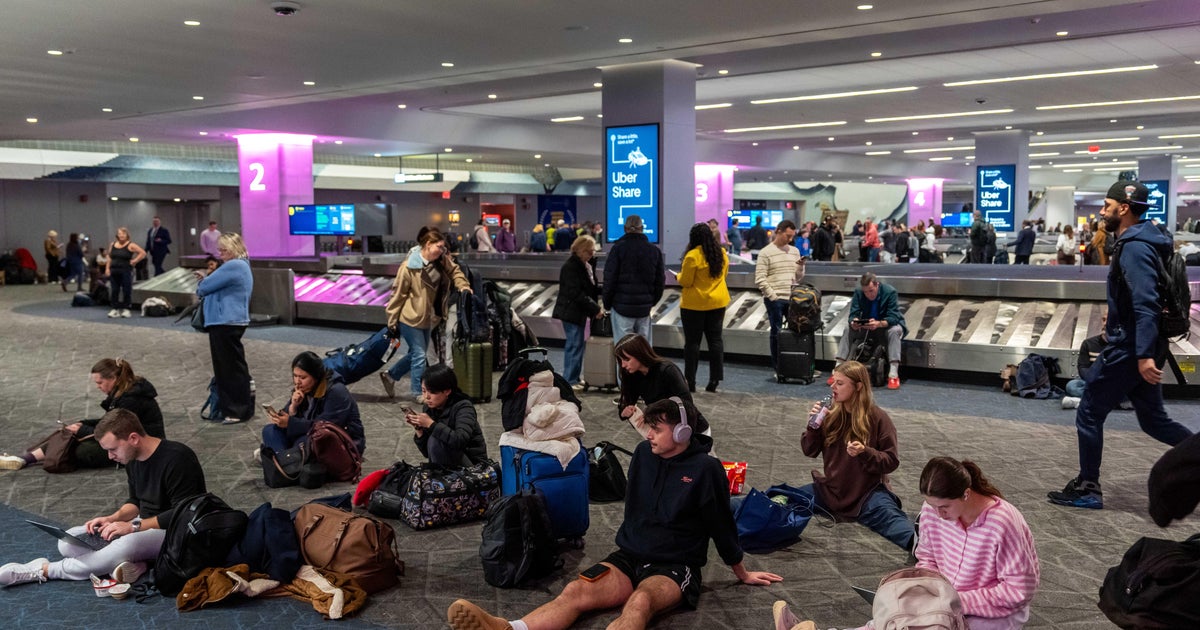
A five-hour nationwide ground stop on Friday, November 13, resulted from a technical failure within the Federal Aviation Administration's (FAA) telecommunications infrastructure. Transportation Secretary Sean Duffy stated on Sunday, November 15, that the disruption may have originated from a single router scheduled for replacement in 2006. Department of Homeland Security (DHS) Secretary Markwayne Mullin said on Sunday, November 15, that no personnel would be fired, as the event appeared to be an equipment issue.
Government watchdogs have issued warnings for two decades regarding the technical risks of the FAA's legacy systems. A 2024 audit by the Office of the Inspector General (OIG) found that the FAA has used noncompetitive contract extensions, resulting in $1.5 billion in additional spending and 57 months of delays. Since 2002, the FAA's telecommunications infrastructure has been managed by L3Harris (formerly Harris Corporation), a firm that has received billions in contract funding despite a 2008 report identifying reliability problems and a 2009 outage that delayed 800 flights.
The FAA reported that the November 13 ground stop was enacted at approximately 3:30 p.m. out of an "abundance of caution" after its legacy equipment became unstable. The system was reportedly flooded with data, receiving 1,000 connection attempts every four to five seconds. Investigators have identified sites in Amarillo, Texas, and El Dorado, Arkansas, as possible locations linked to the data flood. Secretary Mullin noted that the agency was attempting to integrate 50-year-old "dial-up" technology with modern systems when the failure occurred.
The Department of Transportation (DOT) is currently utilizing $12.5 billion in modernization funding approved by Congress as part of the One Big Beautiful Bill Act. This funding includes $4.75 billion for telecommunications upgrades. The DOT reports that funds are being used to replace paper systems at 25 control towers and upgrade five facilities that still use floppy disks. However, a 2024 Government Accountability Office (GAO) report found that 51 of the FAA’s 138 air traffic systems are unsustainable due to outdated parts and functionality.
The financial scale of the modernization effort involves $12.5 billion in federal funds. These funds are allocated to upgrades such as modernizing 469 tower radios. However, the OIG warned that the FAA’s reliance on noncompetitive contracts with L3Harris, which has spent $23.9 million on lobbying since 2020, risks higher costs and potentially lower-quality results. A September OIG report warned that moving too quickly with upgrades could also cause system instability.
Officials have attributed the failure with "98 percent certainty" to 50-year-old equipment. What happens next includes a continued investigation by the FAA to understand the specific conditions of the November 13 failure. L3Harris reported it has completed 70% of the switch to fiber cables, while the FAA works to meet modernization goals.