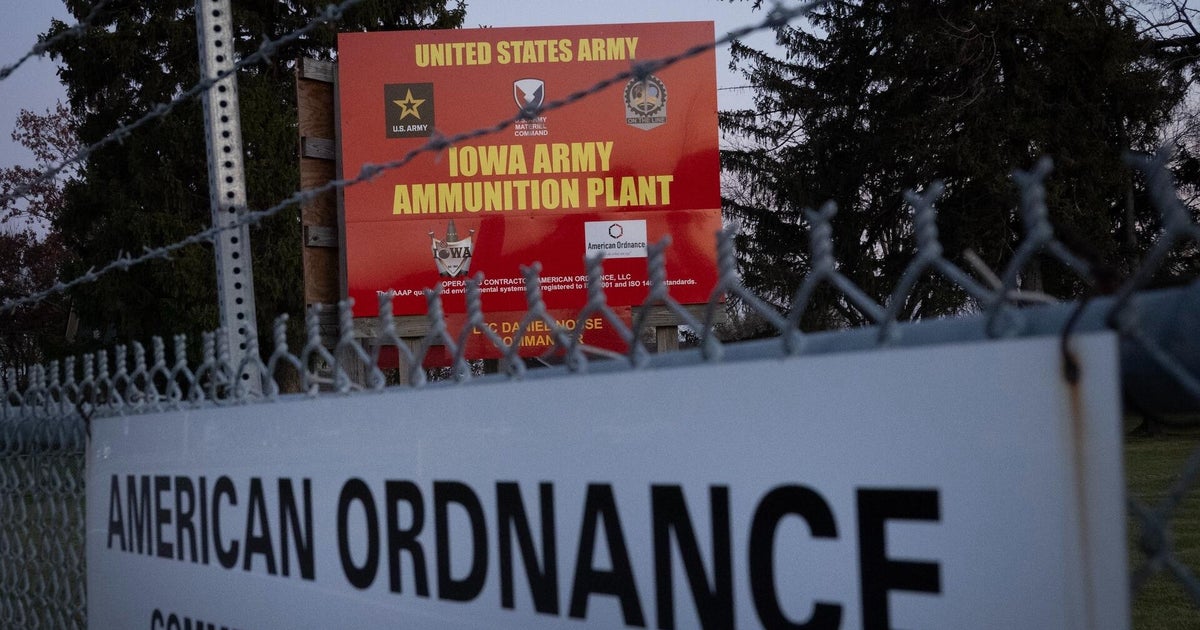
The 8th U.S. Circuit Court of Appeals on Friday, November 20, 2026, granted an emergency motion to indefinitely suspend the U.S. Army's plans to detonate approximately five tons of unstable explosives at a munitions plant in Middletown, Iowa. The court's order followed a lawsuit filed by environmental groups on Thursday, November 19, which sought to block the operation due to concerns that a resulting dust plume would spread toxic lead particles across parts of Iowa and Illinois.
The material in question is lead azide, a highly sensitive primary explosive used as a detonator. In March, Army officials discovered that 68 drums of the chemical stored at the Iowa Army Ammunition Plant (IAAAP) had begun "recrystallization," a process the Environmental Protection Agency (EPA) stated creates a high risk of spontaneous explosion. The substance had been stored for over 20 years in ethanol and water to maintain stability, but a routine check found that some of the water had evaporated.
Army officials stated that the materials are too unstable to relocate and that controlled detonation is the safest available option. The operation was originally scheduled for Friday, November 20, but was delayed to Monday, November 23, by Acting Secretary of the Army Adam Telle to ensure public safety before the court intervention. The Army warned that a forecasted temperature drop could further destabilize the chemicals, increasing the risk of an accidental blast.
The scale of the operation involves 68 drums totaling five tons of explosives. During the proposed six-hour evacuation period, residents would notice loud noise and ground vibrations powerful enough to potentially shatter windows. To mitigate the impact, the Army planned to detonate the drums inside concrete, earth-covered magazines surrounded by sand-filled barriers and water misters. While the military stated lead levels would remain below EPA thresholds for protective action, residents expressed concern that lead particles could settle on playgrounds and farmland or infiltrate groundwater.
The legal challenge by the Iowa Environmental Council and another group argues that the federal government failed to consider safer alternatives or provide adequate notice to the community. The next steps depend on further judicial review of the lawsuit challenging the validity of the EPA's emergency permit. No new date for the disposal has been set.