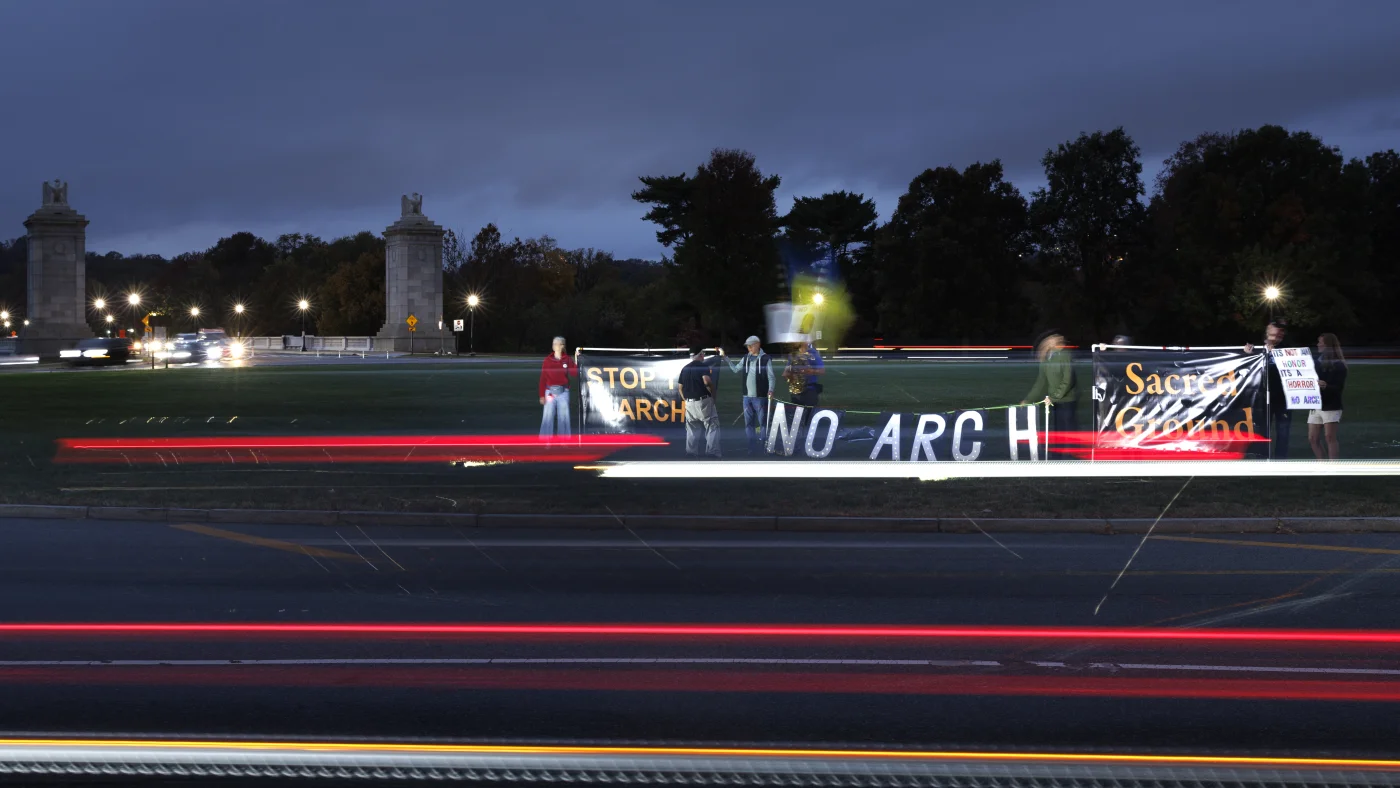
On Friday, November 6, 2026, U.S. District Court Judge Tanya Chutkan issued a 14-day temporary injunction blocking the construction of a proposed 250-foot arch in Washington, D.C. The ruling came just hours after the National Capital Planning Commission (NCPC) voted 8-4 to grant final approval for the project, which the Trump administration intended to begin excavating immediately.
The legal challenge was brought by the governments of the District of Columbia and Virginia, along with a group of Vietnam War veterans and an architectural historian. These parties argue that the project is unlawful because the administration did not seek authorization from Congress. The administration maintains that the project was authorized by a 1925 act involving columns for the same site and recently cited national security functions for the structure, though Interior Department official Greg Wischer noted the National Park Service had not been privy to those specific preparations.
Judge Chutkan's 33-page opinion stated that the local governments were likely to be harmed by the immediate commencement of work, specifically citing traffic disruptions. The arch is planned for Memorial Circle, a traffic island on the bridge connecting the Lincoln Memorial to Arlington National Cemetery. The administration had previously informed the court that construction crews intended to work 20 hours a day, year-round, for two to three years.
The case also sets a precedent regarding executive authority over federal land and the interpretation of century-old congressional authorizations. Critics, including Rep. Jared Huffman (D-CA), argue the project bypasses federal environmental and historic preservation laws and lacks modern congressional approval. Conversely, supporters like Reps. Andrew Clyde (R-GA) and Brian Mast (R-FL) describe the arch as a tribute to the nation and its veterans. The dispute involves whether a 1925 approval for 166-foot columns can legally justify a 250-foot arch a century later.
For now, all construction activity is halted until the 14-day injunction expires or is modified by the court. In the legislative branch, Rep. Don Beyer (D-VA) has introduced a bill to prohibit and defund the project, which currently has 80 co-sponsors. Democratic lawmakers have indicated they intend to investigate the project's funding and approval process when they assume the congressional majority in January 2027. The NCPC's next scheduled meeting is in early December 2026.