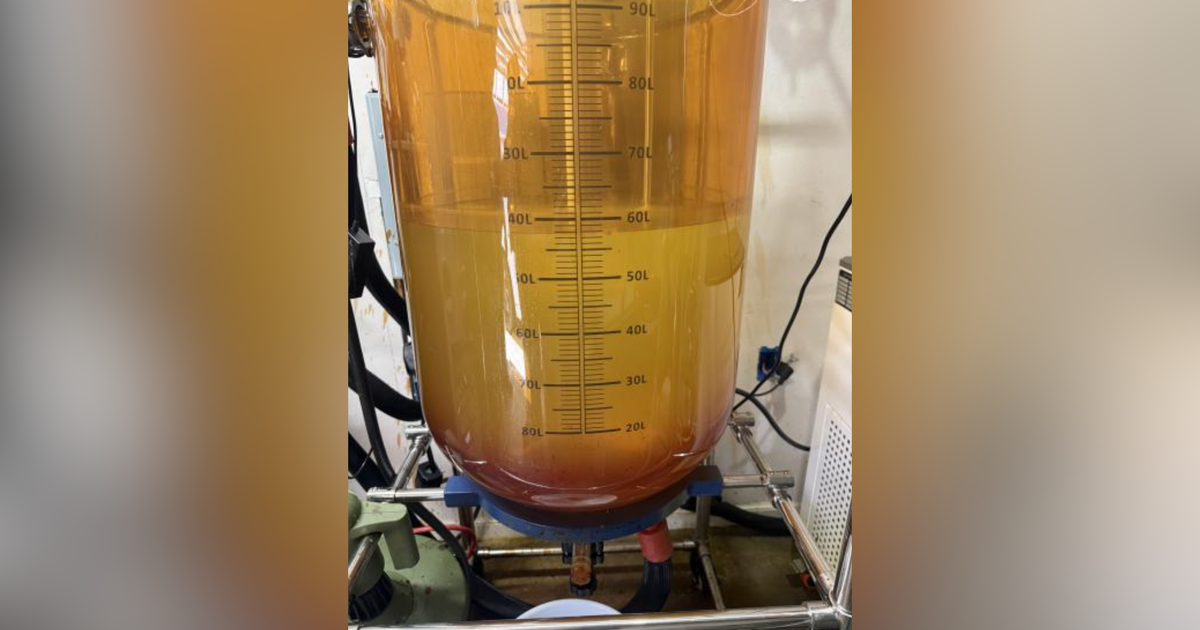
Federal and local authorities in Louisiana announced the discovery and dismantling of what they described as the first nitazene synthesis laboratory found in the United States. While investigators initially believed the facility in Baton Rouge was producing fentanyl, forensic testing by the Drug Enforcement Administration (DEA) confirmed on a Wednesday that it was manufacturing etonitazene. The clandestine laboratory was located in the basement of a residential home and contained approximately $250,000 in professional-grade equipment, including specialized temperature controls and an industrial evaporator.
Nitazenes were originally developed in the 1950s by Swiss researchers as a morphine alternative but were never approved for medical use. The substances emerged in the illicit American drug supply around 2019 and belong to a class of synthetic opioids that can be significantly more powerful than other opioids. According to the DEA and related reports, some nitazene formulations are 80 times more potent than fentanyl and up to 800 times more potent than morphine. The DEA previously issued a public safety advisory in May regarding fentanyl being mixed with synthetic substances like nitazenes.
The bust followed a three-month investigation by the East Baton Rouge Sheriff's Office and the DEA. During the raid, agents discovered 58 liters of liquid etonitazene in a main reactor vessel. East Baton Rouge Sheriff Sid J. Gautreaux III stated that the facility was a "first-of-its-kind discovery" for the agency in the U.S. According to the Louisiana State Police Crime Laboratory, Louisiana has become a primary site for the drug's emergence, with more than 80% of all etonitazene exhibits seized by the DEA nationwide this year originating in the state.
The scale of the threat is linked to the extreme potency of these synthetic opioids. Because some variants are much stronger than fentanyl, users may experience rapid respiratory depression or cardiac arrest. While naloxone is effective against nitazenes, medical reports indicate that multiple doses are often required to revive a person due to the drug's high potency.
The presence of domestic laboratories suggests that specialized equipment, valued in this instance at $250,000, is being used to bypass international supply chains. This sets a precedent for law enforcement agencies who must now monitor for sophisticated chemical reactors in residential areas. The DEA's investigation into the distribution network connected to the Baton Rouge lab is ongoing. Additional details regarding the global pipeline of these chemicals are expected to be released in upcoming investigative broadcasts.