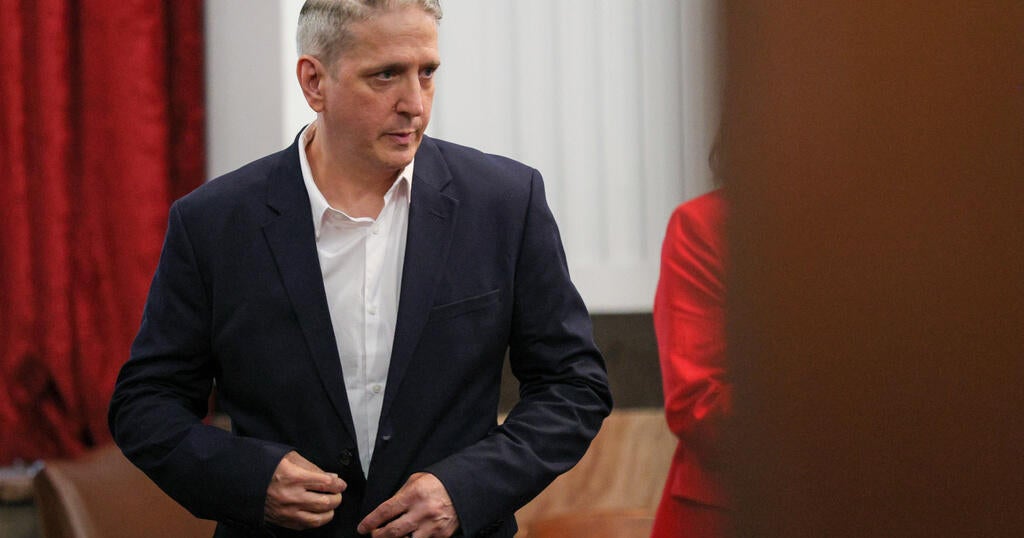
Richard Glossip, a former death row inmate who spent nearly 30 years in prison following the 1997 death of motel owner Barry Van Treese, pleaded guilty on a Thursday to a lesser charge of being an accessory to murder. The plea agreement resulted in the dismissal of the murder charge against Glossip. According to his attorney, Don Knight, Glossip is scheduled for sentencing in December, where he could be released or sentenced to up to 15 years in prison.
The case originated from the killing of Van Treese, who was beaten with a baseball bat in Oklahoma City. Another man, Justin Sneed, admitted to the killing and testified that Glossip had promised him $10,000 to carry out the act. Sneed received a life sentence, while Glossip was convicted of murder in 1998 and again in 2004 following an appeal. Glossip maintained his innocence throughout his incarceration, during which he faced nine execution dates and was served three last meals.
In February 2025, the U.S. Supreme Court overturned Glossip’s conviction and death sentence in a 5-3 ruling. The court found that the prosecution had failed to correct false testimony provided by Sneed during the trial, which Justice Sonia Sotomayor wrote violated Glossip's right to due process. Following this ruling, Glossip was released on bond in May 2025 to await a scheduled retrial.
Oklahoma Attorney General Gentner Drummond, who previously supported Glossip's request for a new trial due to errors in the original proceedings, stated that accepting the plea to the lesser charge was a difficult decision for the state and the Van Treese family. Drummond said the plea ensures a conviction related to the death and gives the state a chance to seek additional prison time. Knight, Glossip's attorney, said the plea acknowledges allegations that Glossip helped place plexiglass over a broken window at the hotel and saw the body without reporting the killer's identity to police, but maintained Glossip had no role in planning or executing the murder.
A person in Glossip’s position will notice a change in their legal status starting in December. Depending on the judge's sentencing decision, he could be released immediately or he could be returned to a correctional facility for a term of up to 15 years. This follows a period starting in May 2025 where he was out of prison on bond. The plea agreement ends the state’s plan to pursue a new murder trial, which Attorney General Drummond had intended to prosecute without seeking the death penalty.
The case has already had effects on the Oklahoma justice system. A 2015 drug mix-up involving Glossip’s scheduled execution—where officials realized they had the wrong lethal injection drugs while Glossip was waiting near the execution chamber—led to a nearly seven-year moratorium on all executions in the state. The final resolution of the case will occur at the sentencing hearing in December, which will determine Glossip's remaining prison time or his release.