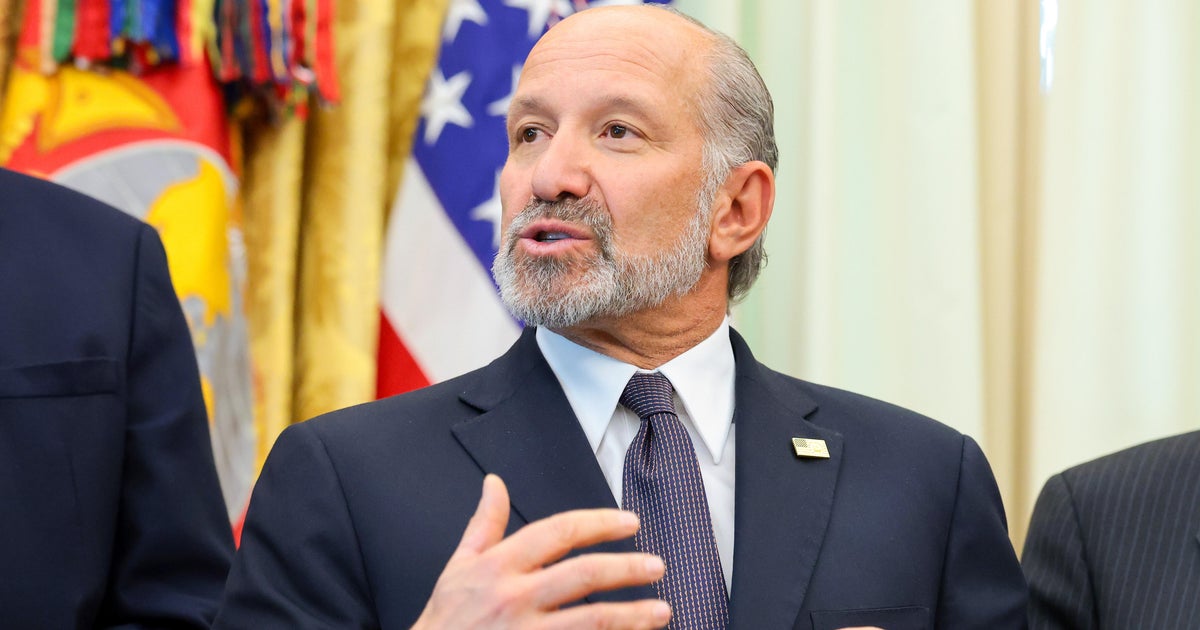
Former Commerce Department officials have described Secretary Howard Lutnick’s tenure as being marked by internal disorder, micromanagement, and a failure to enforce export bans on sensitive computer chips. Four former employees, speaking anonymously to CBS News, alleged the department refused to use available national security tools to prevent advanced chips from being smuggled to China and other adversaries. According to these sources, the agency stopped adding firms to the Entity List—a federal registry of companies banned from purchasing advanced technology—for the first time in 18 years.
The scrutiny follows the resignation of Nvidia CEO Jensen Huang, who admitted to an affair with a woman U.S. intelligence agencies identified as a suspected Chinese spy. Members of Congress and senior officials have since questioned whether the Commerce Department effectively policed Nvidia’s exports to companies with ties to China. Former staff alleged that despite enforcement officers finding suspicious activity at Southeast Asian delivery sites, department directors took no action to restrict those shipments.
In May 2025, the department rolled back an interim final rule that had blocked China from obtaining advanced AI chips through third-party countries, arguing the rule would have "stifled American innovation." Since then, several reports have indicated the circumvention of these bans. An April 2026 study by the nonprofit Epoch estimated that between 290,000 and 1.6 million cutting-edge chips were smuggled into China in 2024 and 2025. Additionally, tech news site The Information reported that at least $7.5 billion in Nvidia chips reached Chinese firms through entities linked to the suspected agent involved in the Nvidia CEO scandal.
For the general public and federal workforce, these allegations point to a change in how the government manages sensitive technology. Former employees reported an "exodus" of up to 50 skilled staff members, including engineers, scientists, and experts on AI and Russia, over an 18-month period. This loss of institutional memory coincided with the departure of two veteran officials, Matthew Borman and Eileen Albanese, in February 2025. Current federal records show that key leadership roles in the Bureau of Industry and Security, which oversees export controls, remain vacant, potentially slowing the processing of licenses and enforcement actions.
The internal friction has also reached other cabinet levels, with Treasury Secretary Scott Bessent stating that the Commerce Department failed to follow through on chip ban enforcement supported by the State and Treasury departments. This creates a situation where interagency national security goals may be stalled by the internal management of a single department. What happens next includes the implementation of a new rule announced on Monday, which requires export licenses for advanced semiconductors sent to Brazil, Indonesia, Malaysia, Singapore, and Thailand. This measure is designed to close loopholes that allowed chips to reach China via intermediaries. Further congressional inquiries into Nvidia’s export practices and the Commerce Department’s oversight are expected as the investigation into the Nvidia CEO’s conduct continues.