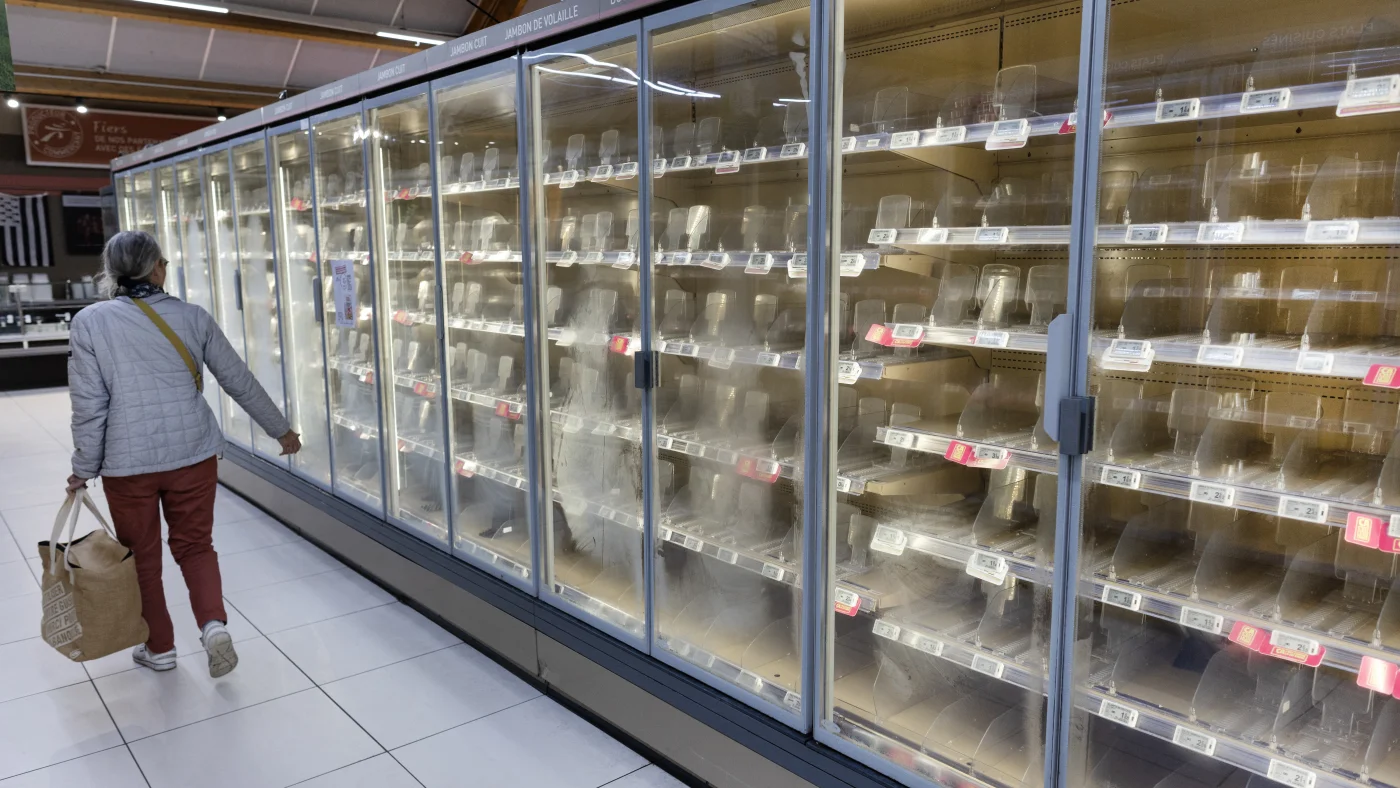
The French government has accused the Iranian military of conducting a series of cyberattacks against critical infrastructure in October. The French National Cybersecurity Agency (ANSSI) reported that hackers took over refrigeration controllers at approximately 700 retail locations, including supermarkets and butcher shops. The agency stated that the hackers increased temperatures during the night, resulting in the loss of millions of dollars' worth of food.
The hacking campaign also targeted several small hydroelectric power plants, which ANSSI described as having "moderate effects." French Foreign Minister Jean-Noël Barrot characterized the incident as the first large-scale cyber sabotage on French territory, stating it affected national interests and public security. In response, the Paris Prosecutor's Office opened an investigation into Shahid Kaveh, a cyber unit the French government links to Iran's Islamic Revolutionary Guard Corps (IRGC). The prosecutor's office is seeking international arrest warrants.
French authorities identified the hackers through digital infrastructure, links to a propaganda outlet, and the presence of Farsi language traces in the attack. The attribution follows similar incidents reported in other countries. Last week, grocery stores in Sweden and Ireland faced similar attacks, and a French blood bank narrowly avoided the loss of samples due to refrigeration interference. In the summer of 2026, commissaries on U.S. military bases experienced food spoilage under similar circumstances, though the Pentagon has not officially attributed those events to a cyberattack or to Iran.
For retail workers and business owners, these attacks represent a change in day-to-day operations, as refrigeration systems—often left connected to the internet for remote maintenance—proved vulnerable to remote temperature manipulation. These systems, known as operational technology, are frequently difficult to secure because they are often outdated and cannot be easily shut down for patching without disrupting services. The incident sets a precedent for how governments may publicly attribute cyber sabotage to foreign military units, specifically naming the IRGC's Shahid Kaveh unit, which has previously been linked to attacks on Israeli targets and U.S. water treatment facilities.
What happens next involves both legal and diplomatic steps. The Paris Prosecutor's Office is currently pursuing international arrest warrants. While Iran has not yet responded to the allegations, the French government's public attribution may prompt other affected nations, such as the U.S., Sweden, or Ireland, to release their own investigative findings. U.S. Secretary of State Marco Rubio, speaking at a G7 meeting in Paris, declined to comment on information sharing regarding the attribution but noted the ongoing conflict between the U.S. and Iran that began in February 2026. No specific trial dates or deadlines for the arrest warrants have been reported.