The Plain Record

Neutral daily news — clear headlines, complete facts.

World

French Workers Conduct Nationwide Strikes Over Wages and Living Costs

French union workers and government employees held nationwide protests over rising living costs, with turnout estimates ranging from 600,000 to 1.6 million.

Published November 5, 2026 at 8:05 PM EST

The short answer

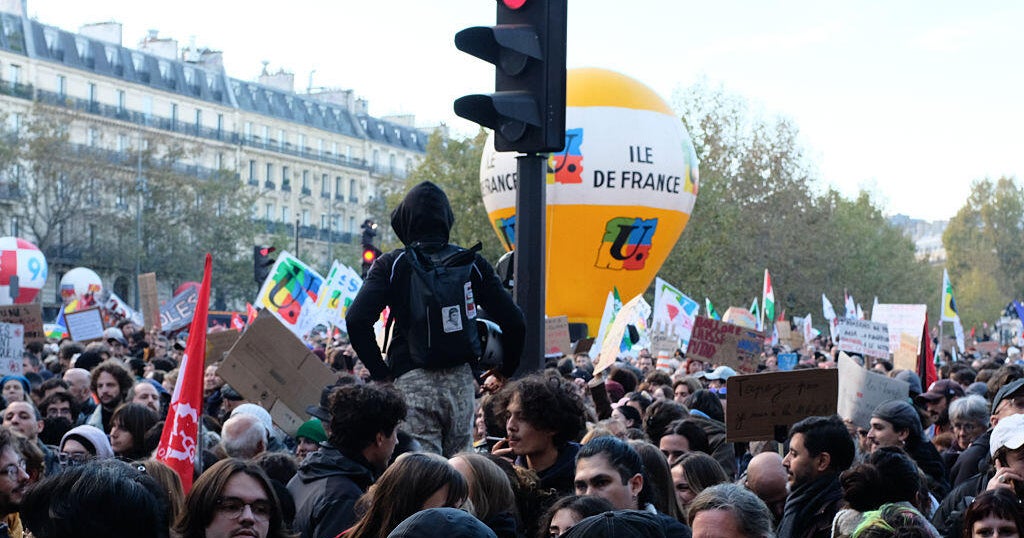
French union workers and government employees held nationwide protests over rising living costs, with turnout estimates ranging from 600,000 to 1.6 million. Tens of thousands of union workers, including teachers, transport employees, and government staff, conducted a nationwide walkout and protests across France on Thursday. The participants demonstrated against low wages and the rising cost of living, leading to nearly 200 rallies throughout the country.

French Workers Conduct Nationwide Strikes Over Wages and Living Costs

The Facts

Who
French union workers, teachers, transport employees, the GCL union, and the French government.
What
Nationwide labor strikes and protests over wages and the cost of living.
When
Thursday, following a meeting call on Monday and leading to a scheduled protest on Saturday.
Where
France, including Paris, Lyon, and Saint-Denis.
Why
Protesters are demanding higher wages and several told CBS News they want a shift in government spending from the military to social services to combat the high cost of living.

Tens of thousands of union workers, including teachers, transport employees, and government staff, conducted a nationwide walkout and protests across France on Thursday. The participants demonstrated against low wages and the rising cost of living, leading to nearly 200 rallies throughout the country.

The protests began in late September as student-led demonstrations in Paris focused on school conditions, teacher shortages, and infrastructure issues. These actions expanded into a wider movement that local surveys indicate is supported by nearly six in 10 people in France. Previous demonstrations resulted in curfews in several cities and thousands of arrests following instances of vandalism and clashes with police.

The General Confederation of Labour (GCL), a major French union, reported that approximately 1.6 million people participated in the Thursday rallies. However, France’s Interior Ministry estimated the turnout at roughly 600,000. While many events remained peaceful, some escalated into violence; protesters burned a car in Lyon and objects in Paris, prompting police to use tear gas to disperse crowds.

For the average household, these protests manifest as a challenge to the current economic environment where salaries are reportedly insufficient to cover basic living expenses. Several protesters told CBS News they want the French government to reduce military and law enforcement spending to provide more funding for social services. These changes, if adopted, would impact the funding of schools, infrastructure, and public benefits.

The ongoing unrest has created a deadlock between labor unions and the administration of President Emmanuel Macron. While Prime Minister Sébastien Lecornu on Monday called for a meeting with union leaders to address these grievances, the GCL has maintained its pressure with another round of protests scheduled for Saturday. The outcome of these negotiations will determine the future of French economic policy and whether the country will face further service shutdowns.

Timeline of what happened

Key dates and decisions, in the order they occurred.

  1. September 2026

    Protests begin among students in Paris

  2. October 2026

    Curfews issued in several cities during peak violence

Summaries are written by The Plain Record to state the facts of a story plainly and without political slant. Drafted with AI assistance and checked against the source record before publication. See how we report, or report a correction.

← Back to the front page

Questions readers ask

What happened: French Workers Conduct Nationwide Strikes Over Wages and Living Costs?

Nationwide labor strikes and protests over wages and the cost of living.

Who is involved?

French union workers, teachers, transport employees, the GCL union, and the French government.

When did this happen?

Thursday, following a meeting call on Monday and leading to a scheduled protest on Saturday.

Where did this happen?

France, including Paris, Lyon, and Saint-Denis.

Why does this matter?

Protesters are demanding higher wages and several told CBS News they want a shift in government spending from the military to social services to combat the high cost of living.