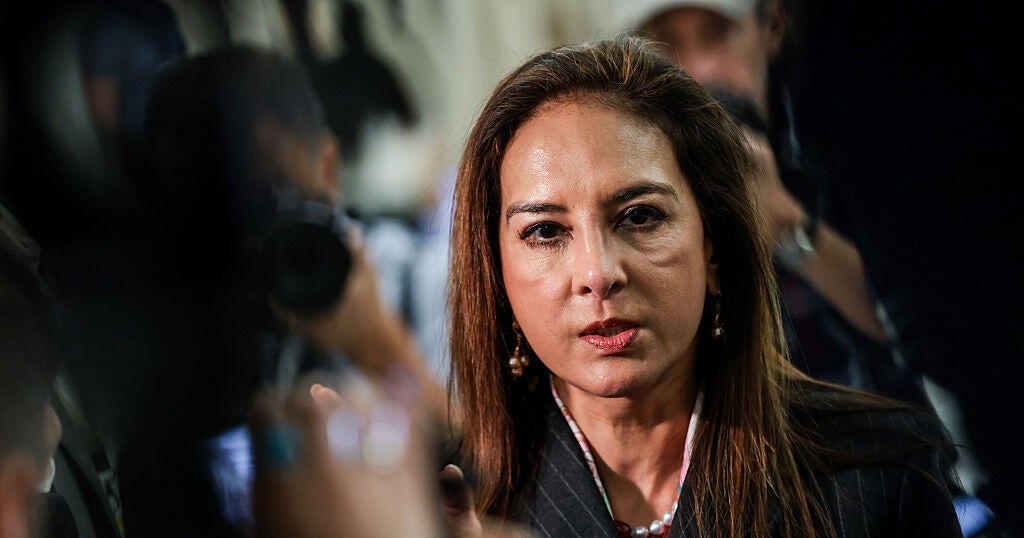
Assistant Attorney General Harmeet Dhillon, the head of the Justice Department’s Civil Rights Division, resigned on Thursday after leading the office for 18 months. Attorney General Todd Blanche announced the departure in a social media post, thanking Dhillon for her service and stating that she enforced the law "without fear or favor." Dhillon is the first senior official to leave the department following midterm elections in which Democrats regained control of both the House and Senate.
Dhillon, a lawyer from San Francisco and a supporter of President Trump, was appointed to lead a division established 70 years ago to protect constitutional rights in housing, employment, education, and policing. During her 18-month tenure, the division shifted away from traditional focuses, such as investigating discrimination against historically marginalized groups. Dhillon stated at a 2025 event that the division's goal was to "achieve the executive branch's goals."
The division experienced a significant change in personnel under Dhillon, with approximately 300 attorneys, or more than 75% of the staff, departing. The office redirected its resources toward protecting gun owners' rights, opposing civil rights protections for transgender people, and challenging equity, diversity, and inclusion (EDI) policies at universities. The department also dismissed more than 50 decades-old consent decrees intended to protect Black students from discrimination in public schools and closed several cases involving discrimination against Black Americans.
The scale of the division's shift is also evident in its workforce and its litigation strategy. The departure of 300 veteran attorneys—replaced in some instances by what critics described as less experienced ideological allies—represents a change in the expertise available to enforce federal civil rights laws. In the legal arena, the division filed 31 lawsuits against the District of Columbia and primarily blue states to obtain unredacted voter rolls for use in criminal and immigration enforcement. The department lost 27 of those cases, but the litigation required state election officials to dedicate resources to defending their voter data in court.
The change in priorities resulted in differences for individuals seeking federal intervention in civil rights cases. For example, following the shooting deaths of Renee Good and Alex Pretti by immigration agents in Minneapolis, the division initially did not open a criminal civil rights investigation. While it later joined a probe into the Pretti case following public criticism, no charges have been filed to date. For students and faculty at universities, the division's shift meant new lawsuits against institutions like UCLA and Harvard over allegations of antisemitism, as well as investigations into schools accused of discriminating against white and Asian students. What happens next depends on the appointment of a successor, as the Civil Rights Division continues to manage polling site monitoring and ongoing state-level investigations into high-profile incidents.