The Plain Record

Neutral daily news — clear headlines, complete facts.

National

Heavy El Niño Rains Trigger Largest Atacama Desert Bloom in Decades

Unusually heavy rainfall has triggered the largest floral bloom in Chile's Atacama Desert in decades, drawing thousands of tourists and prompting a bid for UNESCO recognition.

Published November 8, 2026 at 6:00 AM EST

The short answer

Unusually heavy rainfall has triggered the largest floral bloom in Chile's Atacama Desert in decades, drawing thousands of tourists and prompting a bid for UNESCO recognition.

Heavy El Niño Rains Trigger Largest Atacama Desert Bloom in Decades

The Facts

Who
Chilean scientists, Governor Miguel Vargas, and thousands of tourists.
What
The Desierto Florido (Desert Bloom) phenomenon in the Atacama Desert.
When
October and November 2026
Where
Atacama Desert, northern Chile
Why
Heavy rains from an El Niño cycle awakened dormant seeds, creating a massive ecosystem that supports tourism and scientific research.

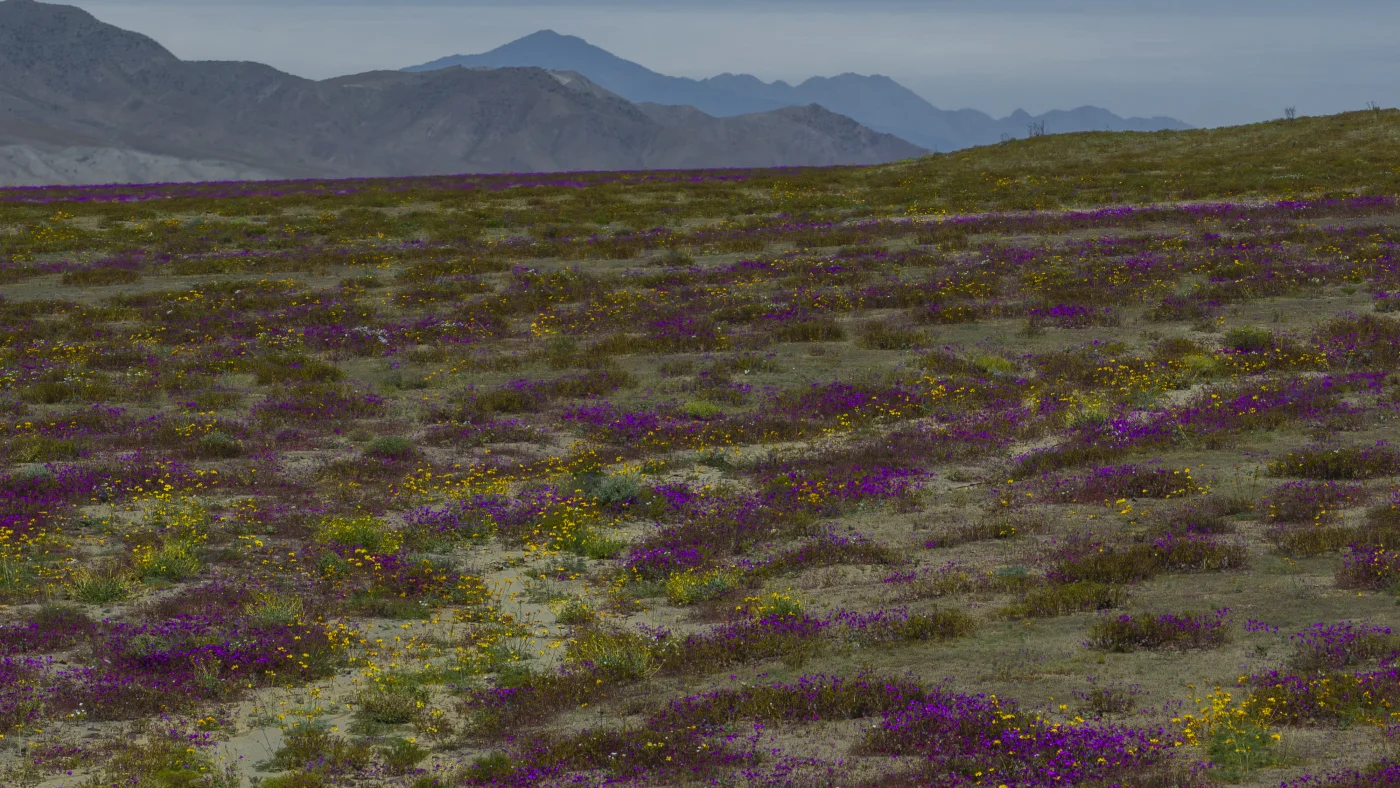
Heavy rains during an El Niño weather cycle have triggered a large-scale floral bloom in Chile’s Atacama Desert, described by scientists as the largest and most colorful display in 30 years. The event, known locally as the Desierto Florido or Desert Bloom, has transformed the world’s driest non-polar desert into a landscape covered in pink, yellow, lilac, and purple wildflowers.

The bloom follows significant flash floods in July and August 2026, which occurred after some areas received their heaviest rainfall since record-keeping began in the 1950s. While the water triggered the growth of millions of dormant seeds, the preceding floods caused property damage to dozens of homes and forced hundreds of residents to evacuate.

Scientists from Chile’s national seed bank, the Agricultural Research Institute (INIA), are currently collecting specimens to analyze genetic adaptations that allow these plants to survive extreme aridity. More than 200 species are currently in flower, including the red garra de león, which grows only along a specific stretch of the Atacama coastline. Researchers noted that flowers are appearing in areas where they have never been recorded previously, suggesting some seeds may have been dormant since before 1997.

The concrete day-to-day change for visitors and residents includes heavy traffic, as roads are currently lined with cars, and an influx of transient wildlife including insects, lizards, bats, and guanacos. Researchers from INIA are working to preserve these genetic materials before the flowers dry out and release seeds back into the soil, where they may remain for decades until the next sufficient rainfall. This work is intended to safeguard genetic diversity for future generations against a backdrop of what scientists describe as more frequent unseasonal rains due to climate changes.

The regional government is now moving to establish permanent protections and international recognition for the site. Miguel Vargas, the governor of the Atacama region, stated he has begun the process of seeking UNESCO World Heritage recognition for the desert bloom phenomenon. A 141,000-acre national park was already established in June 2023 to protect a portion of the blooming area. The current floral display is projected to last until mid-November 2026, at which point the flowers will fade and return to dormancy.

Timeline of what happened

Key dates and decisions, in the order they occurred.

  1. June 1, 2023

    National park created to protect desert bloom area

  2. July 1, 2026

    Heavy El Niño rains cause flash floods and evacuations

  3. October 19, 2026

    Tourists visit blooming desert near Huasco

  4. October 21, 2026

    Wildflowers observed in full bloom across desert floor

  5. November 15, 2026

    Projected end of the 2026 flowering season

Summaries are written by The Plain Record to state the facts of a story plainly and without political slant. Drafted with AI assistance and checked against the source record before publication. See how we report, or report a correction.

← Back to the front page

Questions readers ask

What happened: Heavy El Niño Rains Trigger Largest Atacama Desert Bloom in Decades?

Heavy rains during an El Niño weather cycle have triggered a large-scale floral bloom in Chile’s Atacama Desert, described by scientists as the largest and most colorful display in 30 years. The event, known locally as the Desierto Florido or Desert Bloom, has transformed the world’s driest non-polar desert into a landscape covered in pink, yellow, lilac, and purple wildflowers.

Who is involved?

Chilean scientists, Governor Miguel Vargas, and thousands of tourists.

When did this happen?

October and November 2026

Where did this happen?

Atacama Desert, northern Chile

Why does this matter?

Heavy rains from an El Niño cycle awakened dormant seeds, creating a massive ecosystem that supports tourism and scientific research.